Know your roof's real condition
Roof inspection in Sacramento, CA
You cannot tell from the driveway whether a roof has two years left or twenty, and guessing wrong costs thousands in interior damage or a roof replaced too early.
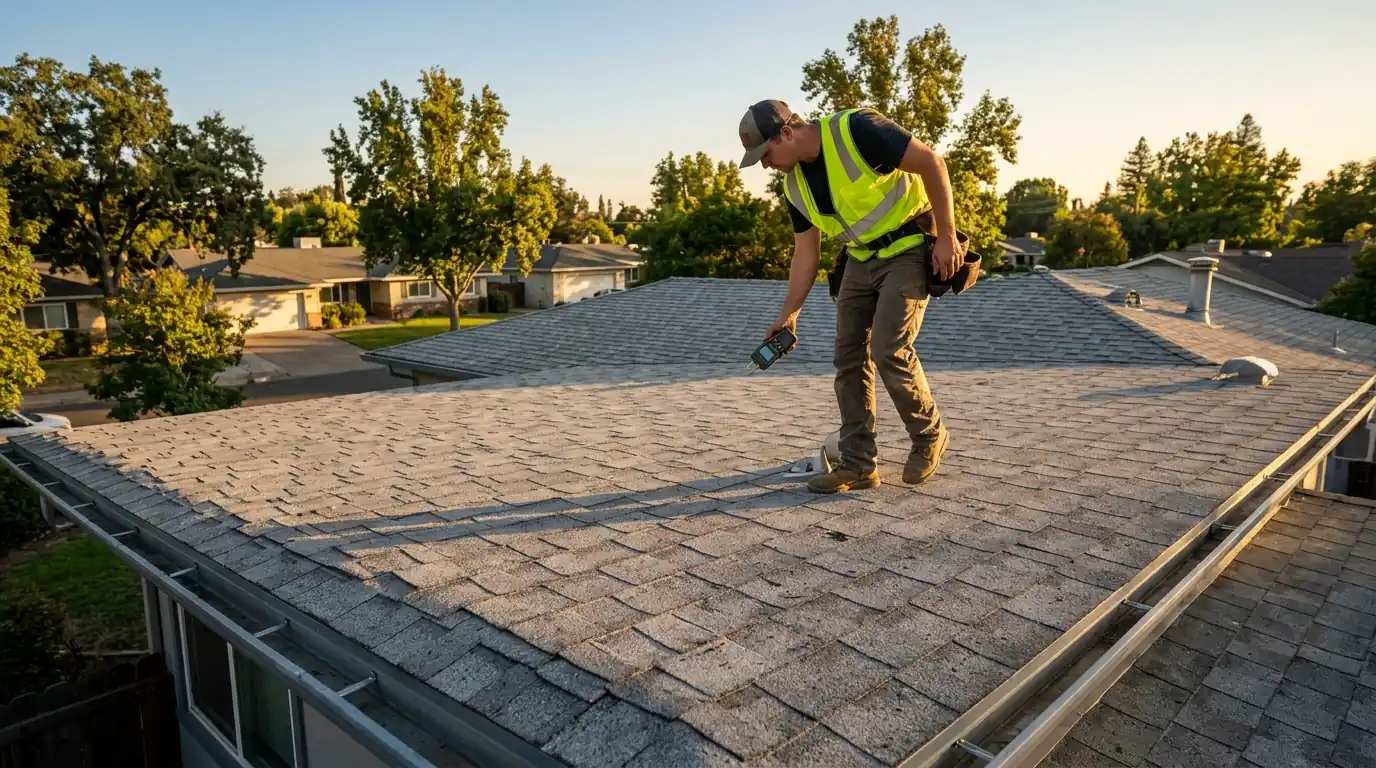
A roof inspection is a hands-on check of the surface, flashings, penetrations, drainage and attic underside to find active leaks and wear before they spread. Most homes take 45 to 90 minutes. A residential inspection typically runs 185 to 465 per job, and larger commercial roofs cost more. Infrared or moisture mapping is added when hidden wet insulation is suspected.
What this job involves
A proper inspection starts on the roof, not from a ladder at the eave. Our crew walks the surface, checks every seam, fastener, flashing and drain, then looks at the attic or ceiling side for stains, daylight and damp insulation. We photograph each finding so you can see what we saw. Nothing is guessed from the street.
People call for inspections for different reasons. Some are buying or selling a house and want to know what the roof will cost soon. Others have a stain on the ceiling after the first November storm, or a flat roof that has gone chalky after a hot summer. Because Mountainside also sprays foam and applies coatings, we can tell you honestly when a roof needs a repair, a coating, a recoat or a full replacement.
When to schedule a roof inspection
Brown rings or bubbling paint under a roof usually mean water is getting in somewhere above. The stain is rarely directly under the hole, so the source needs tracing.
Heavy sand-like grit at downspouts means asphalt shingles are shedding their protective layer. That is normal in small amounts and a warning when it is constant.
Concrete and clay tiles crack under foot traffic and shift as underlayment ages. A few broken tiles can hide a failing felt layer underneath.
A flat roof that gives underfoot can mean wet insulation or rotted deck beneath the membrane. This needs moisture testing before any coating goes on.
Bubbles, cracking in a skin pattern and chalking on flat roof surfaces point to a coating or membrane at the end of its service life.
A written condition report helps with price talks on a sale, and a check after wind or a fallen limb catches damage before the next storm.
What we check on the roof surface
On shingle roofs we look at granule loss, curling, exposed nails, cracked mat and the condition of the ridge caps. On tile we check for broken pieces, slipped courses, loose ridge mortar and bird stops. On flat roofs we look for ponding, open seams, blisters, worn walkways and punctures near equipment.
Every penetration gets attention because that is where most leaks start. That means pipe boots, vent stacks, chimney flashings, skylight curbs, satellite mounts and the edges where a roof meets a wall.
- Fasteners, seams and sealant
- Flashings and pipe boots
- Drains, gutters and scuppers
- Ponding areas on low slopes
- Rooftop equipment curbs
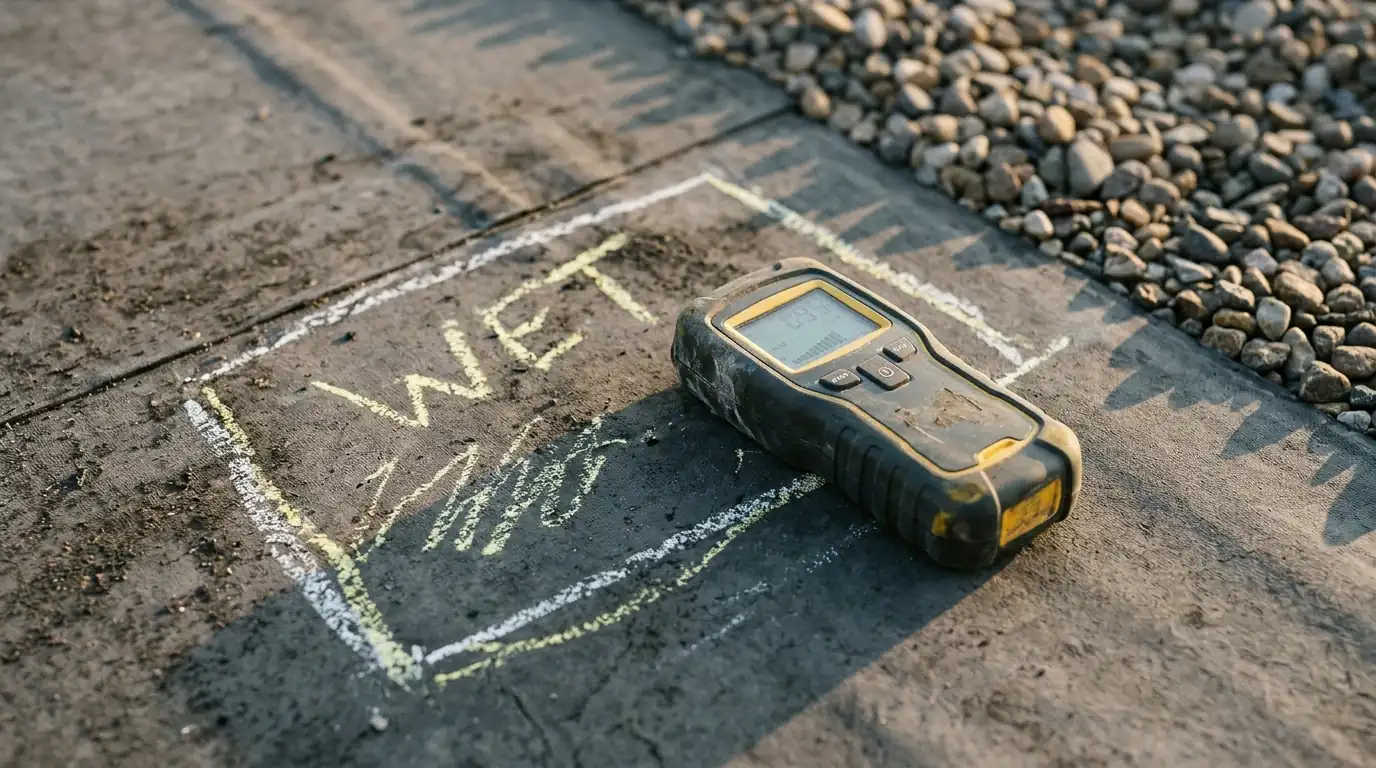
Moisture meters, infrared and water testing
When the surface looks fine but the ceiling is stained, we use tools. A pinless moisture meter reads damp decking or insulation through the surface. On low-slope roofs, an infrared camera scan, done after a warm sunny day as the roof cools in the evening, shows wet insulation as a different temperature than dry areas.
If a leak still hides, controlled water testing works section by section: one person on the roof with a hose, another inside watching. It is slow, but it finds the real entry point instead of a guess that gets patched and fails again.
What the report gives you and what it does not
You get a plain summary: the roof type and approximate age, what is failing now, what will fail within a few years, and the repair options with typical price ranges. We do not pad the list. If a roof only needs a few sealed penetrations, we say so.
An inspection is a visual and instrument-based opinion on the day we visit. It cannot see through a membrane without a scan, and it does not predict a storm. If we find a problem that needs a deeper look, such as wet insulation, we explain what the next step is and what it costs.
Our process for roof inspection
Six steps, in the order the crew does them on a Sacramento roof.
- Step 1Talk through the concern
We ask where you saw a stain, when it rained, and what repairs were done before, so the inspection targets the likely trouble spots first.
- Step 2Exterior walk-around
We check the eaves, fascia, gutters and walls from the ground, looking for streaking, sagging lines and loose trim that hint at roof problems.
- Step 3Roof surface survey
We walk the roof surface, probe suspect spots, and photograph seams, flashings, penetrations and any damaged or worn areas.
- Step 4Attic or deck check
Where access allows, we look at the underside for stains, daylight, damp insulation, rusted nail tips and ventilation condition.
- Step 5Moisture mapping if needed
If wet material is suspected, we scan with a moisture meter or infrared camera and mark the wet boundary on the roof.
- Step 6Findings and options
We walk you through the photos, rank repairs by urgency, and give a typical price range for each option, from patching to coating to replacement.
What roof inspection costs in Sacramento
A single-story home with a shingle or tile roof and attic access typically falls around 265 to 340 for a full inspection with photo findings.
- Roof size and pitch
- Roof type and access
- Infrared or moisture mapping
- Commercial or multi-building scope
Compare this job with others in the Sacramento roofing cost guide.
Sacramento conditions that matter
Sacramento roofs take a beating from summer heat that often passes 100 F, then a short wet season from November through March. That cycle expands and contracts materials every day and cracks old sealant at flashings. Many mid-century homes have low-slope sections where ponding hides leaks, and 1990s tract homes in Natomas, Elk Grove and Roseville often have concrete tile with aging felt beneath. After the first heavy rain is the best time to look for new stains. Inspections before summer also catch cracked caulk and open seams while the roof is dry and safe to work on.
Often paired with this service
Roof Leak Detection
Find the leak, not the stain
View serviceRoof Maintenance Plans
Small visits that extend roof life
View serviceFoam Roof Repair
Fixing damaged spray foam roofs
View serviceRoof Repair
Leaks, lifted shingles, bad flashing
View serviceRead before you decide
Foam Over the Old Roof or Tear It Off? How to Decide
Spray foam can go straight over many sound existing roofs, which saves landfill, labor and mess. This guide explains what has to be true about the old roof, and when tearing off is the better call.
Read the guideFlat Roof Warning Signs to Check Before the Rains
Sacramento's dry summer hides flat roof damage until the first storms arrive. This guide lists what to look at in October, what each sign means, and what is safe to check yourself.
Read the guideWhat a Foam Roof Core Cut Tells You
A core cut is a small round sample taken through every layer of a roof. This guide explains what each layer reveals, what the numbers mean, and how the hole gets repaired afterward.
Read the guideQuestions about roof inspection
How long does a roof inspection take on an average house?
Most single-story homes take 45 to 90 minutes on site, including photos and attic access. Two-story homes, steep pitches, tile roofs and large flat roofs take longer. If infrared scanning or water testing is needed, that is scheduled as a separate visit, because infrared works best in the evening.
Is an infrared roof scan always necessary?
No. Infrared is mainly useful on flat and low-slope roofs where insulation can hold hidden water. On a typical shingle or tile roof, a visual survey and a moisture meter reading are usually enough to find the problem, so we only add a scan when the situation calls for it.
Can you inspect a roof before I buy a house?
Yes. Many buyers want a roof condition report during their inspection period. We note the age, material, active problems and likely repair costs over the next few years, so you can negotiate based on real information instead of a general home inspector's quick look.
Will walking on my roof damage it?
Our crew knows how to walk each roof type. On tile, we step on the lower third of the tile near the headlap. On foam and coated roofs, we use soft-soled shoes and walk paths that avoid fresh coating. Brittle old shingles in cold weather are the main risk, and we avoid those conditions.
What happens if you find nothing wrong?
Then you have a baseline report with photos and a date. That is useful for insurance conversations, for comparing against the next inspection, and for knowing roughly how many years remain. We would rather tell you the roof is fine than sell you a repair you do not need.
Roof leaking, peeling or baking in the sun?
Call the 24/7 line. Tell us the roof type, where the water shows up or what the coating looks like, and we will tell you what we would check first and when a crew can be there.