Flat roof warning signs to check before the rains
Sacramento's dry summer hides flat roof damage until the first storms arrive. This guide lists what to look at in October, what each sign means, and what is safe to check yourself.
Updated November 2026, 6 minute read
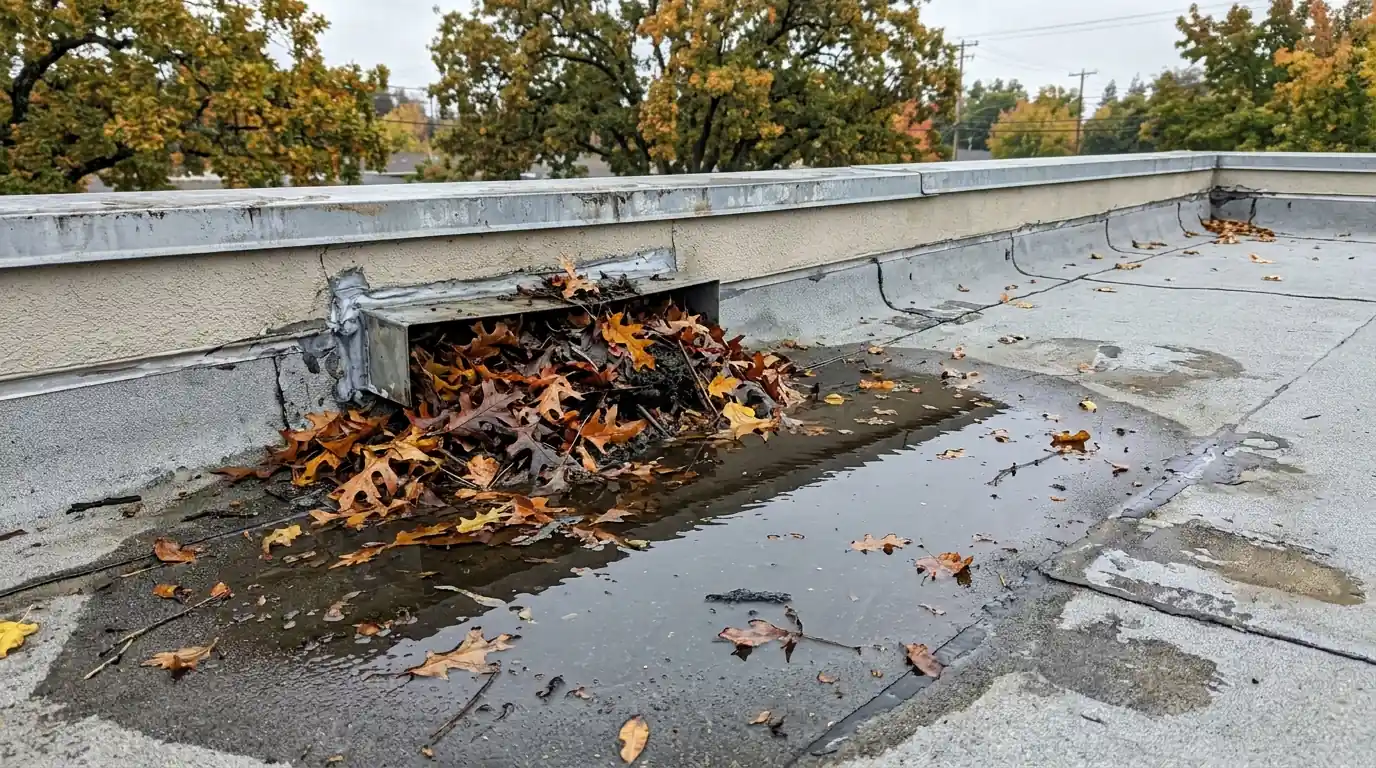
- Check drains and scuppers first, since clogs cause most winter flat roof leaks.
- Ponding that lasts more than two days after rain is a warning.
- Cracked flashing and open seams let water in at the edges.
- Repair small problems in October, before wet weather limits options.
Why October is the right time to look
Sacramento gets most of its rain from November through March, and the first storms often arrive after months of dry heat. Summer sun bakes membranes and coatings, opens seams and loosens flashings, and leaves dust and leaves in drains. The first heavy rain then finds every weakness at once. Fall is also when roofers are busiest, since dozens of owners wake up to the same forecast. Doing the walk-through in early October gives you a few weeks of lead time for repairs, which is much better than calling on the day the storm arrives.
A walk across the roof in early fall takes under an hour and can save a ceiling. Repairs done in dry weather also cure properly, which sealants and coatings need. Patching in the middle of a storm only buys a few days. Take photos on the first visit and again after the first rain, so you can compare how water moves and which spots changed.
Drains, scuppers and gutters
Start where the water leaves the roof. Check every drain, scuppers through parapet walls, and any downspouts for leaves, seed pods, shingle grit and bird nests. A flat roof has no slope to spare, and a blocked drain can hold several inches of water in a single storm. Foam, mod-bit and built-up roofs often have a small lip or curb around a drain. Make sure the roof surface slopes toward the drain, not away from it, and that no old patch or gravel has built up into a dam.
Look at the drain bowl and the flashing around it. A drain clamp ring that is loose, a cracked bowl or a membrane that has pulled away from the drain are common leak points. Run a hose to see if water moves freely and does not pool nearby. Overflow scuppers, the secondary openings set higher on the wall, must also stay clear. They are the last line of defense when a primary drain clogs, and they are often forgotten until a roof holds too much water.
- Clear debris from drains and scuppers
- Check that the strainer dome is in place
- Look for cracks at the drain bowl
- Flush downspouts with a hose
- Trim branches that drop leaves on the roof
Ponding water and low spots
Water that remains on a flat roof more than 48 hours after rain is called ponding. It adds weight, speeds up membrane aging, grows algae and can find tiny pinholes. Low spots often sit between drains or near the middle of a span where the deck has sagged slightly. Weight is the quiet risk. Each inch of water on a flat roof adds about five pounds per square foot, so a clogged drain on a large roof can add serious load. Older mid-century roofs with light framing are the most sensitive to it.
After the next rain, walk the roof or look from a window and mark the areas where water stays. Photograph them. Ponding can often be corrected with foam build-up or added drains, which is cheaper than replacing a roof that has been underwater for years. Do not sweep puddles toward a drain with a broom and walk away. Water that persists means the surface or the deck is the issue, and it needs a fix, not just a push.
Membrane, seams and surface damage
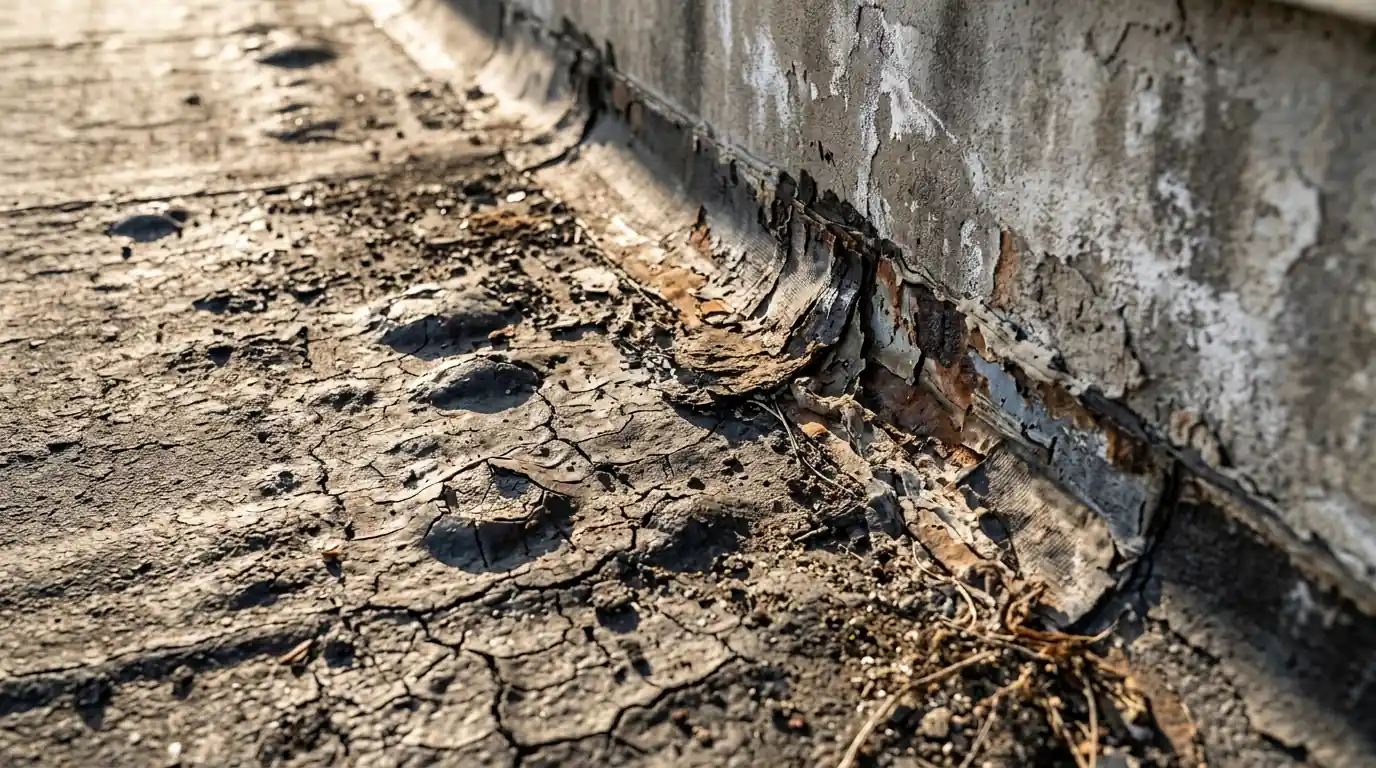
Look closely at the roof surface. Blisters, which are raised bubbles under the membrane, show trapped moisture or air. Alligatoring is a pattern of cracks in the asphalt surface that looks like reptile skin. On single-ply roofs, check seams for lifting edges, and on built-up roofs look for bare felt where gravel or coating has worn away. Look for exposed fasteners, fabric showing through coating, and bare spots near seams. On foam roofs, check for tan or orange showing through the white, which means the coating is thin and the foam is losing protection.
Granule loss on mod-bit, shrinkage pulling the membrane from walls, and soft spots underfoot all point to deeper problems. Press down gently near suspect areas. Spongy feeling means wet insulation, which should be tested before any coating goes on. Also look for bird damage, since crows and woodpeckers sometimes peck foam, and for punctures from tree limbs. Small holes grow when water freezes or when roots of moss and algae get in, so patch them before the wet season.
Flashings, edges and penetrations
Most flat roof leaks start at transitions. Check the flashing along parapet walls, around HVAC curbs, vent pipes, skylights and the roof edge metal. Look for cracked sealant, gaps at the top of the wall flashing, rusted fasteners and loose coping caps. Roof edges take the most abuse from wind and temperature swings. Check metal drip edge for lifting, and look at the roof membrane at the edge for pulling or shrinkage that leaves a gap.
Heat expansion in summer pulls these joints open a little each day. A small gap that only leaks in wind-driven rain can still soak the wall cavity for months. A bead of the right sealant is a stopgap, while rebuilt flashing is the lasting fix. Rooftop equipment is another source. Condensate lines that drip onto the roof, loose panel covers and cable penetrations that were drilled and sealed with caulk are all common leak spots on commercial roofs.
Inside clues and what to do next
Look inside as well. Brown ceiling stains, bubbling paint, musty smells in closets under the roof and drips near light fixtures show past or present leaks. Stains with a ring pattern often grow after each rain. Some leaks travel along framing or pipes before dripping, so the stain can be several feet from the actual hole. Take photos and note where the stain sits, since that helps a roofer trace it quickly.
Stay off the roof in wet or windy conditions, and never walk on a roof you suspect is soft. Write down what you find and the location. Document everything with dates, because insurance claims or landlord disputes go better when you can show when a problem started and what you did about it. If the list is longer than a few clogged drains, call Mountainside Foam & Coating at (916) 963-8097 and we can schedule an inspection before the storms start.
Questions readers ask
How long can water sit on a flat roof before it counts as a problem?
Most roofing manufacturers treat water that remains beyond about 48 hours after rain as ponding. A little drying puddle after a storm is normal. Pools that persist for days point to low spots, a sagging deck or a drain that is not working. Every roof has a few trouble spots it develops over time, and an owner who knows where they are can often spot the next problem early.
Is a blister in the roof membrane urgent?
Not always urgent, but it should be watched. A small blister can hold air or moisture. If it grows, splits or is soft, water is likely getting in. Do not pop it. Have the area cut open, dried and patched properly instead. Do not wait for rain to confirm what you already suspect, since a dry-weather repair is cheaper, faster and more durable.
Can I safely walk my own flat roof to check it?
On a dry day, on a roof that feels solid, usually yes. Wear soft-soled shoes and stay away from the edge and any skylights. If the roof is spongy, steep, high or wet, check from a ladder or a window and leave the close look to a roofer. Seasonal checks are also a good time to clear gutters, trim trees and photograph the roof for your records.
Roof leaking, peeling or baking in the sun?
Call the 24/7 line. Tell us the roof type, where the water shows up or what the coating looks like, and we will tell you what we would check first and when a crew can be there.