Flat roofs for working buildings
Commercial roofing in Sacramento, CA
A leaking roof over inventory, tenants or equipment stops work and starts insurance conversations, so commercial roofs need a fix that fits the building and the budget.
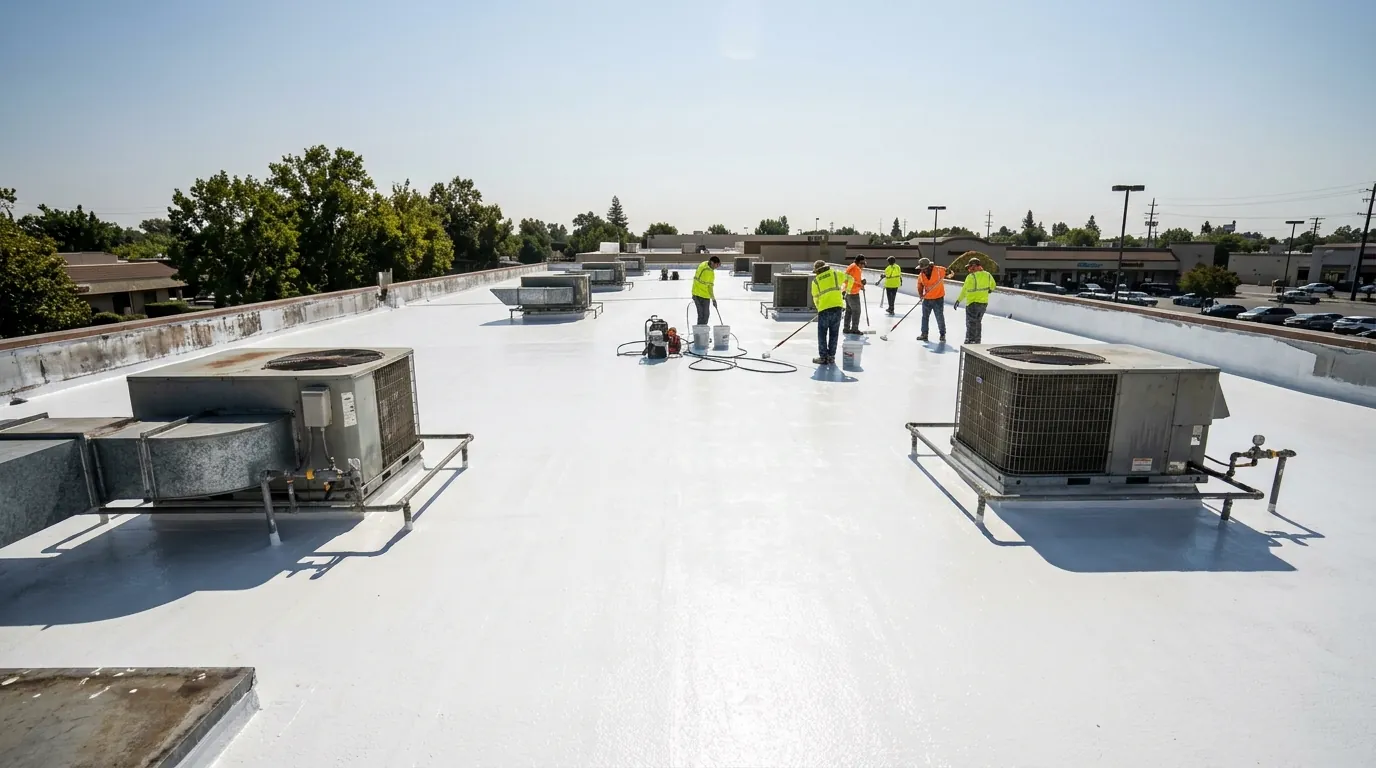
Commercial roofing covers repair, coating, recovering and replacement of low-slope roofs on shops, offices, warehouses and apartment buildings. Options include spray foam, TPO, silicone coating and modified bitumen. Typical pricing runs 3.10 to 14.60 per sq ft depending on the system, and most mid-size roofs take three to ten working days.
What this job involves
Most commercial buildings in the Sacramento area have a flat or low-slope roof: strip malls, light industrial units, medical offices, churches, restaurants and apartment blocks. These roofs carry rooftop HVAC units, vents, drains and conduit, and every one of those is a place water can enter. The roof also sits in full sun for most of the year.
Our crews work with the owner or property manager to match the system to the roof. A sound but worn roof may only need cleaning and a silicone or acrylic coating. A roof with wet insulation may need sections cut out and replaced. A building that must stay open can often be done in phases, which is one reason foam and coatings are popular. We also install single-ply TPO and repair built-up roofs.
Signs your commercial roof needs attention
If the same ceiling tile stains after each storm, the patch is not addressing the entry point or there is wet insulation spreading the water sideways.
Ponding that remains two days after rain adds weight, speeds membrane breakdown and usually means drains are blocked or the deck has sagged.
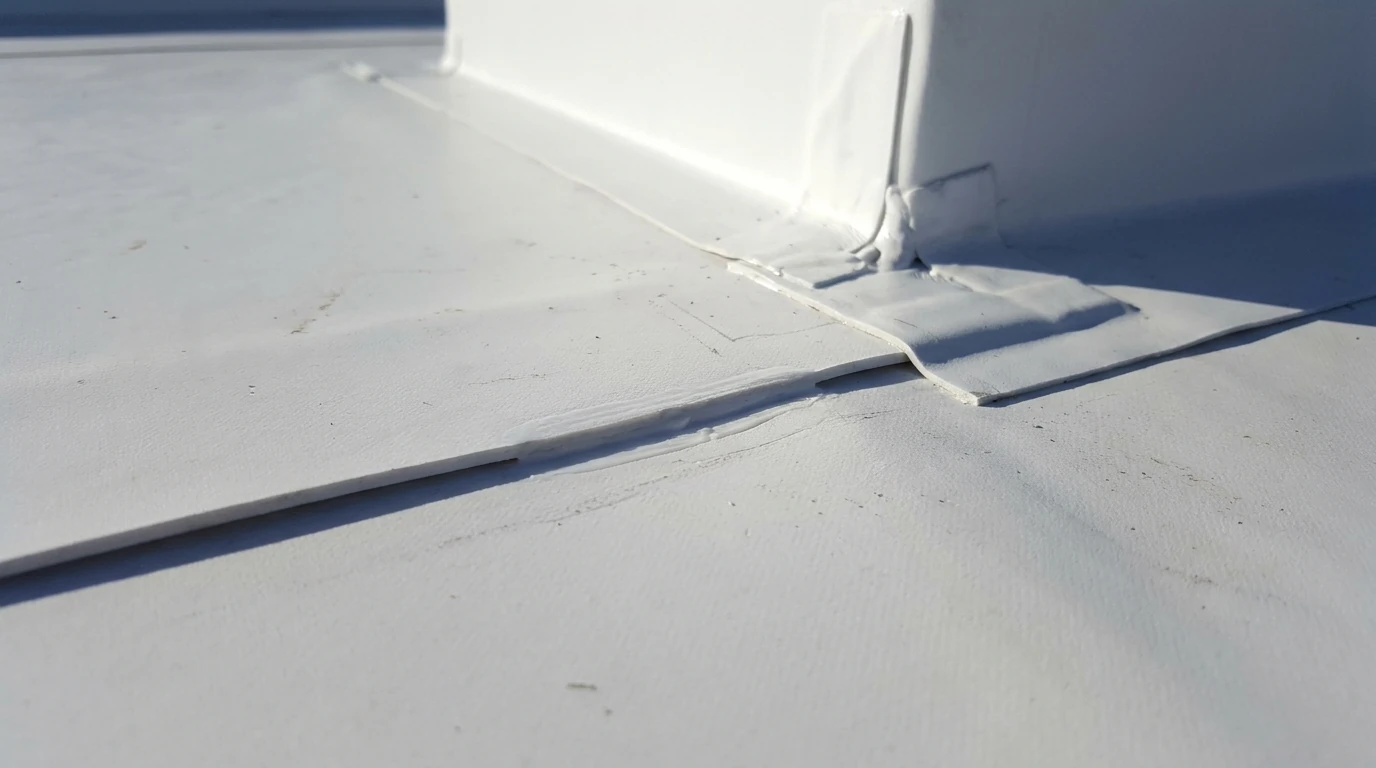
Single-ply membranes shrink and pull at seams and perimeter flashings. Daylight at an edge or a flapping sheet means wind can get under it.
A dark, aging roof soaks up heat. Tenants complain and rooftop units run constantly, which shortens their life and raises the electric bill.
Vibration and service traffic crack sealants and flashings at curbs. Mechanics walking the same path also wear the membrane through.
Bubbles in a built-up roof or exposed felts show the surface protection is gone. The layers underneath will age fast once uv reaches them.
System options for low-slope buildings
Spray polyurethane foam builds a joint-free, insulating layer and is then coated with silicone or acrylic. It works well over many existing roofs once they are dry and clean. TPO is a white single-ply sheet, heat-welded at the seams, a good fit for tear-offs and large open roofs. Modified bitumen is a torched or cold-applied multi-layer system that holds up to foot traffic.
We also coat existing metal roofs, repair built-up roofs and replace EPDM. The right choice depends on the deck, the existing layers, drainage and how long you plan to own the building.
- Spray foam with coating
- TPO single-ply
- Silicone or acrylic coating
- Modified bitumen
- Metal roof restoration
Working around tenants and operations
A commercial roof job should not shut down your business. We schedule noisy tear-off for off hours when possible, cover or move air intakes before foam is sprayed, and keep material away from entries and parking. Foam overspray is controlled with wind monitoring and masking, and vehicles are moved when the wind is wrong.
We also keep a clear daily plan: which section is open, which is dry, and when the roof is back to watertight. Tenants and managers hear the plan before the crew starts.
Roof-top equipment, drains and details
The field of the roof is easy. The details decide whether it leaks: curbs, drains, scuppers, pipe penetrations, expansion joints and parapet walls. We rebuild or reflash each one as part of the system and photograph the finished work. Drains get cleaned and, where needed, new sumps are formed so water has a path off the roof.
If your HVAC contractor needs to reset units, we coordinate so curbs are flashed properly the first time instead of patched later.
Our process for commercial roofing
Six steps, in the order the crew does them on a Sacramento roof.
- Step 1Site walk and roof survey
We walk the roof with the manager, mark leaks and equipment, and check drains, parapets, deck condition and the existing layers.
- Step 2Moisture testing
Infrared or meter scans show whether insulation is wet. Wet sections are marked for removal so a coating is never applied over trapped water.
- Step 3System recommendation
You get two or three options with typical price ranges, service life ranges, and what each means for operations and warranty terms.
- Step 4Prep and repair
We power wash, remove loose material, fix seams and flashings, replace wet insulation and prime where the system requires it.
- Step 5Install the system
Foam, membrane or coating goes on in controlled sections with wind, temperature and humidity checks, then details and drains are finished.
- Step 6Final walk and record
We walk the finished roof with you, test drains with water, and give you photos and care notes for future maintenance.
What commercial roofing costs in Sacramento
A 9,000 sq ft strip-mall roof recoated with silicone after repairs typically lands around 4.35 to 6.20 per sq ft.
- Existing roof type and condition
- Amount of wet insulation
- Number of curbs and penetrations
- Access and work-hour limits
Compare this job with others in the Sacramento roofing cost guide.
Sacramento conditions that matter
Sacramento has a huge stock of flat-roofed commercial buildings, from downtown offices and midtown shops to warehouses in West Sacramento and light industrial parks along the Highway 50 and 99 corridors. Summer heat on dark membranes is intense, and reflective roofs can cut surface temperature considerably. California Title 24 cool roof rules can apply to commercial reroofs and some recoats, so the system choice should be checked early. Winter storms are short but heavy enough to find every weakness, and tule fog keeps roofs damp in the morning, which affects when we can coat or spray.
Often paired with this service
Questions about commercial roofing
Can a commercial roof be recoated instead of torn off?
Often yes, if the existing roof is mostly dry and well attached. We scan for wet insulation first. Dry roofs can be cleaned, repaired and coated with silicone or acrylic, or covered with foam. Roofs with widespread saturation usually need those areas removed before anything goes on top.
How do you protect rooftop HVAC and air intakes during foam work?
We mark every intake and exhaust, shut or cover them where the building manager agrees, and spray only when wind direction is safe. Overspray masking and wind checks are part of the job plan. Tenants get a schedule so equipment can be shut down during the short window.
What is the difference between TPO and spray foam for a warehouse?
TPO is a sheet membrane with welded seams, usually fully removed or mechanically attached over insulation. Foam is sprayed in place, adds insulation and has no seams, but needs a coating and careful scheduling. Warehouses with many curbs and uneven decks often suit foam, while large clean roofs suit TPO.
Do you handle roofs on apartment buildings and HOAs?
Yes. Multi-family roofs add tenant notices, stairwell access and phased work across buildings. We plan by building or section so residents are not left with an open roof, and we provide photo records the HOA board or manager can keep with their files.
How soon can you stop an active leak on a commercial building?
We answer calls around the clock and can usually place a temporary repair, such as sealant, patch or tarp, quickly after a call. That buys time for a proper moisture survey and a permanent repair plan scheduled once the roof is dry.
Roof leaking, peeling or baking in the sun?
Call the 24/7 line. Tell us the roof type, where the water shows up or what the coating looks like, and we will tell you what we would check first and when a crew can be there.