Keep flat roofs draining
Roof drain and scupper repair in Sacramento, CA
When a flat roof drain clogs or a scupper sits too high, water has nowhere to go, and it ponds, backs up under the membrane or spills over the parapet.
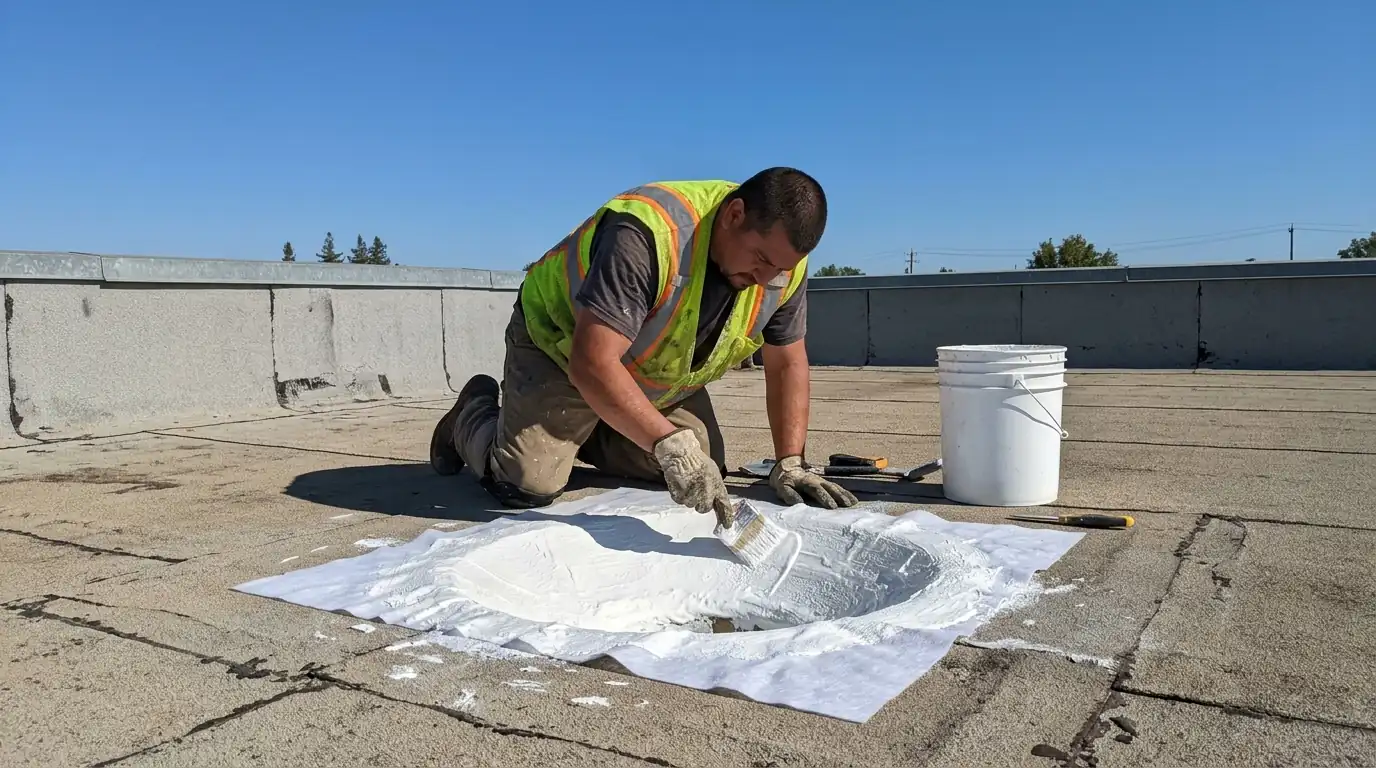
Roof drain and scupper repair clears blocked drains, replaces strainers and clamping rings, reseals drain bowls into the membrane and adjusts or adds overflow scuppers. Typical cost is 265 to 1,980 per drain, and most repairs take half a day to one day per roof, depending on the roof membrane.
What this job involves
Flat and low-slope roofs depend on a small number of drains to move all the water off the building. Internal drains sit in low spots and run down through the building. Scuppers are openings through a parapet wall that let water spill out to a conductor head and downspout. If either one is blocked or poorly sealed, the whole roof is affected.
Most failures are simple. Leaves and trash plug the strainer, the clamping ring loosens, or the membrane around the drain bowl splits. Water then backs up, soaks the insulation and finds a way into the ceiling. Mountainside repairs the drain, seals it into foam, single-ply or modified bitumen, and fixes the low spots that made it fail.
Signs your drains need attention
Water that remains for more than a day near a drain or scupper suggests a blockage, a drain set too high or a depressed deck.
Internal drain lines run inside walls and columns. Stains or dripping near them can mean a leaking drain bowl or pipe joint.
If rain spills over the top of the wall or stains the outside, the scupper is blocked, undersized or placed too high.
Fall leaves from nearby trees collect at drains. A clean strainer is the first sign of a roof that is looked after.
Splits in coating, foam or membrane near the bowl open a direct path into the building. Movement and heat make these seams crack.
Slow flow into the pipe can come from debris inside the line, a partial blockage or a crushed pipe below the roof.
Internal drains, domes and clamping rings
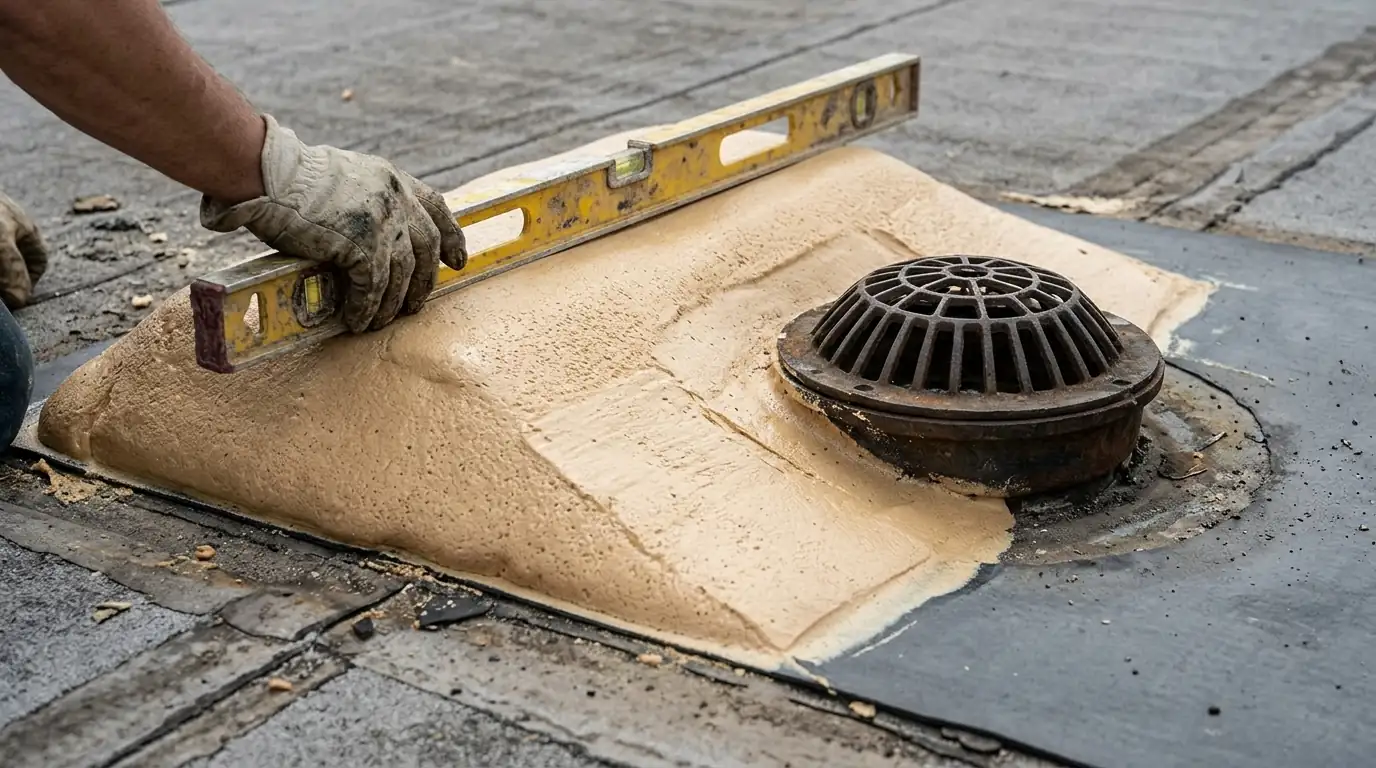
An internal roof drain has a bowl set into the deck, a clamping ring that squeezes the membrane against the bowl and a strainer dome that stops debris. Over time the bolts corrode, the ring loosens and the membrane lifts. We remove the ring, clean the flange, replace damaged parts, set the membrane back with sealant and install a new dome. If the bowl sits above the surrounding roof, water will not enter it. A quick fix is a tapered insulation crickets or a sump built into the deck, which lowers the area around the drain so water flows in. Replacing the strainer with an oversized dome also reduces clogging by leaves.
Scuppers, conductor heads and overflow
Scuppers are cut through parapet walls at the roof level, often with a metal liner and a conductor head that feeds a downspout. Liners rust, seams open and the opening may sit above the roof surface, creating a dam. We reflash the opening, add a sloped liner or drop it to roof level when the wall allows, and seal the joints. Building code can call for a secondary overflow route in case the main drains clog. Requirements depend on the roof and the local building department, so they are hedged here and checked per project. Overflow scuppers are set slightly above the main drain height, and they must be kept clear to work.
Sealing drain bowls into foam, single-ply and mod-bit
The sealing method depends on the roof. On spray foam roofs, we cut the foam back to the bowl, apply a base coat, add reinforcing fabric and finish with silicone or acrylic coating over the flange. On TPO or EPDM, we use a drain boot or prefabricated flashing welded or adhered to the sheet. On modified bitumen, we heat or cold-apply a flashing set into mastic. Compatible products matter. Mixing sealants or coatings that do not bond leaves a seam that peels in a year. We match the repair to the roof system and the manufacturer's detail where one exists.
- Foam: base coat, fabric and silicone coating
- TPO: welded boot or flashing
- EPDM: adhered boot with seam tape
- Mod-bit: reinforced flashing in mastic
Our process for roof drain & scupper repair
Six steps, in the order the crew does them on a Sacramento roof.
- Step 1Survey the roof drainage
We locate every drain, scupper and overflow, check slope, photograph ponding and note which ones are blocked or missing parts.
- Step 2Clear and test the lines
Strainers are cleaned, accessible lines are cleared and flushed with water to confirm they run freely.
- Step 3Remove damaged parts
Loose clamping rings, broken domes and failed flashings are removed, and the bowl flange is cleaned and checked.
- Step 4Fix low spots
Where the drain sits high, we build a sump or tapered area so water runs toward the opening instead of around it.
- Step 5Seal into the membrane
New rings, domes or flashings are set in compatible sealant, then reinforced and coated according to the roof system.
- Step 6Water test and report
We flood-test the area, confirm water drains fully and send you photos of each repaired drain and scupper.
What roof drain & scupper repair costs in Sacramento
Reflashing and sealing one internal drain and installing a new dome on a foam or single-ply roof often costs around 485 to 925.
- Number of drains and scuppers
- Roof membrane type
- Low spot or sump building
- Access and parapet height
Compare this job with others in the Sacramento roofing cost guide.
Sacramento conditions that matter
Sacramento's rain is concentrated from November to March, so drains are tested hardest after a long dry summer when debris has built up. Fall leaves from sycamore, elm and liquid amber trees collect at strainers, and the first storm of the season floods the roof. Many commercial and mid-century buildings have flat roofs with internal drains or parapet scuppers, and Delta breeze evenings carry dust that clogs strainers over the summer. Summer heat also stresses sealants at drain bowls, so annual cleaning before October is a practical habit for property managers.
Questions about roof drain & scupper repair
When should roof drain strainers be cleaned each year?
At least twice a year, in early fall before the rains and again after leaf drop. Buildings under trees may need more. Cleaning takes minutes compared with the cost of ponding damage. A maintenance plan can include scheduled visits and photos so you have a record of each drain's condition.
Why is there water ponding around my roof drain?
The usual causes are a clogged strainer, a drain bowl set higher than the surrounding roof, or a deck that has sagged. A clean drain should empty a roof within about 48 hours after rain. If it does not, the area may need tapered insulation or a sump built around the drain.
Why does my parapet scupper overflow in heavy rain?
A scupper is an opening through a parapet wall that lets water spill off a flat roof. It overflows when debris blocks it, when it sits above the roof surface or when it is too small. Fixes include clearing it, lowering it, enlarging it or adding a second overflow opening.
Can a leaking roof drain be repaired without replacing the roof?
Usually yes. Most drain leaks come from loose clamping rings, cracked sealant or a split in the membrane around the bowl. We remove the ring, reseal the flange and flash it into the existing roof. Replacement is only needed when the surrounding membrane is saturated or failed.
Does a roof need an overflow drain?
Many flat roofs with parapets are expected to have a secondary way for water to leave if the primary drains clog. The exact requirement depends on the building, roof design and local code. We check what is installed and tell you if an overflow scupper is missing or set at the wrong height.
Roof leaking, peeling or baking in the sun?
Call the 24/7 line. Tell us the roof type, where the water shows up or what the coating looks like, and we will tell you what we would check first and when a crew can be there.