Fixing puddles on flat roofs
Ponding water repair in Sacramento, CA
Water sits on your flat roof for days after every winter storm, and each puddle is shortening the life of your roof surface.
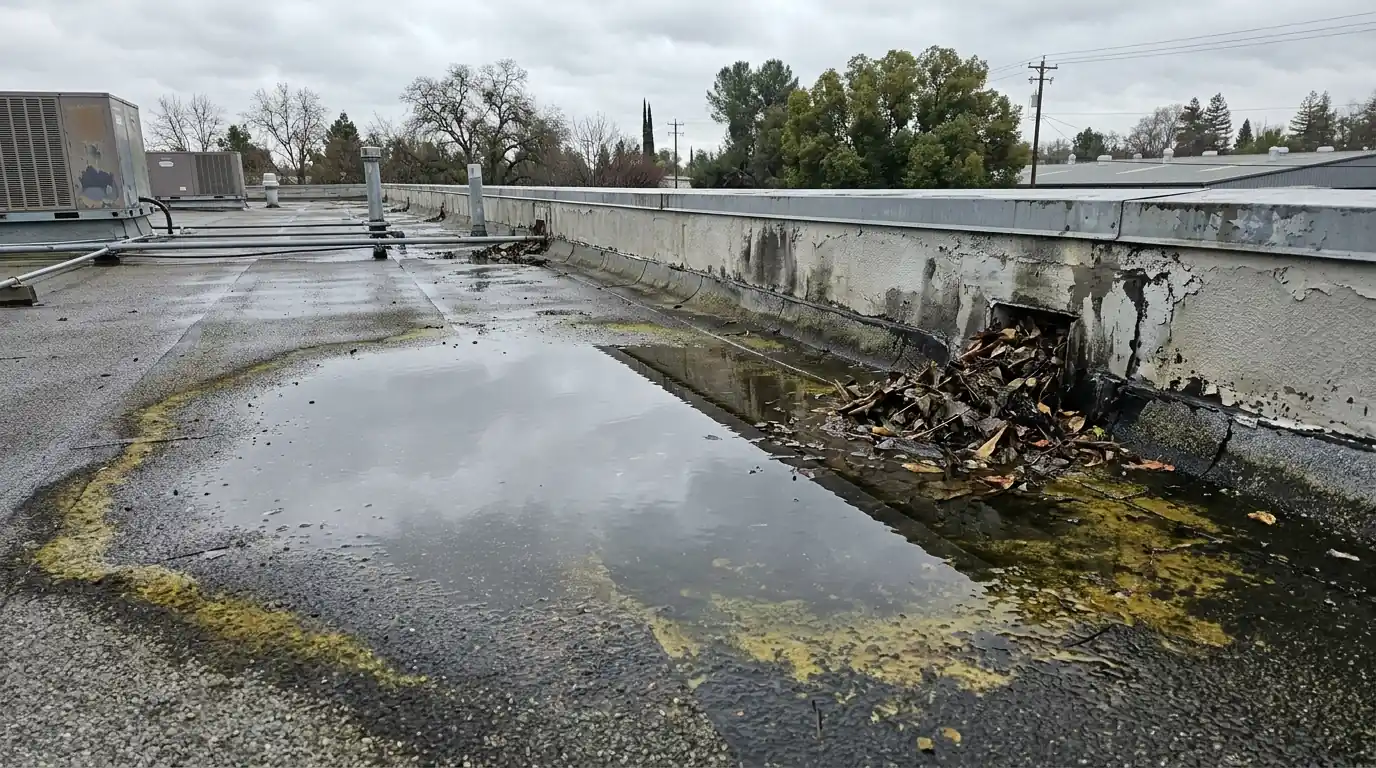
Ponding water repair removes standing water by building slope with tapered spray foam, adding or clearing drains and scuppers, and sealing the area with ponding-resistant silicone. Typical Sacramento cost is 785 to 4,650 per job, depending on size, and most repairs take one to two days.
What this job involves
Ponding is water that remains on a flat roof longer than 48 hours after rain. It happens when the deck sags, drains clog, framing deflects under the roof's weight or the original slope was never enough. A flat roof does not need to be perfectly level. It needs a gentle fall toward drains, often about a quarter inch per foot, and ponds when that fall is lost. Locating the real cause is half the repair.
Standing water speeds up almost every kind of damage. It softens coatings, grows algae that holds more moisture, finds small cracks and adds weight to the roof structure. Water also magnifies sun on the surface below it and can speed aging. The right fix depends on why the water is there, which is why we map the puddles before choosing a repair. That is a slow, expensive way for a roof to fail.
Signs of a ponding problem
Water that has not drained in 48 hours is ponding by roofing standards. Check low spots, around drains and along sagging deck lines.
Green or dark stains with a clear outline show where water used to sit. Even when dry, those marks map the ponding areas.
Acrylic and some other coatings blister and peel under standing water, so failure patterns often track the puddles. Acrylic and some other coatings blister and peel under standing water, so failure patterns often follow the puddles.
A drain sitting above the roof surface, or choked with leaves, holds water around it. Drain and scupper problems are the cheapest fix.
A deck that dips between supports holds water in a pattern that follows the framing. Sag may need structural attention as well.
Stains on the ceiling directly below a puddle show water is finding a way in, usually through a worn seam or crack.
Why water stays: slope, drains and deflection
There are three usual causes. The first is original design, where the roof was built nearly flat or with drains mounted too high. The second is deck deflection, where sheathing or joists sag over time. The third is drainage failure, where debris blocks scuppers and downspouts or the drain lines are crushed or disconnected. We map the roof after rain, or flood test it with a hose, marking where water holds and how deep. We use a level or laser to see slope, and check the framing from below where we can. This tells us if the fix is a simple drain job, a tapered foam build up, or a structural repair before roofing.
Tapered foam and silicone for lasting repair
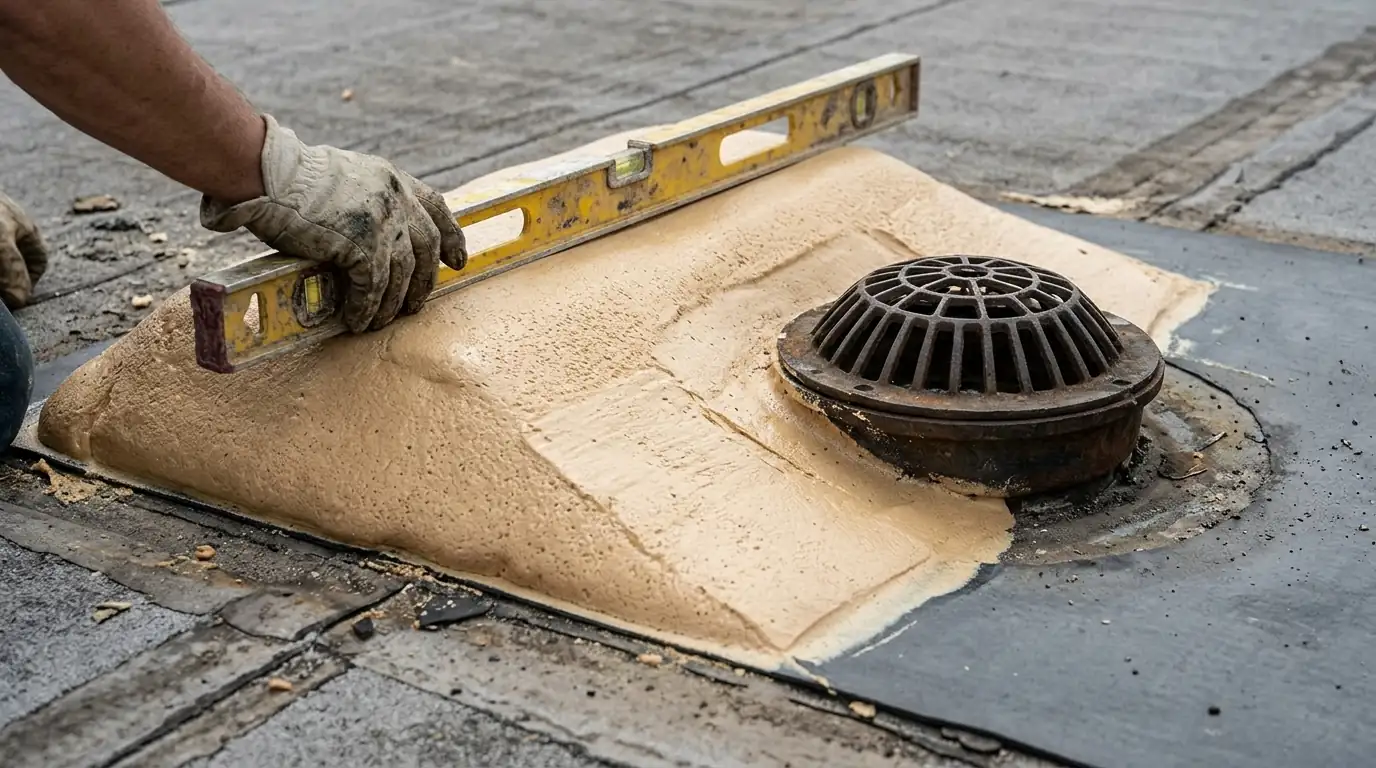
Spray foam is a good way to build slope on an existing roof, since it can be sprayed thicker in low areas and thinner at high spots. Foam is applied in lifts to fill the dip and create a gentle fall to the drain, then smoothed to a clean surface. It adds insulation and bonds to many existing roofs, though a moisture check comes first. The foam is then coated, and for ponding areas silicone is the usual choice because it handles continuous water exposure without softening. We apply the coating to a specified dry mil thickness and add extra build at transitions where the new foam meets old roof. Where slope cannot be fixed fully, silicone gives the roof a surface that tolerates remaining puddles.
- Flood test or post-rain mapping
- Level or laser slope check
- Tapered foam to build fall
- Added or raised drains and scuppers
- Silicone coating in ponding zones
What not to do about ponding
Do not patch a ponding area with roof cement or add another thin coating over it. The water will keep working, and the patch will soften and wash out. Do not drill drain holes or scuppers without checking roof framing, since cutting the wrong spot can weaken parapets or leak into walls. Do not ignore sag, either. If the deck is flexing or the structure is rotted, foam and coating hide the problem but do not fix it. We look at the framing, and if needed we recommend carpentry first. The most durable repairs deal with slope and drainage together, and then protect the finished surface.
Our process for ponding water repair
Six steps, in the order the crew does them on a Sacramento roof.
- Step 1Map the puddles
After rain, or with a hose flood test, we mark where water holds, measure depth and note slope direction and drain position.
- Step 2Check drains and deck
We clear and test drains and scuppers, check for sag or rot from above and below, and decide how to restore flow.
- Step 3Clean and test surface
The roof is washed, moisture is checked and an adhesion test confirms foam and coating will bond to the existing roof.
- Step 4Build slope with foam
Tapered foam is sprayed in lifts to fill low areas and create fall to the drains, then checked against a level.
- Step 5Coat with silicone
The foam and surrounding roof are coated in silicone to the target dry mil thickness, with extra build at edges and drains.
- Step 6Test and clear drains
We water test where practical, check that flow reaches the drains and leave a short note on keeping them clear.
What ponding water repair costs in Sacramento
A 500 sq ft ponding area on a flat commercial roof, built up with tapered foam and coated in silicone, typically costs near 2,300 to 3,400.
- Size and depth of the low area
- Added drains or scuppers
- Foam thickness for slope
- Coating and roof access
Planning a recoat? The coating calculator turns roof area, coating type and target thickness into gallons and pails.
Sacramento conditions that matter
Sacramento's rain comes in big winter storms from November through March, and flat roofs have to handle an inch or two in a day. Add tule fog and heavy dew, and some roofs stay wet for days. Mid-century flat-roof homes in East Sacramento, Land Park and Carmichael often have shallow slope to begin with, and decades of leaf fall from valley oaks and sycamores clog scuppers. Summer sun then bakes the algae and mineral residue left behind. Fall is the time to clear drains and fix ponding, before the first big storm. Check any parapet and scupper work against building code and permit rules.
Often paired with this service
Flat Roof Repair
Seams, ponding, blisters, punctures
View serviceSpray Foam Roofing
Sprayed-in-place SPF roof systems
View serviceGutter Installation & Repair
Move water away from the house
View serviceFlat Roof Coating
Restoring flat roofs without tear-off
View serviceRead before you decide
Questions about ponding water repair
How long is too long for water to sit on a roof?
Most roofing guidance treats water still standing 48 hours after rain as ponding. A little dampness the next morning is normal. Deep puddles that last days, grow algae or show a dirt ring when dry are a sign the slope or drainage needs correcting. Measure after the second dry day.
Can ponding cause my roof to collapse?
Severe cases can. Water weighs about 5.2 pounds per square foot per inch, so a few inches over a large area adds real load to a roof that may already be sagging. Deep ponding on a sagging deck should be checked by a roofer and, if needed, a structural professional.
Will adding a drain solve the problem?
Sometimes. A new drain or scupper at the low point can clear most of the water, but it needs a drain line, a discharge path and enough roof fall toward it. Cutting new drains also affects walls and framing, so we check the layout before any cutting.
Why use foam instead of just coating over the puddle?
Coating over a puddle gives you a coated puddle, which still holds water and still ages faster. Foam removes the low spot itself. Even where full drainage is not possible, foam can reduce the depth and area, and silicone then protects what remains. It is a fix, not a cover-up.
Is ponding covered by a typical roof warranty?
Many roofing warranties exclude damage from ponding water, since it is treated as a drainage or design issue. Terms vary by product and manufacturer. Fixing the slope and using a ponding-rated coating helps keep the roof within warranty limits, but check your own document. Read the exclusions closely.
Roof leaking, peeling or baking in the sun?
Call the 24/7 line. Tell us the roof type, where the water shows up or what the coating looks like, and we will tell you what we would check first and when a crew can be there.