Shade that does not leak
Patio cover and carport roofing in Sacramento, CA
A low-slope patio cover that drips onto the furniture usually leaks where it meets the house, at the ledger, and surface sealant alone will not hold there.
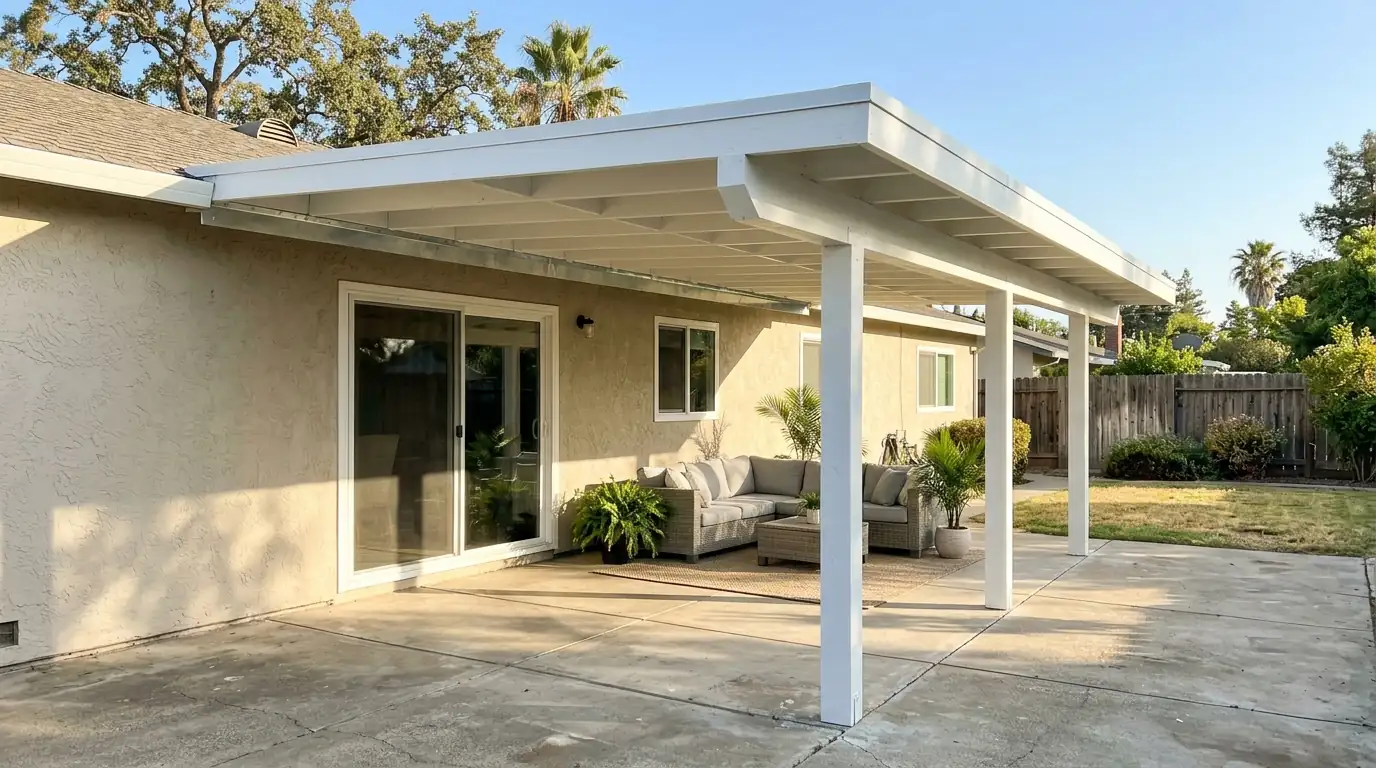
Patio cover and carport roofing means repairing, coating or replacing the roof surface over an attached or freestanding structure. Typical fixes include ledger flashing, seam repair and coating, at 385 to 3,150 per job. Full re-covers cost 4.60 to 11.20 per sq ft, and most patio covers take one to two days.
What this job involves
Patio covers and carports look simple, but they are often built with the lowest slope on the property. Some are aluminum panels, some are wood-framed with roll roofing, some are old corrugated fiberglass. Many have a pitch of less than one inch per foot, which is flat enough that water is slow to leave and any weak seam leaks.
The most common failure is at the ledger, where the cover attaches to the house wall. If flashing is missing or caulked badly, water runs behind the trim, into the wall and onto the cover below. We inspect the ledger, the attachment points, the seams and the surface, and then repair or recover the roof with a system suited to its slope. Coatings and foam can be a good fit for low-slope covers.
Signs your patio cover is leaking
Water that appears where the cover meets the house usually means failed ledger flashing, or flashing that was never installed above the attachment.
Shallow puddles that remain after rain show a low spot or sag, and they speed up wear on the surface and seams.
Corroded fasteners on metal or fiberglass panels leak around each hole, and gaskets harden and crack in sun.
Roll roofing, old coatings and fiberglass panels chalk and crack after years of sun, and then let water through.
Wall paint blistering above a patio cover often means water is entering behind the ledger and running into the siding.
Soft wood at the beam ends or post tops points to long-term leaking that needs carpentry as well as a roof repair.
The ledger: where most patio covers leak
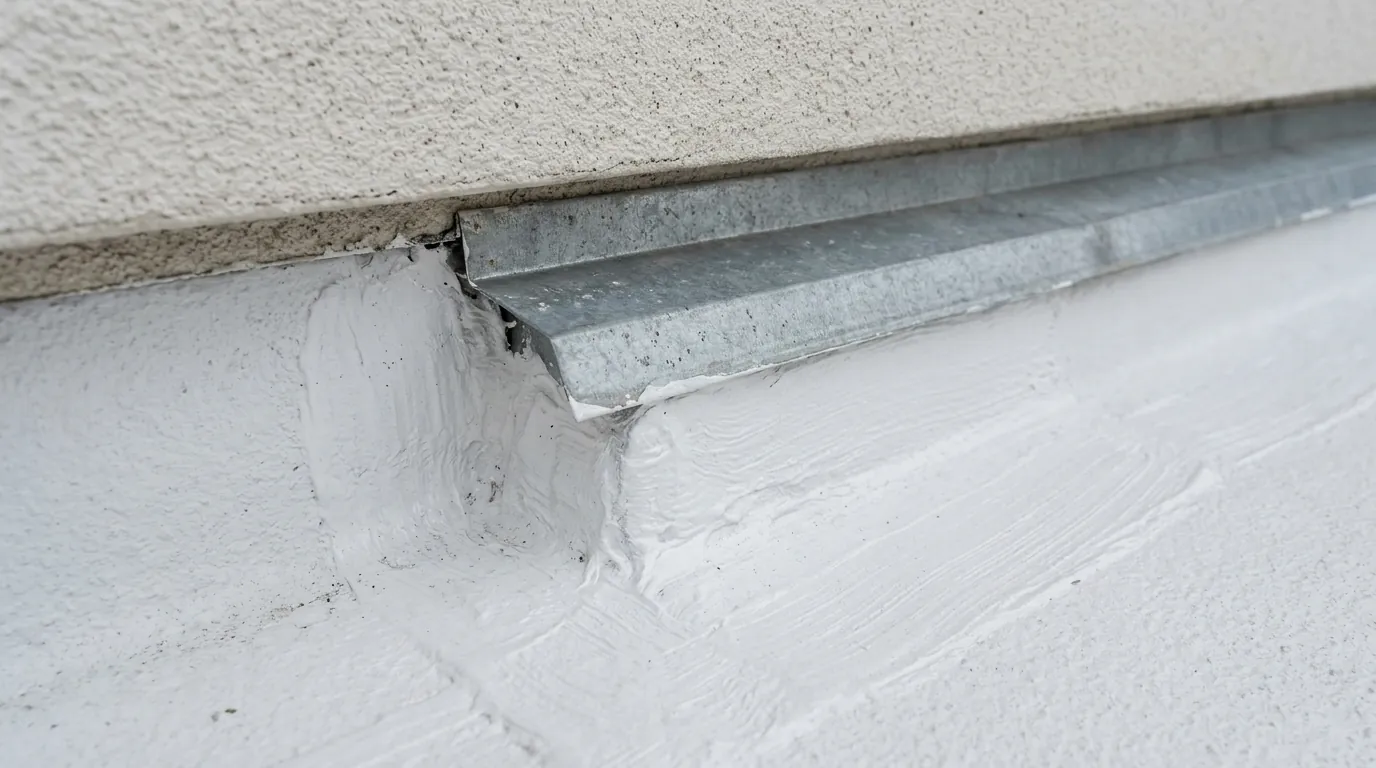
A ledger is the board bolted to the house that supports the cover's rafters. Water running down the wall hits the top of the cover and, without proper flashing, goes behind the ledger. Correct flashing lays a metal or membrane flashing over the ledger top, under the siding or stucco, and up the wall, so water sheds out onto the roof.
Repairing it often means cutting back stucco or siding, installing flashing in the right order and sealing the wall transition. Caulk only on the surface fails because the wall moves differently than the cover.
- Metal or membrane ledger flashing
- Weep path for water
- Stucco or siding cutback
- Sealed top and side terminations
- Check bolts and ledger wood
Surface options for low slopes
On slopes under about one inch per foot, shingles and many metal panels are risky. Better options include an acrylic or silicone coating over a prepared surface, a spray foam layer with coating, a modified bitumen or a single-ply membrane such as EPDM. Each has trade-offs in price, reflectivity, weight and how it handles foot traffic.
Corrugated panels may be re-sealed with new screws, washers and butyl tape, then coated. If the panels are brittle or sagging, replacement is better.
Carports, shade and framing concerns
Carports often use metal panels over steel or wood frames, and they shed water to one side. Check that the fascia, gutters or drip edge send water away from the house and driveway. Poor drainage can pool next to the foundation.
Framing matters. If posts are leaning or beams are rotted, the roof will keep opening up, and a new surface will not last. We flag structural concerns and recommend a carpenter or contractor where needed, since we handle roofing, not structural framing.
Our process for patio cover & carport roofing
Six steps, in the order the crew does them on a Sacramento roof.
- Step 1Inspect ledger and surface
We look at the wall connection, flashing, fasteners, seams, pitch and framing, and mark ponding or sagging areas.
- Step 2Find the leak path
We check where water enters, using a hose test if needed, to confirm whether it is the ledger, fasteners or the roof surface.
- Step 3Prepare the surface
We clean the roof, remove loose material, replace rusted screws and corroded flashing, and fill low spots where possible.
- Step 4Rebuild the ledger flashing
Siding or stucco is cut back as needed, new flashing is installed in the correct order and the wall transition is sealed.
- Step 5Coat or recover the roof
We apply the chosen coating, foam or membrane, with seams and fastener heads reinforced and the edges detailed to shed water.
- Step 6Test and review
We hose the finished roof, check the wall and the underside for dryness and explain care steps and expected service life.
What patio cover & carport roofing costs in Sacramento
Re-flashing a ledger and coating a 14 by 20 foot low-slope patio cover typically costs around 1,240 to 2,060.
- Size and pitch of the cover
- Ledger rebuild extent
- Coating or membrane chosen
- Rotted framing repair
Compare this job with others in the Sacramento roofing cost guide.
Sacramento conditions that matter
Sacramento's strong summer sun bakes patio covers, and surface temperatures can reach well over 150 F, which cracks old roll roofing and fiberglass panels. Winter rain then finds every gap, especially at ledgers. Many mid-century and 1980s homes have attached covers built with low slopes and little flashing, and mobile home parks often have carports and awnings with aluminum panels that need resealing. A reflective coating can make the space beneath noticeably cooler, and cover repairs may need a permit if the structure is altered.
Often paired with this service
Questions about patio cover & carport roofing
Why does my patio cover leak only where it meets the house?
That joint is the ledger, and it is often flashed poorly or not at all. Rain running down the wall enters behind the ledger board and drips from the connection. Fixing it means proper flashing under the wall covering, not just caulk along the top.
What roofing works on a patio cover with almost no slope?
Low slopes need water-tight continuous systems, such as silicone or acrylic coating over a prepared surface, spray foam with a coating, modified bitumen or single-ply EPDM. Standard shingles are not suited to very low slopes, and many metal panels leak at laps without sealing.
Can corrugated fiberglass or metal panels be resealed?
Often yes. We replace rusted screws with gasketed fasteners, add butyl tape at laps, clean the panels and then coat them for sun and water protection. Brittle, sagging or cracked panels are better replaced, because a coating will not restore their strength.
Do carports need gutters?
Often they should have some way to control runoff. A carport without a gutter or drip edge can pour water onto walkways, the driveway or next to the foundation. We check the slope and fascia and recommend a gutter or edge detail that sends water away from the house.
Will a coating make my patio cooler?
A white reflective coating reduces the roof surface temperature, so the space beneath is usually noticeably cooler, especially for thin metal or fiberglass covers. It will not act like insulation, but it helps. Results depend on the existing surface, shade and airflow.
Roof leaking, peeling or baking in the sun?
Call the 24/7 line. Tell us the roof type, where the water shows up or what the coating looks like, and we will tell you what we would check first and when a crew can be there.