Tar and gravel roof repair
Built-up roof repair in Sacramento, CA
A tar and gravel roof can last decades, but blisters, splits and bare spots let water into the layers and the insulation below.
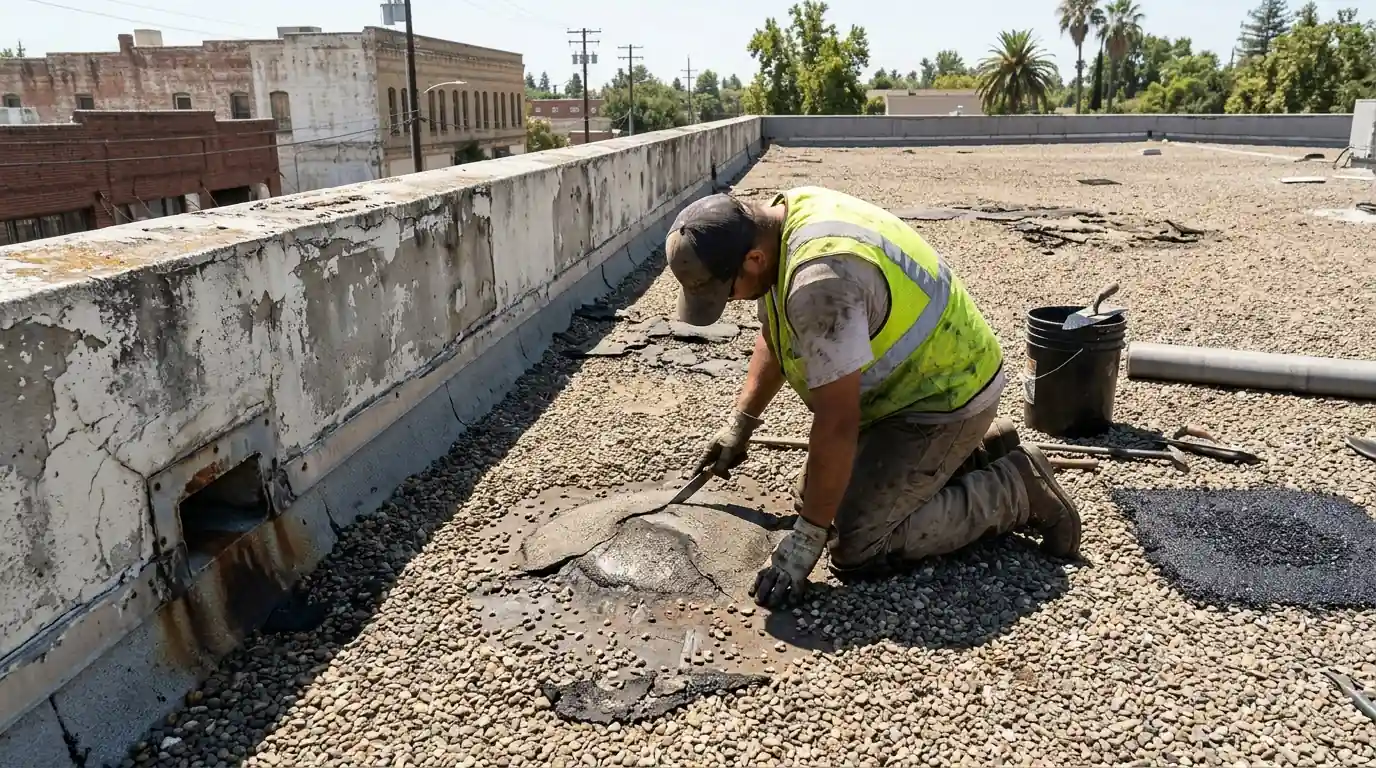
Built-up roof (BUR) repair fixes blisters, splits, exposed felts and failed flashing on tar and gravel roofs. In Sacramento, typical repairs run 540 to 3,620 per job and take half a day to two days. If the roof is near the end of its life, we will say so and explain the options.
What this job involves
A built-up roof is made of alternating layers of hot or cold asphalt and reinforcing felts, topped with gravel or a cap sheet. Many mid-century homes and older commercial buildings in Sacramento still have BUR roofs, some from the 1960s and 1970s with later recoats. The gravel shields the asphalt from the sun, and the layers provide redundancy, so a BUR can last a long time when maintained. Age is the main enemy.
Over time, the asphalt dries out, felts get exposed, blisters form and flashing at walls cracks. Repair means finding those weak points, cutting out blisters, replacing damaged plies and reflashing details. We repair BUR with compatible materials, and if the roof is worn, we can compare recoating, foam or replacement so you do not keep repairing a roof past its useful life. We lay out each path with prices. Prices come first.
Signs your built-up roof needs work
Raised bubbles come from trapped moisture or air between plies. Small ones can be left, but cracked or large ones allow water in.
Where gravel has washed or blown off, asphalt is exposed to sun and breaks down fast, often turning brittle and cracked.
Long cracks or raised ridges show membrane movement, often along old lap lines, and can open to the felts below.
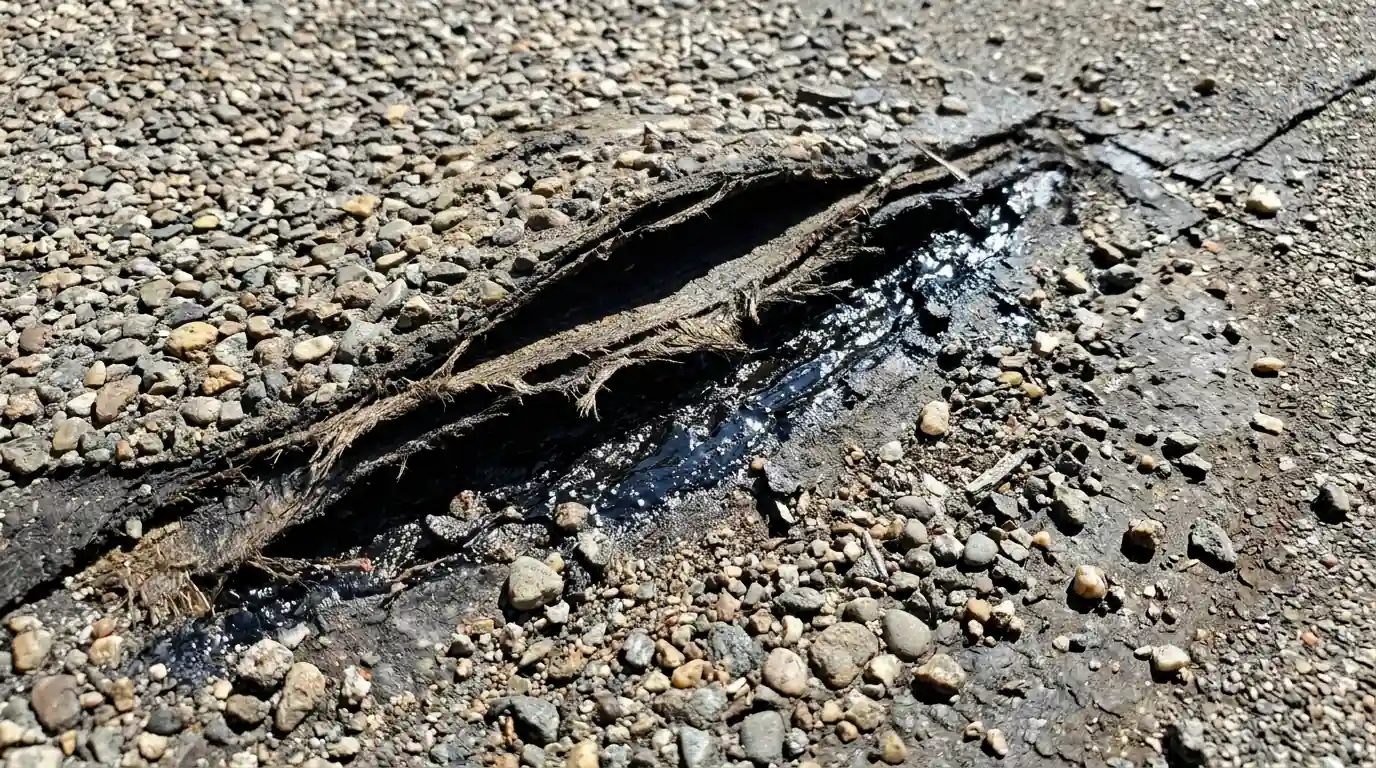
Visible fibrous felts through worn asphalt mean the waterproofing layer is gone and the roof is unprotected. Early fabric reinforcement slows further wear.
Base flashing at parapets and walls dries and cracks, and is one of the top leak sources on older BUR roofs.
Ponding on BUR speeds up wear and may point to a sagging deck or clogged drains. Check drains after every big storm.
Blisters, gravel and how BUR ages
Blisters form when moisture or air trapped between layers expands in summer heat. A small, intact blister is often left alone, but one that is cracked, in a traffic path or over a seam should be cut out and patched. Gravel matters because it protects the asphalt from UV and heat. When it moves, the asphalt below ages quickly. We sweep and re-spread gravel after repairs, sometimes adding a flood coat of asphalt to bond new gravel to bare areas.
- Intact small blisters: monitor
- Cracked or large blisters: cut out, dry and patch with new plies
- Bare spots: clean, flood coat and re-embed gravel
- Exposed felts: reinforce with fabric and coat before they fail
How a BUR repair is done
We cut out the blister or split in an X pattern, dry the area, and inspect the plies below. New felt layers are laid in compatible asphalt, usually cold-applied for small repairs or hot-mopped for larger ones, then covered with a cap and gravel or coating. Flashings are cleaned, reinforced with fabric and sealed with mastic or replaced with new membrane. We avoid tar patches without reinforcement, which crack again quickly. For larger sections, hot asphalt gives the strongest bond, and we keep a kettle crew for those jobs. Each new ply laps over the old one in the direction of drainage so water cannot get under an edge, and we embed a fabric layer between coats for strength at flashings.
Repair, recoat or replace
If the roof has scattered defects but solid layers, repair is the lowest cost. If the surface is worn evenly, a reflective coating can extend life and cut heat, often for less than replacement. Foam over a dry, sound BUR is another option we offer. If insulation is wet across large areas or the deck is damaged, replacement with mod-bit, TPO or a new BUR may be the better choice. We give you a straight recommendation based on what the roof actually shows.
Our process for built-up roof repair
Six steps, in the order the crew does them on a Sacramento roof.
- Step 1Walk and mark the roof
We inspect blisters, splits, flashing and drains, and mark each defect with paint for tracking. We also photograph each marked defect.
- Step 2Check moisture
We test suspect areas for wet insulation, since patching over moisture only traps it and leads to new blisters. Meter readings are noted on a roof diagram.
- Step 3Cut out failed areas
Blisters, splits and damaged plies are cut out, and the area is cleaned and dried before new material goes in.
- Step 4Lay new plies
Reinforcing felts or fabric are set in compatible asphalt, overlapping the old roof so water sheds correctly. Laps point downhill so water cannot get under.
- Step 5Reflash and seal
Wall flashing, curbs, drains and pipe penetrations are cleaned, reinforced with fabric and sealed with proper mastic or membrane. We add a fabric layer for extra strength.
- Step 6Re-spread gravel
Gravel is swept back and embedded in a flood coat where bare, and drains are cleared before we finish. We also sweep debris out of scuppers.
What built-up roof repair costs in Sacramento
Repairing four blisters, a split near a wall and a section of cracked flashing on a small commercial BUR roof typically runs about 1,180 to 2,140.
- Number and size of defects
- Wet insulation found
- Roof access and height
- Flashing and drain work
Compare this job with others in the Sacramento roofing cost guide.
Sacramento conditions that matter
Many older Sacramento buildings still have BUR roofs, including 1960s and 1970s apartment complexes, small offices and flat-roof homes in neighborhoods like Land Park, Curtis Park and Carmichael. Summer heat cycles drive blister growth and dry out asphalt, while winter rain finds splits and open flashing. Valley oak and sycamore leaves clog drains, so ponding is common. Gravel roofs can also be hard to inspect, since debris hides defects. Reflective coatings are popular here because they cut heat and extend BUR life when the roof is otherwise sound. Debris also hides small defects.
Often paired with this service
Questions about built-up roof repair
Do I need to repair every blister on my BUR roof?
No. Small, intact blisters that are not in traffic areas or over seams can often be monitored. Cracked blisters, large ones and those near walls should be repaired. We mark and rank them so you can fix the risky ones and track the rest. We mark each one for your records.
Why is gravel on a tar roof important?
Gravel shields asphalt from UV, heat and hail, and helps resist fire. When gravel washes off, bare asphalt cracks and wears fast. We sweep, re-spread and bond gravel in a flood coat so the surface stays protected. We sweep and replace gravel where it matters most, and recommend a flood coat for bare areas so that new stone stays fused after the next storm and the roof stays protected from sun.
Can you put a coating over my old BUR roof?
Yes, if the roof is dry and mostly sound. After repairs, a reflective acrylic or silicone coating can cut heat and add years of protection. We check for wet insulation first, since coating over moisture traps it and causes blisters. A coating can also add reflectivity.
Is it better to replace than keep repairing a BUR?
If leaks recur across the roof, insulation is wet in many areas or felts are exposed widely, replacement may cost less over time. If defects are scattered and layers are sound, repair or coating can be cost-effective. We give a straight recommendation after inspection. We explain what you can expect from either choice.
What is the difference between hot-mopped and cold-applied BUR repairs?
Hot-mopped uses heated asphalt to bond felts, and is standard for larger work. Cold-applied uses adhesive from a bucket, which is easier for small patches and tight spots. Both work when materials are compatible and the area is dry and clean. Compatibility with existing asphalt matters most.
Roof leaking, peeling or baking in the sun?
Call the 24/7 line. Tell us the roof type, where the water shows up or what the coating looks like, and we will tell you what we would check first and when a crew can be there.