Broken, slipped or leaking tile
Tile roof repair in Sacramento, CA
A cracked or slipped tile is rarely the real leak, because the underlayment beneath it is what actually keeps water out of your house.
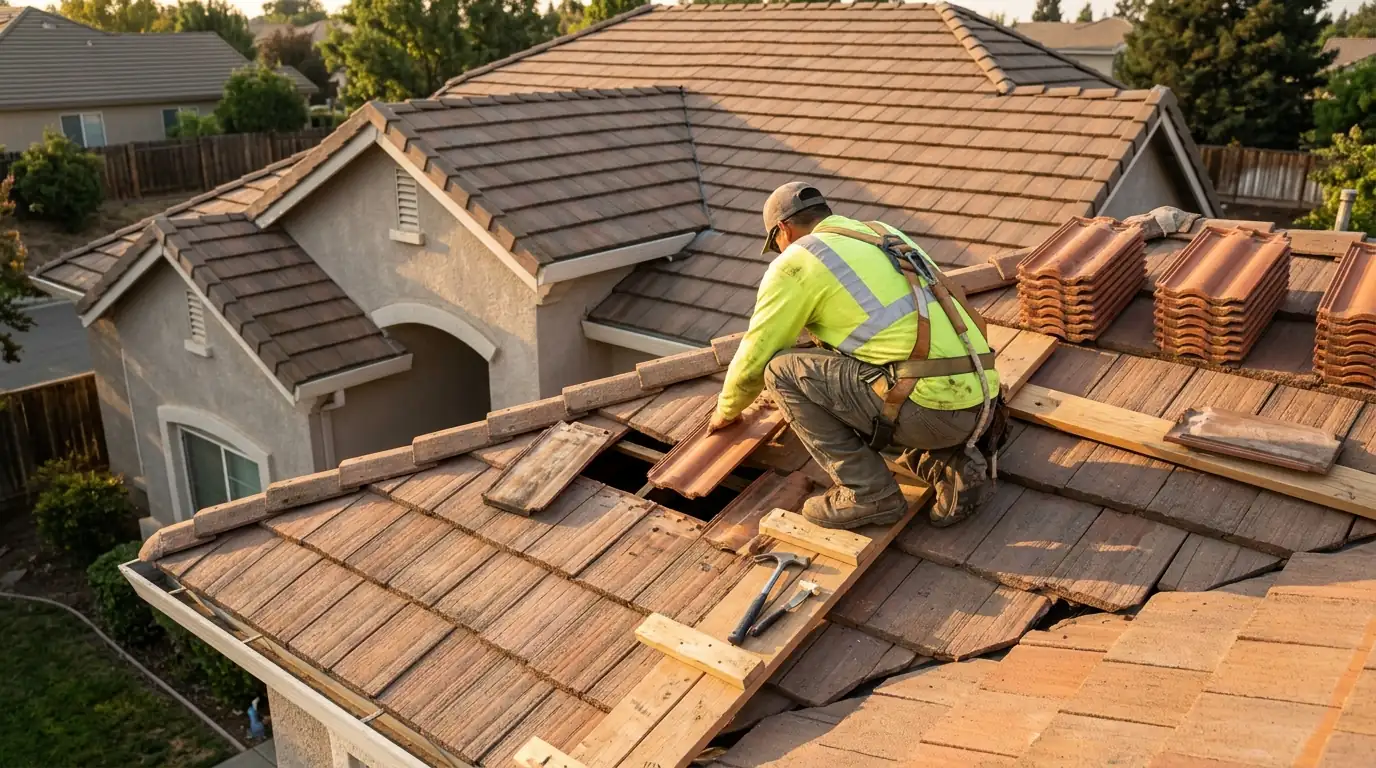
Tile roof repair replaces cracked or slipped concrete and clay tiles and fixes flashing and underlayment problems underneath. Typical Sacramento repairs run 640 to 3,720 per job and take half a day to two days. Matching old tile, and the condition of the underlayment, drive most of the price.
What this job involves
Concrete and clay tile roofs are durable, but they are not waterproof by themselves. The tiles shed most water, and the underlayment below catches the rest. When tiles crack, slip or get walked on, water reaches the underlayment, and on a roof that is 20 or more years old, that underlayment is often brittle. A tile repair therefore has two jobs: replace what is broken and check what is underneath.
We repair concrete tile, clay barrel and flat tile roofs. We lift tiles around the damage, inspect the underlayment and battens, replace bad sections, and reset tiles with proper fasteners and sealants. If the underlayment is failing across the roof, we will explain when a full lift and relay makes more sense than repeated spot repairs. You get the numbers for both options so the decision is simple, and we show you the underlayment we find so you can judge its condition yourself.
Signs your tile roof needs repair
Broken tiles leave gaps. You may see pieces in gutters or on the ground after wind, or after someone has walked on the roof.
Tiles that have slid out of line show failed fasteners or battens, and expose the underlayment and deck to rain.
If tiles look fine but the ceiling leaks, the underlayment or flashing is probably failing, especially at valleys and walls.
Old ridge and hip caps bedded in mortar crack and fall out. Mechanically fastened caps with sealant last longer. Mechanical caps with sealant last longer.
White chalky deposits or green moss indicate moisture is sitting on the tile. Both can mean absorption and early wear.
Metal flashing at walls, chimneys and valleys rusts out over time, and tile roofs depend on it for water control at every transition.
How tile roofs actually fail
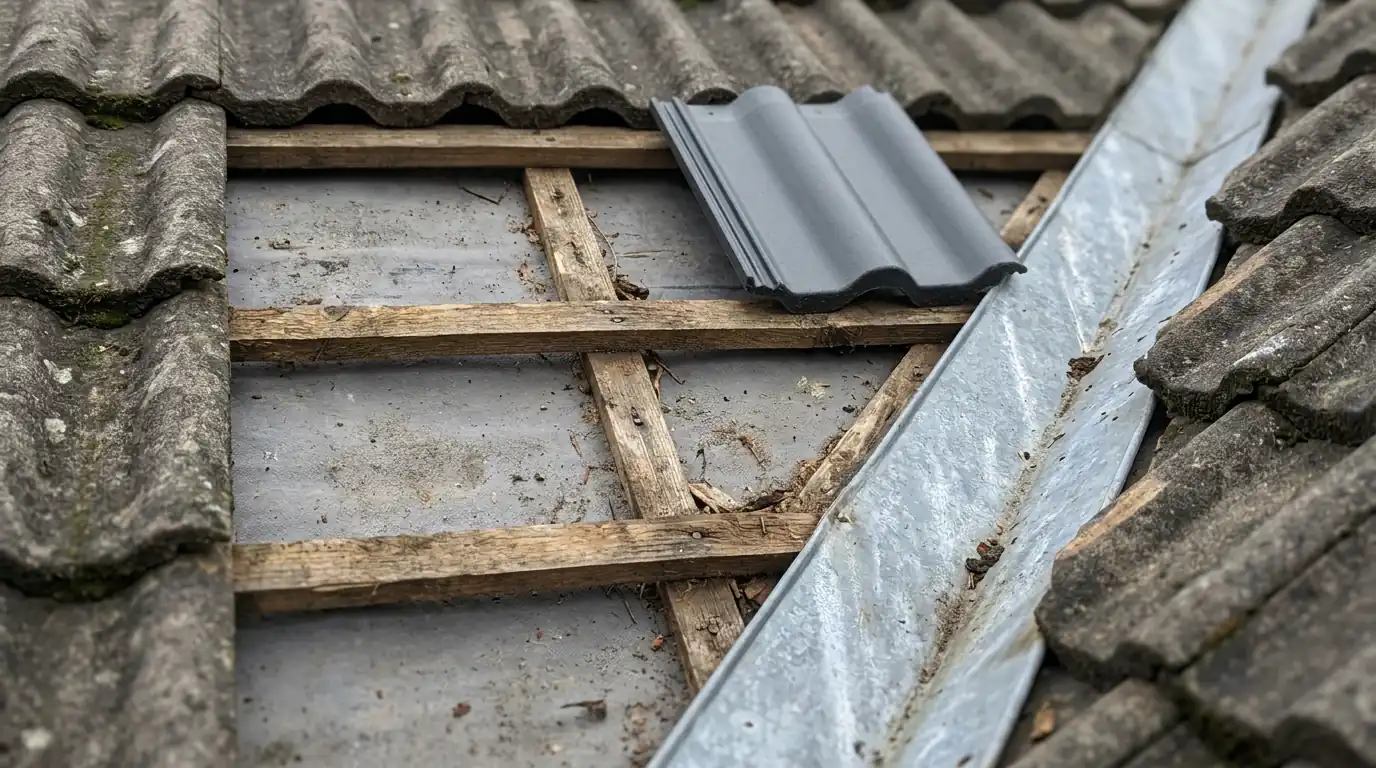
The tile is the visible layer, but the underlayment is what fails first. Many tract-home roofs from the 1990s and 2000s used felt underlayment that dries out under the tile in valley heat. Fasteners also work loose, and mortar-set ridge caps crack. Foot traffic is a common cause of breakage, since concrete and clay tiles crack under a heel. Repair means more than swapping a tile. We check the batten system, which on many concrete tile roofs is a grid of wood strips that tiles hook over, and look for rot, loose nails and rusted fasteners.
What a proper tile repair includes
We remove surrounding tiles carefully, stack them for reuse, and inspect underlayment and deck. Bad underlayment is patched or replaced in the affected area, flashing is replaced if rusted, and tiles are reinstalled with the right fasteners. Replacement tiles are matched for profile and color as closely as possible. Before lifting anything, we plan access with roof ladders and walk boards, stage tiles on the roof so they are not stacked in one spot, and check the batten spacing. Tiles are reset on the same layout and fastened per the manufacturer's pattern, with extra fasteners on steeper slopes and near the roof edge where wind lifts them first.
- Tiles lifted without cracking neighbors, then reset with fasteners
- Underlayment patched or replaced under the damaged area
- New flashing at valleys, walls and penetrations where needed
- Ridge and hip caps re-secured with mechanical fasteners and sealant
Repair or lift and relay
If underlayment is failing in many areas, repeated repairs add up. A full lift and relay removes tiles, installs new underlayment and reinstalls the same tiles, often with replacements for broken ones. It costs more than a repair but less than full replacement with new tile, and it resets the roof's real service life. We will tell you which path fits after checking underlayment in several spots. We tell you in plain terms which road makes sense. Cost and disruption both factor in.
Our process for tile roof repair
Six steps, in the order the crew does them on a Sacramento roof.
- Step 1Inspect tiles and attic
We check the roof surface for broken or slipped tiles and look in the attic for water stains, wet wood and failed underlayment.
- Step 2Plan access carefully
We use roof ladders and walk boards to avoid cracking tiles, and mark the repair area before lifting anything. Roof ladders and boards spread the weight.
- Step 3Lift and stack tiles
Tiles around the damage come off and are stacked for reuse, exposing underlayment, battens and flashing. Each course is numbered so it goes back in place.
- Step 4Repair the layers below
Damaged underlayment, battens and flashing are repaired or replaced, and the deck is checked for rot. Rotted batten sections are cut out and replaced.
- Step 5Reset and replace tiles
Tiles are reinstalled with the proper fasteners, and broken ones are replaced with the closest match available. Cracked tiles are never reused.
- Step 6Seal and inspect
Ridge caps and edges are secured, penetrations are sealed, and we review the roof so you know what condition the rest is in.
What tile roof repair costs in Sacramento
Replacing about a dozen broken concrete tiles and patching underlayment near a valley typically runs 960 to 1,840.
- Tile type and availability
- Underlayment condition
- Roof pitch and access
- Flashing and ridge repair needed
Compare this job with others in the Sacramento roofing cost guide.
Sacramento conditions that matter
Concrete tile is common on 1990s and 2000s tract homes in Natomas, Elk Grove, Roseville and Folsom, and clay tile appears on older Mediterranean and Spanish-style homes in Midtown and East Sacramento. Valley heat dries out felt underlayment under the tile, so leaks often show up long before the tiles look worn. Winter rain then finds the weak spots. Rooftop foot traffic, from solar installers, HVAC techs and holiday light hangers, is a common cause of cracked tile. Rooftop solar arrays often need removal and reinstall for tile work. Solar arrays also need coordination.
Often paired with this service
Tile Roof Underlayment Replacement
Lift tile, replace failing underlayment
View serviceRoof Flashing Repair
Fix the metal where roofs leak
View serviceRoof Leak Detection
Find the leak, not the stain
View serviceSolar Panel Removal & Reinstall
Roof work around your solar array
View serviceRead before you decide
Questions about tile roof repair
Why does my tile roof leak when the tiles look fine?
Tiles shed most water, but the underlayment below does the real waterproofing. When felt gets old and brittle, it cracks at nail holes, valleys and laps, and water gets through. Flashing at walls and chimneys can also fail. A repair means lifting tiles to check what is underneath.
Can you match my existing tile color and profile?
We try. Concrete tile profiles are common, but colors fade with sun and some lines are discontinued. We often pull spare tiles from hidden spots, like behind a chimney, to use in visible areas, and place the closest new matches where they are least noticeable.
Is it safe to walk on a tile roof?
Not without care. Tiles crack under concentrated weight, and the damage may not be visible. Walk only on the lower third of the tile, near the nailed edge, and use walk boards. Roofers use roof ladders and step on the headlap to avoid breakage. Walk boards also spread the weight.
How do you repair mortar ridge caps?
We remove failing mortar and caps, then reinstall them with mechanical fasteners and a flexible sealant or ridge vent system. Mortar cracks as the roof moves with heat cycling, and loose caps can fall. Mechanical attachment tends to last longer and allows ventilation. Mechanical attachment also allows airflow.
When is lift and relay better than repair?
When underlayment is brittle across the roof, or leaks keep returning in new places, a lift and relay replaces the underlayment and reuses the tiles. It costs more than spot repair but avoids repeated callouts. We check underlayment in several areas before recommending it. We show you the underlayment we find.
Roof leaking, peeling or baking in the sun?
Call the 24/7 line. Tell us the roof type, where the water shows up or what the coating looks like, and we will tell you what we would check first and when a crew can be there.