Lift tile, replace failing underlayment
Tile roof underlayment replacement in Sacramento, CA
Your tiles may last fifty years, but the felt under them often gives out in twenty, and when it does, the whole roof starts to leak.
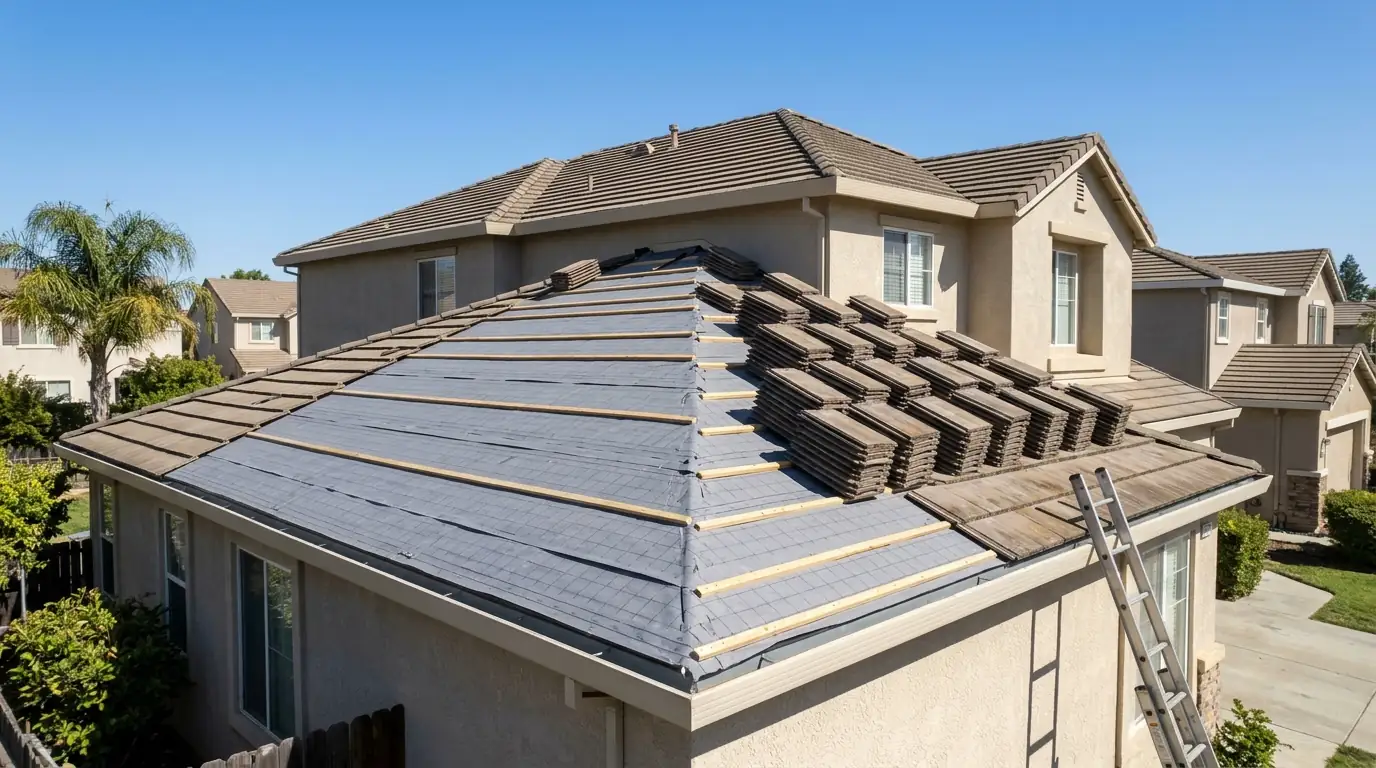
Tile roof underlayment replacement lifts the tiles, removes the old felt, installs new underlayment and flashing, then relays the same tiles. In Sacramento, typical cost runs 8.60 to 16.90 per sq ft, with most homes taking three to seven days. It is usually cheaper than replacing the tile itself.
What this job involves
On a tile roof, the underlayment is the real waterproof layer. Concrete and clay tile shed most water, but wind-driven rain and time get past them, and the underlayment below catches it and directs it to the eaves. Many roofs built in the 1990s and 2000s used 30-pound felt or a basic cap sheet that was never meant to last as long as the tile. In valley heat, felt gets brittle, tears at nails and eventually stops working.
The fix is to lift the tiles, strip the old felt, inspect the deck, install a new underlayment system, and relay the tiles. Done right, the same tiles go back on a roof that is effectively new underneath. We also replace flashing during the job, since valleys and walls are where most leaks start, and we can discuss a foam or coating option for adjoining flat sections. Ask us about the options.
Signs the underlayment is failing
Repeated leaks with a visually intact roof point to the felt layer. Repairs hold only briefly because the felt around them keeps cracking.
Standard felt underlayment on a tile roof in valley heat typically ages out in 15 to 25 years, long before the tile wears out.
When we lift a tile and the felt crumbles or tears like dry paper, the whole layer is usually in similar condition.
Dark, soft or delaminating plywood seen from the attic shows water has reached the deck. Underlayment is no longer doing its job.
Rusted nail heads or tiles shifting out of line indicate movement and moisture in the layers below. Both are easy to spot from the attic.
Valley metal that is rusted or pulled away is part of the same system and is usually replaced during underlayment work.
Felt versus synthetic underlayment
Traditional felt is asphalt-saturated paper, usually 30-pound or heavier. It is cheaper but ages quickly under hot tile. Synthetic underlayment is a woven polypropylene sheet that resists heat, tearing and UV exposure better. For tile roofs, we often use a high-temperature self-adhered or heavy synthetic layer, especially in valleys and over low slopes. Product choice depends on tile weight, slope, and your budget, and some manufacturers require specific underlayment to keep warranties valid. We confirm the choice against the tile maker's installation guide.
- 30-pound felt: lower cost, shorter life under hot tile
- Synthetic underlayment: stronger, better heat and tear resistance
- Self-adhered high-temp layers for valleys and low-slope areas
- Two-layer systems on lower slopes where code or the tile maker requires them
Battens and tile layout
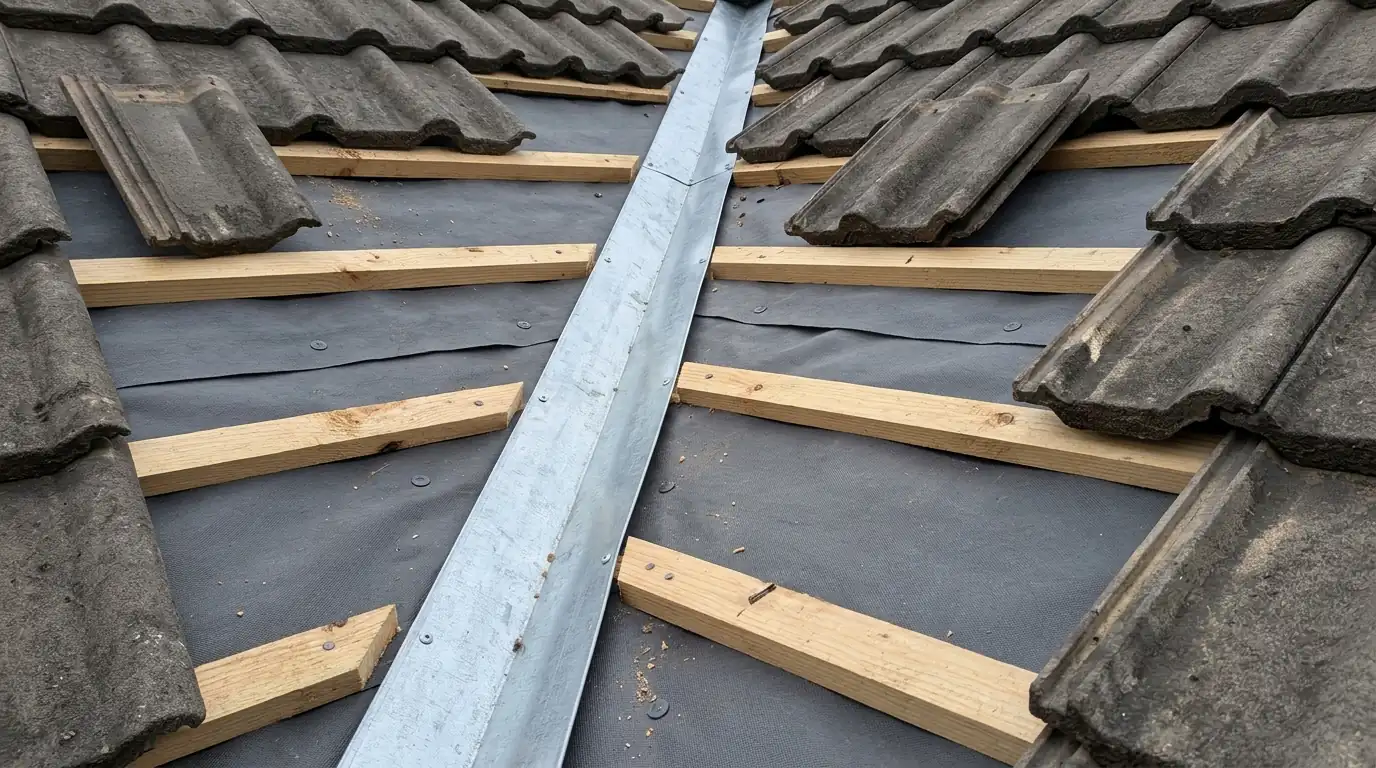
Many concrete tile roofs use wood battens, small strips nailed across the roof that tiles hook onto, and others are direct-nailed or foam-set. During the work we check batten condition, replace rotted or split ones, and reinstall tiles on the original layout. Tile weight is significant, so we stage stacks across the roof carefully and spread loads, and we check rafters and decking for any damage before loading tiles back on. We also confirm that the attic framing can carry the staged tile loads, and we spread stacks over rafters instead of mid-span.
What can go wrong
The biggest risk is tile breakage, since old tile gets brittle and a percentage of tiles will crack during lifting. We set aside spare tiles and order replacements ahead where possible. Another risk is weather, because tile and felt are off during the job. We work in sections and dry in each area the same day, so rain does not catch an open roof. Skipping flashing replacement is a mistake, since new underlayment under old flashing leaves the weakest link in place.
Our process for tile roof underlayment replacement
Six steps, in the order the crew does them on a Sacramento roof.
- Step 1Test and plan
We lift sample tiles in several spots to judge underlayment, battens and deck, and measure the roof and valleys. Samples are photographed for your records.
- Step 2Stage and remove tile
Tiles are lifted in sections, stacked on the roof or lowered to the ground, and spare tiles are set aside.
- Step 3Strip and inspect deck
Old underlayment is removed, then the deck is checked and any rotted or damaged plywood is replaced. Soft deck sections are marked and replaced.
- Step 4Install new underlayment
New felt or synthetic goes down with proper laps, with heavier layers in valleys, plus new drip edge and flashing.
- Step 5Set battens and tile
Battens are repaired or replaced, then tiles are reinstalled in the original layout with the right fasteners. Spacing follows the manufacturer's layout guide.
- Step 6Seal ridge and finish
Ridge and hip caps are secured, penetrations are re-flashed, and the finished roof is inspected before cleanup. We also clear gutters of loose grit.
What tile roof underlayment replacement costs in Sacramento
A 2,400 sq ft concrete tile roof with new synthetic underlayment, replaced flashing and a few new tiles commonly runs 21,500 to 33,800.
- Roof size and pitch
- Underlayment type
- Tile breakage and replacement
- Deck and batten repair
Compare this job with others in the Sacramento roofing cost guide.
Sacramento conditions that matter
Sacramento valley heat bakes the underlayment under tile roofs, so felt can fail well before the tile does. This is especially common on 1990s and 2000s concrete tile homes in Natomas, Elk Grove, Roseville, Folsom and Rancho Cordova. The work is best scheduled in dry months, April through October, when lifting tile is safer and weather risk is lower. Rooftop solar often needs removal and reinstall during the job, which adds a coordinating step. Title 24 cool roof rules can apply to some reroofs, and tile color choices affect compliance.
Often paired with this service
Tile Roof Repair
Broken, slipped or leaking tile
View serviceRoof Replacement
Full tear-off and new roof system
View serviceRoof Flashing Repair
Fix the metal where roofs leak
View serviceRoof Ventilation
Let the attic breathe
View serviceRead before you decide
Questions about tile roof underlayment replacement
Will my tiles survive being lifted and relaid?
Most do, but some break, particularly older concrete tiles that are brittle. We expect a small percentage of breakage and set aside extras. If your tile is discontinued, we try to source close matches before starting so you are not left with mismatched replacements. We order extras before starting.
Is underlayment replacement cheaper than replacing the tile?
Usually, yes. Reusing tiles saves the cost of new tile and disposal of heavy material. A full tile replacement can cost more than a lift and relay with new underlayment. The right choice depends on tile condition, color match and how much breakage we find.
Do I need to replace battens too?
Not always. We check each batten for rot, splits and loose nails. Damaged ones are replaced, and sound ones can often be reused. In some roofs, battens are refastened or upgraded to treated lumber to match the new underlayment layer. Treated lumber is common on replacement battens.
How long does a lift and relay take?
Most homes take about three to seven days, depending on size, pitch and weather. Tile staging and rebuild are the slowest part. We work in sections and dry in each area each day, so the roof is protected from rain overnight. Dry weather speeds the whole job.
What happens to my solar panels during this work?
Panels on a tile roof usually need to be removed and reinstalled so the underlayment can be replaced beneath them. We can coordinate that step with your solar installer, or handle removal and reinstall ourselves, then confirm the system is reconnected. Reconnection is tested before we leave.
Roof leaking, peeling or baking in the sun?
Call the 24/7 line. Tell us the roof type, where the water shows up or what the coating looks like, and we will tell you what we would check first and when a crew can be there.