Sprayed-in-place SPF roof systems
Spray foam roofing in Sacramento, CA
Your flat roof leaks at every seam, runs hot all summer, and patching it has stopped working, so a sprayed foam roof is worth pricing.
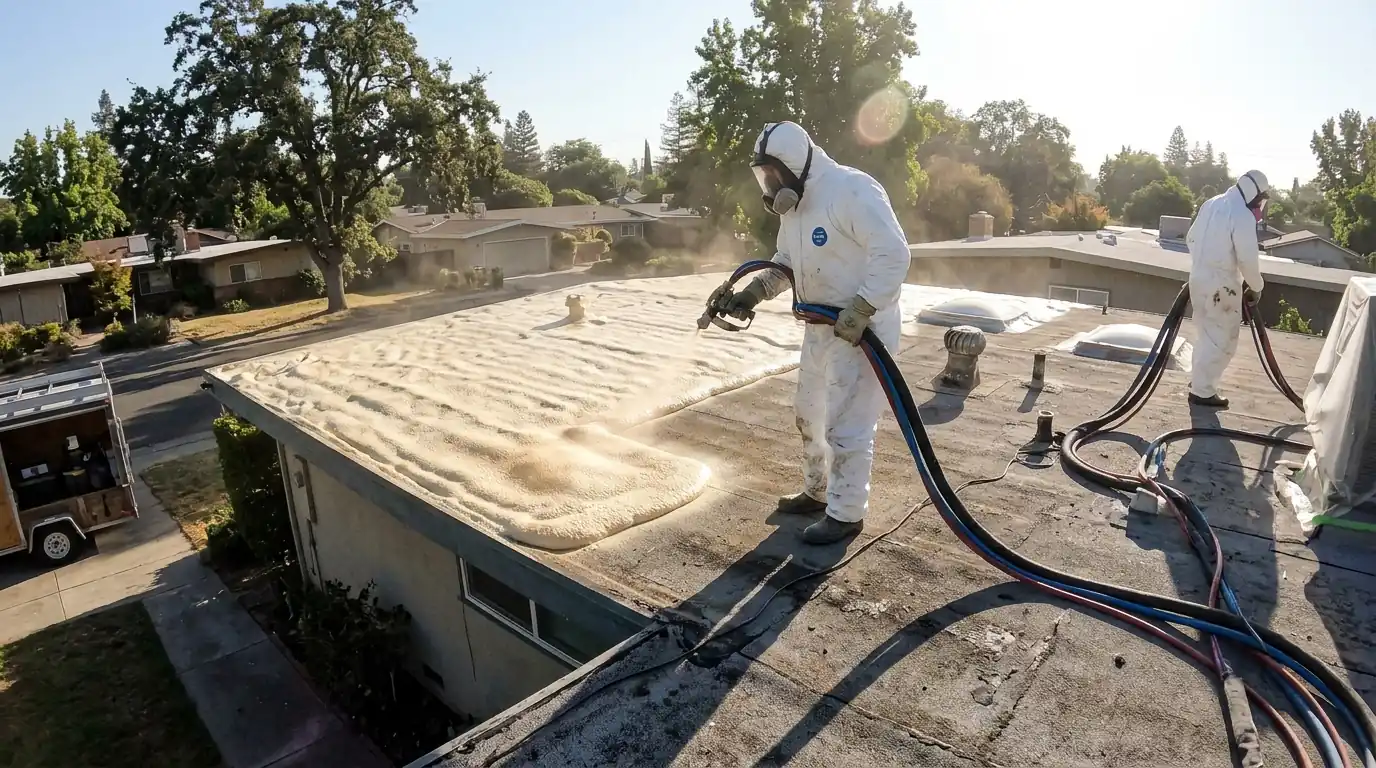
Spray foam roofing is closed-cell polyurethane foam sprayed in lifts over a clean, dry roof, then topped with a protective coating. It suits flat and low-slope roofs with no tear-off in many cases. Typical Sacramento cost runs 4.85 to 7.40 per sq ft, and most homes and small buildings take one to three days.
What this job involves
Spray polyurethane foam, or SPF, starts as two liquids that meet at the spray gun and expand into a solid, fully adhered layer. On a roof it has no seams, no laps and no mechanical fasteners to leak. Roofing foam is closed-cell, usually sprayed at about 2.5 to 3 pounds per cubic foot, which is dense enough to walk on and hold its shape under foot traffic. It is applied wet, expands within seconds and cures into a rigid, lightweight deck of insulation and waterproofing in one pass.
Foam also insulates. Closed-cell SPF gives roughly R-6 to R-7 per inch, so a 1.5 inch roof layer adds meaningful resistance to Sacramento summer heat. That is why mid-century flat roofs, mobile home parks and commercial buildings across the valley are good candidates. The foam is never left bare, though. It always needs a coating on top, and the coating is what keeps the system alive. We use the foam only where it makes sense: flat, low-slope and slightly cupped roofs that need seams gone and heat reduced.
Signs your roof is ready for spray foam
Lap seams in old torch-down or built-up roofing lift and split in valley heat. When seams keep reopening after patches, a continuous foam layer removes the seams entirely.
If the rooms under a flat roof run several degrees warmer than the rest of the house, the roof has little insulation. Foam adds R-value while it waterproofs.
Puddles that remain more than 48 hours after a winter storm mean the deck is low or sagging. Foam can be sprayed thicker in dips to build positive slope.
A roof covered in mastic, tape and patch squares has usually reached the end of repair. Foam bonds over most sound existing roofing without a tear-off.
Cracked, bubbled coating on an old roof means the membrane is aging out. Spraying over it saves landfill and disposal cost compared with a full removal.
Vents, pipes, skylight curbs and HVAC curbs leak first on conventional roofs. Foam wraps these shapes in one continuous layer with no sealed joints to fail.
How the foam system is built
A finished foam roof has three parts. First is the substrate, which is the existing roof or a clean deck. Second is the foam itself, sprayed in lifts of roughly half an inch to one inch each, building to the specified thickness. Third is the protective coating, either silicone, acrylic or polyurethane, applied after the foam cures. Skipping the third part is the most common mistake in the industry. Each lift cures within minutes, so crews can stack several passes in a day, and the finished layer adheres to the substrate without fasteners, adhesives or seams.
Foam surface texture matters. Smooth and orange peel textures shed water best. Coarse orange peel and popcorn or treetop textures are rougher, hold more water in the valleys of the surface and take more coating to cover. A good applicator keeps the gun distance and pass speed steady so the surface comes out smooth to light orange peel, which makes the coating job easier and the roof last longer.
- Closed-cell foam at about 2.5 to 3 lb density
- R-6 to R-7 per inch of thickness
- Applied in lifts, not one thick pass
- Coating applied once foam is cured and dry
- Walk pads placed at roof access points
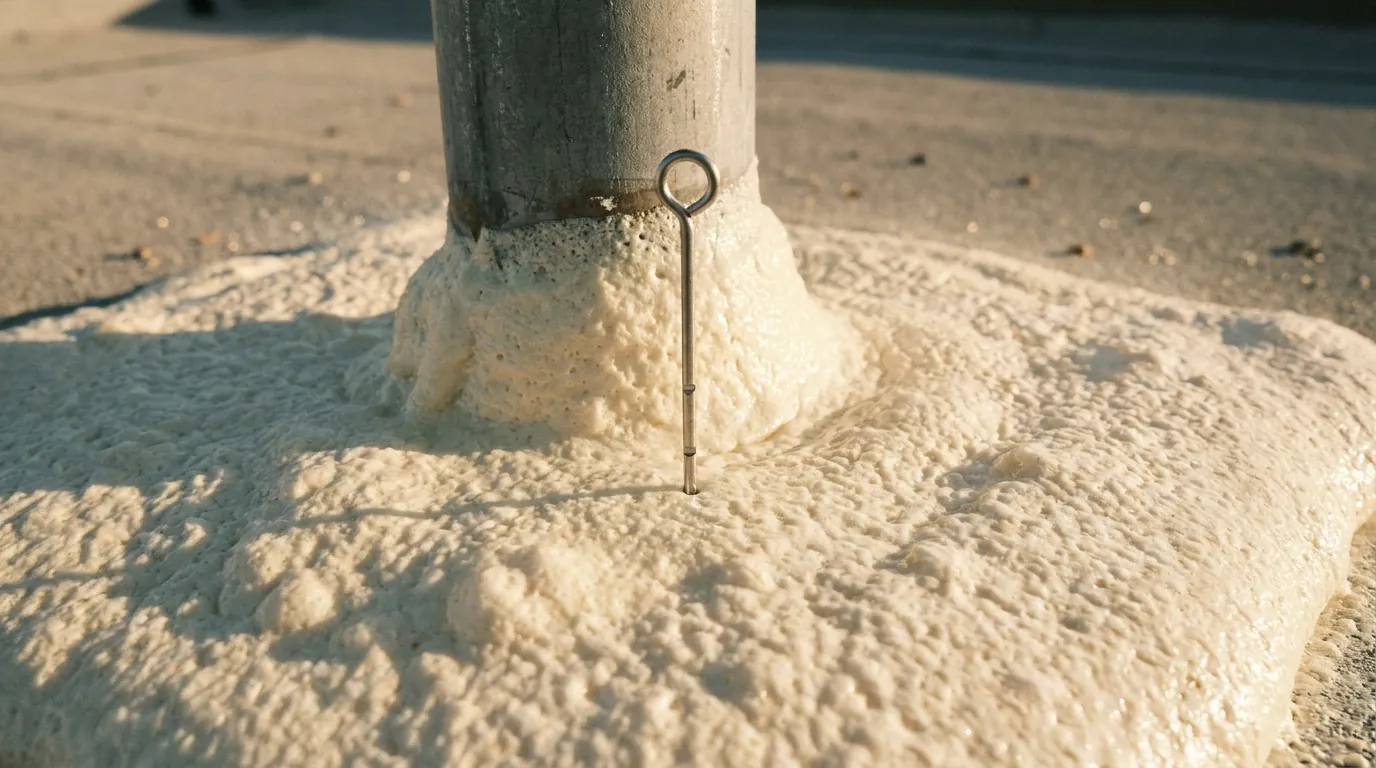
Why bare foam cannot be left alone
Polyurethane foam breaks down in sunlight. Ultraviolet light chalks the surface within weeks and erodes it over a season or two, which is why the coating goes on promptly after the foam cures. In Sacramento, where roofs bake under strong sun for months, a bare foam roof can lose its outer skin quickly and begin to absorb water. We schedule the topcoat the same day or within a few days of spraying, never weeks later, and we never let a foam roof sit through a rainy week unprotected.
The coating also sets the roof's service life. Foam is usually the permanent layer, while the coating is the wear layer. Silicone handles ponding water well. Acrylic costs less and reflects heat but wants good drainage. Polyurethane coatings resist foot traffic and hail. We pick the coating based on how your roof drains, how often people walk on it and what your budget allows, then set a recoat plan so the foam is never exposed.
When spray foam is the wrong choice
Foam is not right for every roof. Steep shingle and tile roofs shed water well and are better served by conventional materials. Wet substrates are a firm no. If the old roof has trapped moisture, foam spraying over it traps that water and leads to blistering. A moisture scan and a few core cuts tell us before we quote. Weather also controls the schedule. Foam needs a dry deck, surface temperature in the right range, light wind and no rain forecast for at least 24 to 48 hours after coating. Sacramento tule fog and heavy dew can delay a morning start, so we watch the dew point and spray in the warm part of the day. Rushing foam in damp conditions is the fastest way to ruin it.
Our process for spray foam roofing
Six steps, in the order the crew does them on a Sacramento roof.
- Step 1Moisture scan and cores
We scan the roof for trapped moisture and cut small cores to see what is under the surface. Wet insulation gets removed before any foam goes down.
- Step 2Clean and prepare
The surface is power washed, loose material is cut out and edges are detailed. Rust and weak spots are treated so the foam has a sound base.
- Step 3Prime where needed
Metal, smooth membranes and some old coatings get a primer for adhesion. We test a small area first to confirm the foam bonds.
- Step 4Spray foam in lifts
Crews spray the foam in thin lifts to the specified thickness, building slope into low areas. Thickness is checked with a depth gauge as we go.
- Step 5Coat the foam promptly
Once cured, the foam gets the base coat and top coat to the specified mil thickness, covering every edge, curb and penetration before UV can harm it.
- Step 6Walk pads and final check
Walk pads are set at access points and we inspect drains, edges and flashings. You get care instructions and a recoat interval for the coating.
What spray foam roofing costs in Sacramento
A 1,400 sq ft flat roof on a mid-century home, with 1.5 inch foam and a silicone coating, typically lands near 8,900 to 9,800 after inspection.
- Foam thickness and slope correction
- Coating type and mil thickness
- Roof access and height
- Amount of detail work and penetrations
Planning a recoat? The coating calculator turns roof area, coating type and target thickness into gallons and pails.
Sacramento conditions that matter
Sacramento summers often run over 100 F, and a dark flat roof can reach far higher surface temperatures. Foam's insulation and a reflective topcoat cut that heat load, which can help SMUD bills in the hottest months. Winter brings the opposite problem: rain from November through March tests every seam, and tule fog leaves roofs damp in the morning. Mid-century flat-roof homes in East Sacramento, Carmichael and Sierra Oaks, plus commercial flat roofs in Midtown and West Sacramento, are the most common foam candidates. California Title 24 cool roof rules can apply to some reroofs, so the coating choice should be checked against your project.
Often paired with this service
Foam Roof Recoating
Restoring the protective topcoat
View serviceSilicone Roof Coating
Ponding-resistant liquid roof membrane
View servicePonding Water Repair
Fixing puddles on flat roofs
View serviceFlat Roof Replacement
New membrane, insulation and drainage
View serviceRead before you decide
Foam Over the Old Roof or Tear It Off? How to Decide
Spray foam can go straight over many sound existing roofs, which saves landfill, labor and mess. This guide explains what has to be true about the old roof, and when tearing off is the better call.
Read the guideHow Long a Spray Foam Roof Lasts and When to Recoat
A spray foam roof is only as durable as its protective coating. This guide explains realistic lifespans, what wears out first, and how to time a recoat in Sacramento's sun.
Read the guideQuestions about spray foam roofing
How thick should a spray foam roof be in Sacramento?
Most residential and light commercial roofs get about 1 to 2 inches of closed-cell foam. Thicker areas are used to fill low spots and push water to drains. Thickness is checked with a depth gauge during spraying, and the final number depends on the existing slope, the insulation goal and the manufacturer's specification.
Can foam be sprayed over my old built-up roof?
Often yes, if the old roof is dry and firmly attached. We scan for moisture and take core cuts first. Loose or wet areas are cut out, and an adhesion test confirms the foam grips the surface. If the old layers hold water, they come off before spraying.
Does spray foam smell or cause problems for the household?
Foam spraying produces some odor and overspray drift while it is applied, so we mask vehicles and windows, watch wind direction and ask you to keep windows closed on spray day. Once cured, SPF is inert and the odor fades. We give you timing so you can plan around it.
How long does a foam roof last before it needs work?
The foam layer can last a long time when it stays sealed under coating. The coating is what wears, so plan an inspection every year and a recoat roughly every 10 to 15 years, depending on the coating type and thickness. Neglected coatings are what shorten foam roof life.
Will a foam roof hold up to hail or foot traffic?
Closed-cell roofing foam at 2.5 to 3 lb density resists normal foot traffic, but heavy hail or dropped tools can dent it. A polyurethane or thicker topcoat adds impact resistance, and walk pads protect busy paths. Damage is repaired by cutting out the spot and respraying.
Roof leaking, peeling or baking in the sun?
Call the 24/7 line. Tell us the roof type, where the water shows up or what the coating looks like, and we will tell you what we would check first and when a crew can be there.