Rust, seams and fasteners handled
Metal roof coating in Sacramento, CA
Your metal roof is rusting at the seams, leaking around backed-out screws and baking the building, and replacing every panel would cost far more.
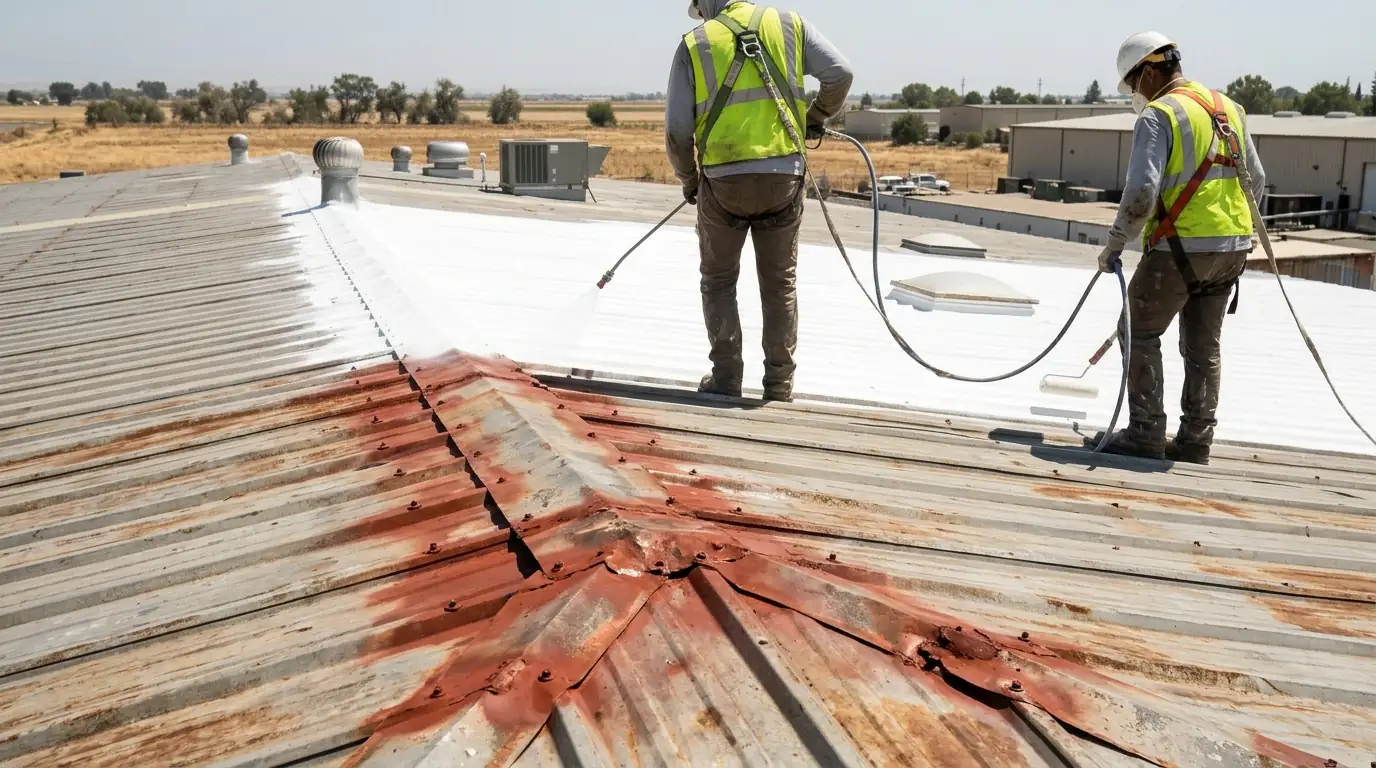
Metal roof coating restores an existing metal roof by treating rust, sealing seams and fasteners, priming and applying a reflective acrylic or silicone coat. It can avoid replacement when panels are sound. Typical Sacramento cost is 2.05 to 4.15 per sq ft, and most roofs take two to four days.
What this job involves
Metal roofs fail at their details before their panels give out. Screws back out as panels expand and contract, rubber washers crack in the sun, seams open and light surface rust spreads into pitting. A coating system fixes those details first, then covers the whole roof with a continuous reflective film that stops leaks and reduces heat. We would rather tell you that now than after you have paid for a coating that cannot hold.
Not every metal roof can be coated. Panels with deep rust perforation or loose, rotted purlins need replacement. But corrugated, standing seam and R-panel roofs with sound metal and surface rust are good restoration candidates. We check with a screwdriver, a moisture meter and a close inspection of fasteners before we say a coating will work. That honest check is the first step of every metal roof job, and we photograph what we find for you.
Signs your metal roof needs coating
Orange staining along panel overlaps shows where water sits and corrosion starts. Treating it early keeps rust from eating through the metal.
Screws that have lifted from the panel leave an open hole under the washer. Each one is a leak and needs resetting or replacing, then sealing.
Old butyl or caulk dries out in valley heat and shrinks away from laps. Re-sealing the seams stops water that follows the panel ribs.
A faded, powdery factory finish means the paint is no longer protecting the steel. Coating adds a new barrier before rust starts.
Bare metal absorbs heat and radiates it into the building. A reflective white coating can drop surface temperatures significantly in July.
Loose panels that rattle in wind point to fastener or purlin problems that must be corrected before any coating goes on.
Rust treatment and primers on metal
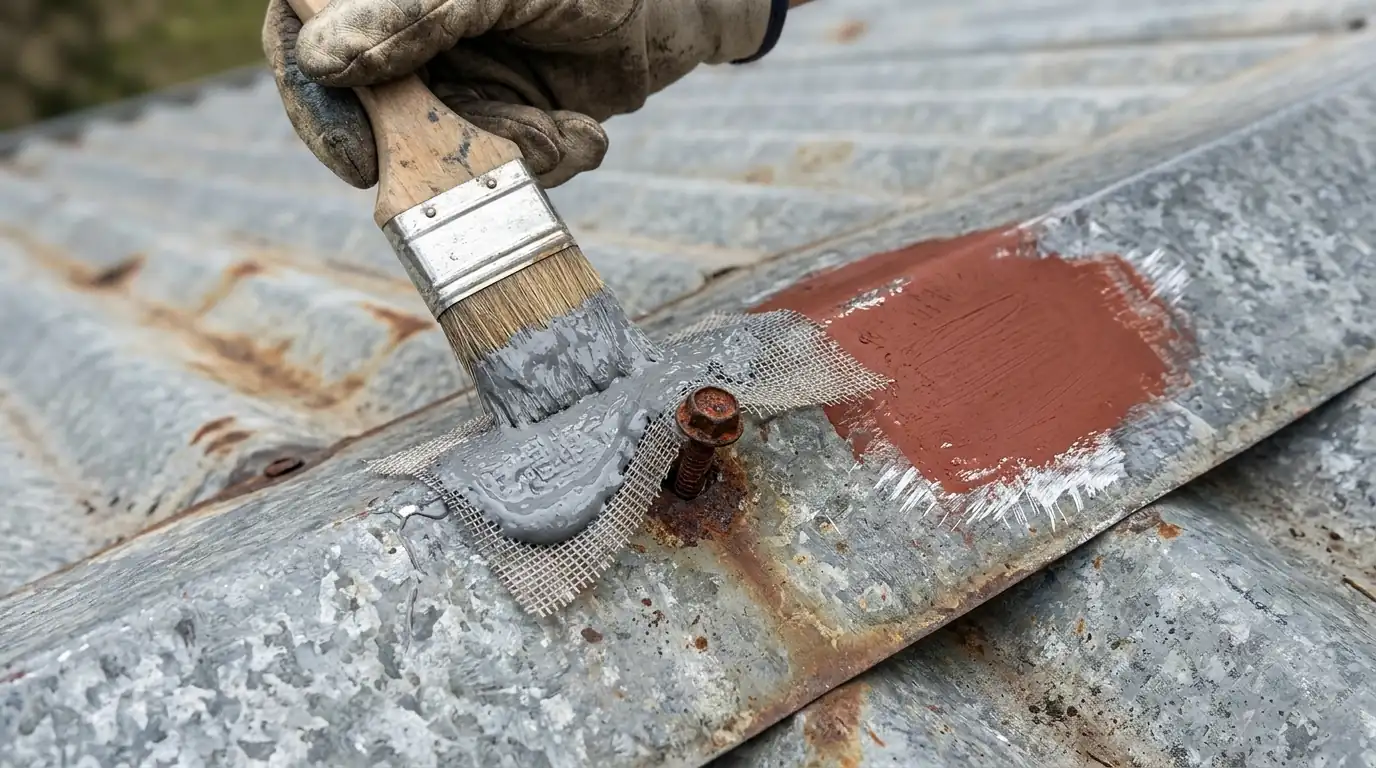
Rust cannot be coated over and ignored. We wire brush or grind loose scale, wash the surface, and apply a rust converter or rust-inhibiting primer to stabilize what remains. Heavily pitted areas may need patching with fabric and mastic, or a panel replaced. Primer type matters, since some primers suit acrylics and others suit silicone. Galvanized and factory-painted metals can be slick, so they often need a bonding primer. We test adhesion on a small area and wait for cure before coating the whole roof. Skipping primer on metal is the biggest reason metal coatings peel in sheets within a year or two.
Fasteners, seams and penetrations
Most metal roof leaks start at fasteners. We reset or replace backed-out screws with larger diameter fasteners where the old holes are stripped, seal each one with sealant, and often cap them with a dab of mastic and fabric. Panel laps are sealed with butyl tape or sealant, then bridged with reinforcing fabric under the coating. Penetrations such as vents, curbs and skylights receive detailed treatment with fabric and extra coating build. Ridge caps and eave flashing are checked for gaps. After this detail work, the field coat goes on to create a continuous film across the entire roof surface, so no single weak point stays exposed.
- Reset or replace backed-out screws
- Seal and cap every fastener
- Butyl or sealant at panel laps
- Fabric reinforcement at seams
- Extra coating build around penetrations
Choosing acrylic or silicone for metal
Acrylic is the usual choice for metal roofs that drain well and have good slope. It costs less and bonds well to primed metal. Silicone is better where panels hold water, such as along flat lap seams, low-slope sections or around curbs, and holds up better in long wet periods. On a metal roof with a steep pitch, acrylic generally performs fine. On a nearly flat metal roof, such as a mobile home or commercial building, silicone is often the safer pick. We choose the coating based on slope, ponding and budget, and we apply the manufacturer primer for that specific coating on bare or rusted steel.
Our process for metal roof coating
Six steps, in the order the crew does them on a Sacramento roof.
- Step 1Inspect panels and fasteners
We check the metal for sound thickness, count backed-out screws, test seams and note rust, so we know if coating is a good fit.
- Step 2Wash and remove rust
The roof is pressure washed, loose scale is brushed off, and rust is converted or treated to stop it spreading.
- Step 3Fix fasteners and seams
Screws are reset or replaced, laps are sealed, and seams are reinforced with fabric and sealant. Screws are reset or replaced with larger fasteners, laps are sealed, and every seam gets fabric reinforcement and sealant under the coat.
- Step 4Prime the metal
The specified primer goes on bare, rusted or glossy metal and cures fully before any topcoat is applied over it.
- Step 5Apply base and top coat
Two coats of acrylic or silicone are applied to the target dry mil thickness, with extra build at seams and penetrations.
- Step 6Final walk and cleanup
We inspect for pinholes, check edges and flashing, clear gutters and leave you a simple yearly inspection and wash routine.
What metal roof coating costs in Sacramento
A 2,200 sq ft corrugated metal roof with rust treatment, fastener sealing and two acrylic coats typically costs near 5,600 to 7,900.
- Extent of rust and pitting
- Number of fasteners to replace
- Acrylic or silicone system
- Roof height and access
Planning a recoat? The coating calculator turns roof area, coating type and target thickness into gallons and pails.
Sacramento conditions that matter
Sacramento's heat makes metal expand and contract each day, which loosens fasteners and cracks sealant over time. Winter rain and tule fog then sit in those gaps and start rust. Metal roofs are common on agricultural buildings, warehouses in West Sacramento and Elk Grove, and many mobile homes. Because metal heats quickly in summer, a reflective coating can lower interior temperatures and reduce cooling use, which matters for SMUD customers. In foothill areas with wildfire risk, a coated metal roof still performs well as a noncombustible surface, but ask us about fire ratings for the specific coating.
Often paired with this service
Metal Roofing
Standing seam and ribbed metal panels
View serviceAcrylic Roof Coating
Reflective elastomeric roof coating
View serviceCommercial Roofing
Flat roofs for working buildings
View serviceRoof Leak Detection
Find the leak, not the stain
View serviceRead before you decide
Questions about metal roof coating
Can all metal roofs be coated instead of replaced?
No. Panels need enough sound steel left to hold fasteners and carry the coating. If rust has perforated panels or purlins are rotted, coating will not fix it. We probe suspect areas and show you what we find, so you know whether coating or replacement is the sensible choice.
Why do metal roof screws back out?
Metal panels expand and shrink with temperature, working screws loose over time, and the rubber washers dry out and crack in the sun. In the valley, daily heat cycles are rough on fasteners. We replace stripped screws with larger ones and seal every head before coating.
Do I need a primer on a galvanized roof?
Usually yes. New or weathered galvanized steel can be slick or oxidized, and coatings may peel without a bonding primer. Weathered galvanized sometimes bonds better, so we run an adhesion test patch first and choose the primer based on how the test cures. Weathered metal differs from new.
How do you treat rust before coating?
We remove loose scale with a wire brush or grinder, wash the roof and apply a rust converter or inhibiting primer. Pits that are deep get filled with mastic and fabric. Treating rust properly is what stops it from bleeding through the new coating within a few months.
Will coating make my metal roof quieter?
A thick coating may dampen rain noise slightly, but it is not a sound insulator. Spray foam under a metal roof deck does more. If noise is a concern, ask about foam insulation, which also adds R-value, though that is a different service from coating.
Roof leaking, peeling or baking in the sun?
Call the 24/7 line. Tell us the roof type, where the water shows up or what the coating looks like, and we will tell you what we would check first and when a crew can be there.