Fix rotted roof edges
Fascia and soffit repair in Sacramento, CA
Peeling, soft or sagging trim along the roof edge is rarely just cosmetic, because water and pests are already getting into the eaves.
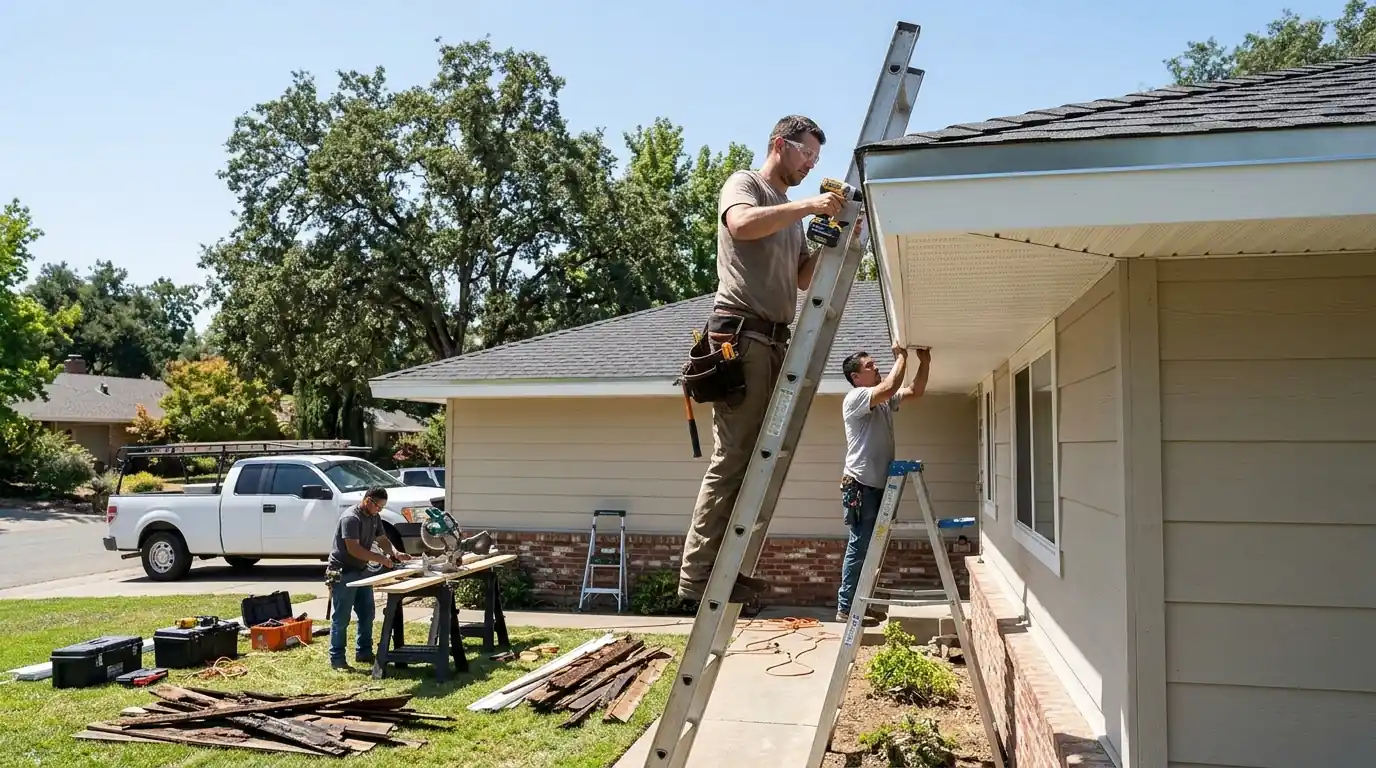
Fascia is the board along the roof edge that holds the gutter, and soffit is the underside of the eave. Repair means cutting out rot, replacing boards or panels, sealing and painting, and fixing the cause. Typical cost is 12.40 to 31.60 per linear ft, and most homes take one to three days.
What this job involves
The roof edge takes more water than most of the house. Gutter overflow runs down the fascia, drip edge may be missing or too short, and the end grain of old wood soaks up moisture every winter. The paint fails, the wood softens and the board starts to rot. Soffit panels behind it can stain, sag or fall away.
Fixing only the visible board is a common mistake. If water is still reaching the edge, the new wood will rot too. Mountainside looks at the roof edge, the gutters, the drip edge and the attic intake as one system, so the repair addresses the cause and not only the damage.
Signs of fascia and soffit trouble
Bubbling or flaking paint along the roof edge usually means moisture is trapped in the wood. Painting over it hides the rot and speeds it up.
If a screwdriver sinks into the board, the wood is rotted. Dry rot in California still needs moisture from somewhere, usually a gutter or roof edge leak.
Gutters pull away when the fascia behind them no longer holds the fasteners. Re-hanging them on soft wood only works for a season.
Birds, squirrels, rats and wasps use damaged soffit as an entrance to the attic. Droppings and nesting can follow.
Brown streaks or sagging soffit panels point to roof edge leaks, gutter overflow or winter condensation from poor attic ventilation.
Musty air near the eaves or flattened wet insulation can mean water and pests are coming in through damaged trim.
Wood, composite and metal options
Painted wood is the traditional choice and matches older homes, but it needs primer on all faces, including the back and cut ends, and repainting every several years. Composite and cellulose-PVC boards resist rot and take paint well, which suits eaves that stay damp. Aluminum fascia wraps cover rot but should not be used to hide it. Each costs differently, so we price the options on your house. Soffit comes in plywood, vented aluminum and vinyl. Vented panels let air into the attic, which matters for roof life and heat. When we replace soffit, we keep or add vents so the attic still breathes, and we install screens that stop pests.
Finding and fixing the cause
The usual culprits are overflowing gutters, missing or short drip edge, shingles that stop short of the gutter and attic condensation. In Sacramento, clogged gutters under oak and sycamore trees are a leading cause. If the underlayment is not lapped over the drip edge correctly, water can run behind the fascia, and we fix that during the repair. We also check the rafter tails behind the fascia. Rot often travels into the ends of the rafters or the first row of roof sheathing. If those are soft, we repair them with sistered lumber or new decking, so the new trim has solid support.
- Clogged or undersized gutters
- Missing or short drip edge
- Roof edge flashing gaps
- Rotted rafter tails
- Poor attic ventilation
Pests, gutters and paint
Pest entry usually starts at a gap that grew from rot or a loose panel. We repair the opening, add screening where needed and tell you if animals are still in the attic so pest control can be done before the soffit is closed. Fascia repair ties directly into gutters. We remove the gutter, replace the board, add drip edge, prime and paint, then hang the gutter with hidden hangers into solid wood. Doing it as one job costs less than separate visits and gives a cleaner finish. Colors are matched as closely as possible, and a full repaint of the trim is an option.
Our process for fascia & soffit repair
Six steps, in the order the crew does them on a Sacramento roof.
- Step 1Inspect the roof edge
We probe the fascia, soffit and rafter tails, check gutters and drip edge, and look at the attic intake to find the cause.
- Step 2Mark the rot
Soft sections are marked and photographed, and we show you what must come out and what can stay.
- Step 3Remove gutters and bad wood
Gutters come off, and rotted fascia, soffit and any damaged rafter tails are cut out back to solid material.
- Step 4Fix drip edge and decking
Missing drip edge is added, the roof edge is sealed, and any damaged decking at the eave is replaced.
- Step 5Install new trim and soffit
Primed boards or composite fascia go on, with vented soffit panels and pest screens, then caulk and sealant at joints.
- Step 6Paint and rehang gutters
Trim is painted to match, gutters go back with solid fasteners, and we test the flow with water before we leave.
What fascia & soffit repair costs in Sacramento
Replacing 90 feet of painted wood fascia and vented soffit on a single-story home with new drip edge often runs around 1,950 to 2,900.
- Wood, composite or metal
- Soffit replacement included
- Rafter tail repair
- Two-story access
Compare this job with others in the Sacramento roofing cost guide.
Sacramento conditions that matter
Sacramento's long dry summers bake paint off south and west eaves, and the first winter storms then soak the exposed wood. Mature trees such as sycamore, oak and liquid amber drop leaves into gutters in fall, and overflow runs straight down the fascia. Many 1950s to 1970s ranch homes in Carmichael, Fair Oaks and East Sacramento still have original painted wood trim, and older soffits may lack vents. In foothill areas, ember-resistant vent requirements can affect which soffit panels and vents are acceptable, so check local rules when replacing them.
Questions about fascia & soffit repair
Can I just paint over soft fascia boards?
No. Paint over rotted wood hides the damage and traps moisture, so the rot continues. If a screwdriver sinks into the board, it has to be cut out and replaced. Small isolated spots can sometimes be repaired with epoxy filler, but only after the cause of the moisture is fixed.
Why does my fascia keep rotting after repairs?
Usually the water source was never fixed. Common causes include clogged gutters, missing drip edge, underlayment that does not lap over the edge and bare end grain. Without those fixes, new wood soaks up moisture the same way. We correct the cause and prime every face and cut end before painting.
Is composite fascia better than wood?
Composite or cellulose-PVC fascia resists rot and holds paint longer, which helps on damp or shaded eaves. It costs more upfront, and the joints still need good sealing. Painted wood is fine on dry elevations and can match older trim profiles, so the best pick depends on your house.
Does soffit repair affect attic ventilation?
Yes. Vented soffit is often the intake side of the attic ventilation system. If solid panels replace vented ones, airflow drops and attic heat and moisture rise. We keep or add vents and screens during replacement, and we check that insulation does not block the airflow at the eaves.
Can birds and squirrels get in through damaged soffit?
Yes. Rotted corners, gaps at the fascia joint and loose vent panels are common entry points. We repair or screen those openings, but if animals are already in the attic, call a wildlife control service first. Sealing them in can cause worse problems. Check for active nests or droppings first, and tell us what you find before we close the opening.
Roof leaking, peeling or baking in the sun?
Call the 24/7 line. Tell us the roof type, where the water shows up or what the coating looks like, and we will tell you what we would check first and when a crew can be there.