Reflective elastomeric roof coating
Acrylic roof coating in Sacramento, CA
Your roof is sound but faded, hot and starting to chalk, and you need a reflective coating that fits a tighter budget than silicone.
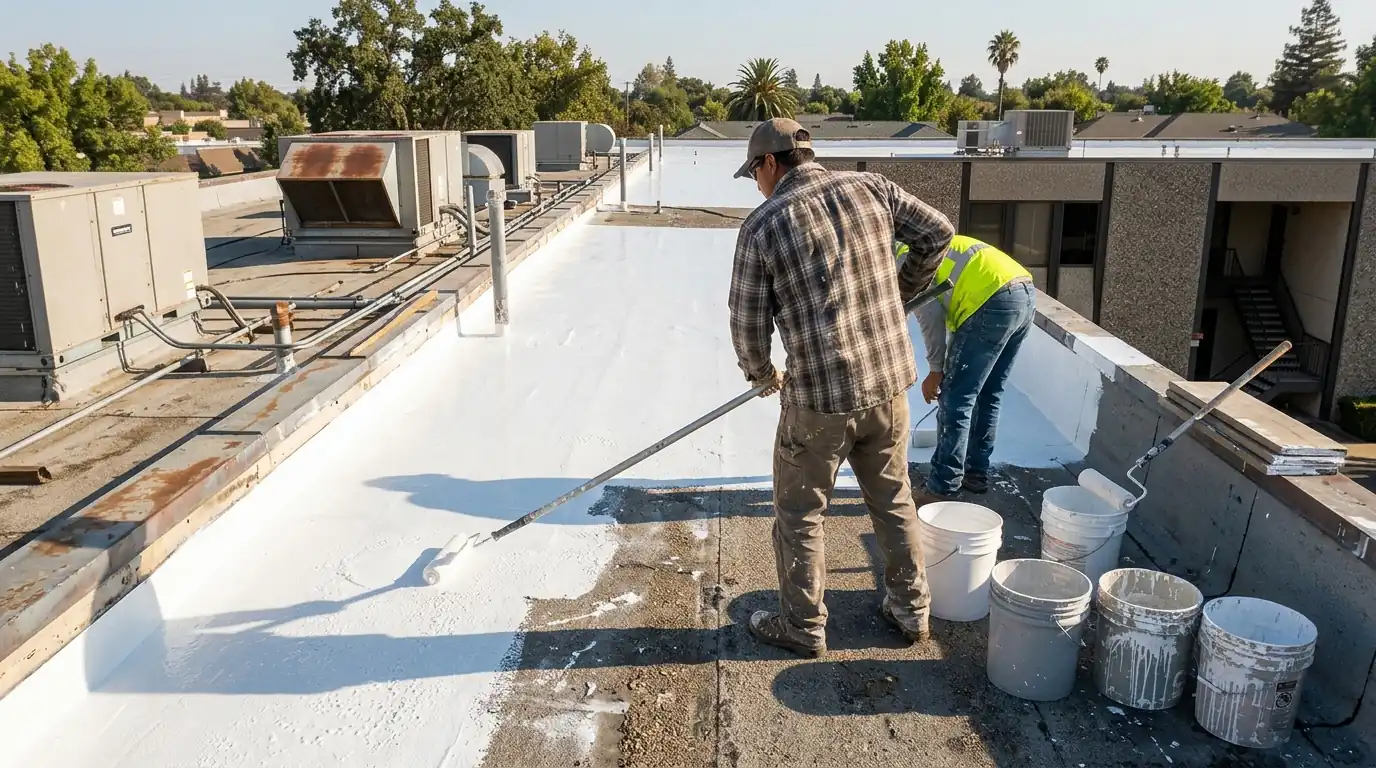
Acrylic roof coating is a water-based elastomeric membrane applied in two or more coats over a cleaned roof. It reflects heat and costs less than silicone but needs good drainage. Typical Sacramento cost runs 1.35 to 2.70 per sq ft, and most roofs take one to two days.
What this job involves
Acrylic roof coatings are water-based, easy to apply and widely used on metal, foam, mobile home and low-slope roofs. They cure as the water evaporates, leaving a flexible white film that bounces back sunlight. For a Sacramento building with a dry, sound roof and working drains, acrylic is often the most economical way to cut heat and add a protective layer. It is also easy to maintain, since a future wash and a fresh coat of the same material is all most roofs need.
The drawbacks are specific. Acrylic does not like standing water, so low spots and clogged drains can cause blistering and washout. It is also affected by cool, damp weather during cure, since it needs time to dry before rain or dew. For those reasons we check drainage and watch the forecast closely, and we steer ponding roofs toward silicone instead. Used where it fits, acrylic gives a clean white roof and a lower bill than almost any other restoration system.
Signs acrylic is the right coating
Acrylic does best when water leaves the roof quickly after rain. If puddles clear in under 24 hours, the coating can perform for many seasons.
An old gray or tan roof absorbs summer sun. A white acrylic film reflects it and can lower the surface temperature noticeably on hot afternoons.
When the substrate is dry and in decent shape, acrylic restores waterproofing for less than silicone or replacement, with simple application.
A previous acrylic or elastomeric coat that rubs off as powder has lost its binder. A fresh coat renews UV protection and appearance.
Treated and primed metal roofs with surface rust and loose fasteners are good acrylic candidates, as long as drainage works.
Foam roofs that drain well can be recoated with acrylic at lower cost than silicone, with adhesion confirmed by testing.
Ponding is acrylic's weak point
Acrylic is a water-based polymer, and even after cure it can absorb moisture and soften when submerged. Standing water for several days can cause blistering, wrinkling and loss of adhesion. Many acrylic failures we see on flat roofs trace back to a low spot or a drain that clogged with leaves and was never cleared. If your roof ponds, you have two sensible options. Fix the slope or drainage first, using tapered foam, extra scuppers or drain cleaning. Or choose silicone for the low areas. Mixing is possible with proper primers, but it needs an adhesion test. We will tell you honestly if your roof is a better match for silicone, even when it costs a little more.
How acrylic is applied correctly
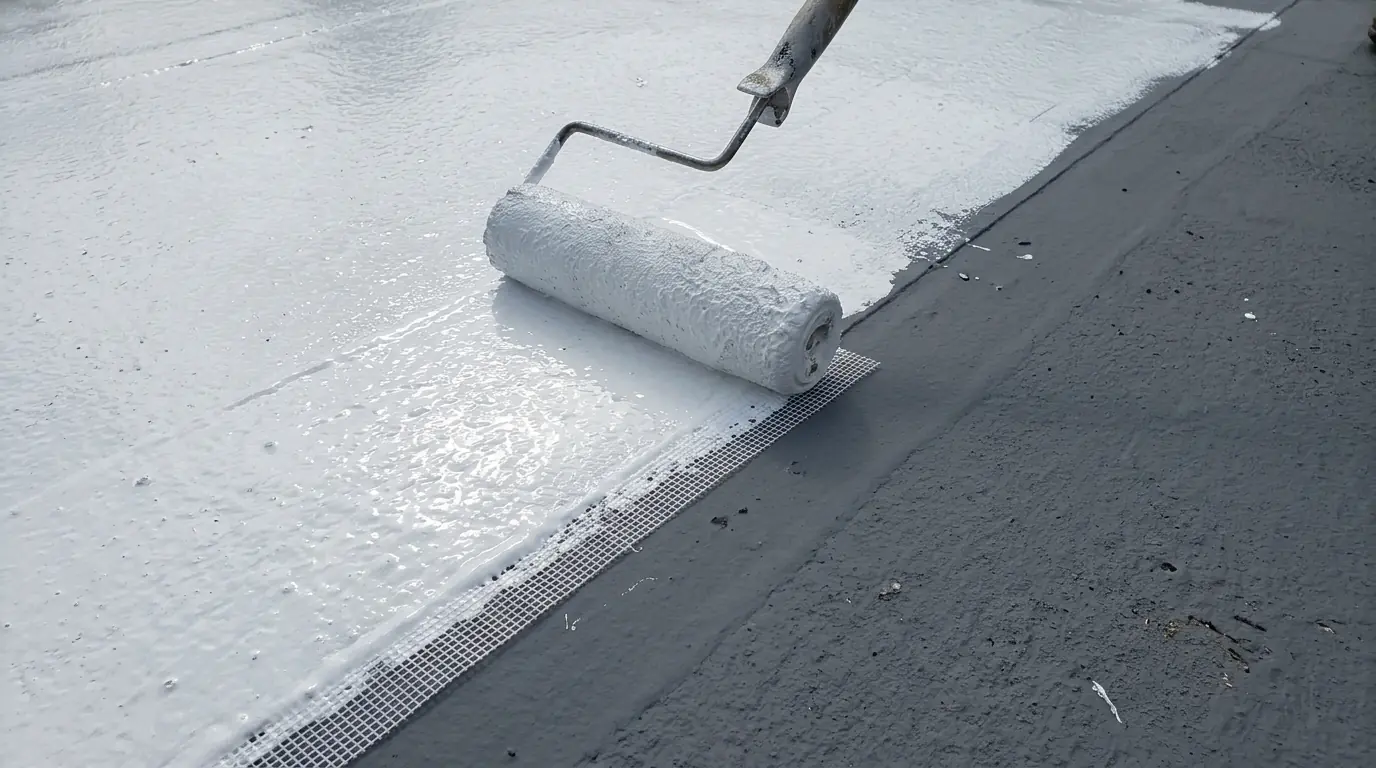
A proper acrylic job starts with a clean surface and the right primer. Rusted metal needs treatment and a rust-inhibiting primer, and foam or old bitumen may need a tie coat. Seams and cracks get reinforcing fabric embedded in mastic before the field coat, so the membrane bridges movement rather than splitting. The main coats go on in perpendicular passes, usually two or three, to reach the specified dry mil thickness. Acrylics often run about 50 to 65 percent solids by volume, so a wet application loses roughly a third to a half of its thickness as it dries. We calculate coverage in gallons per square, check with a wet film gauge and give each coat time to dry before the next goes on.
- Rust treatment and primer on metal
- Reinforced seams and cracks
- Two or three coats, applied in crossing passes
- Wet film gauge checks
- Dry time between coats
Weather windows for acrylic in Sacramento
Acrylic needs a dry surface, moderate temperature and several hours of drying before dew or rain. We avoid application when the forecast calls for rain within 24 to 48 hours, when the dew point is within a few degrees of the surface temperature, or when the roof is too hot to touch and the coating would skin over. Late spring and early fall are the sweet spots in Sacramento, with warm days, low humidity and little fog. Summer works if we start early and finish before afternoon heat flashes the surface. Winter is possible only on clear stretches, since tule fog and long nights can leave the surface damp and ruin adhesion.
Our process for acrylic roof coating
Six steps, in the order the crew does them on a Sacramento roof.
- Step 1Check drainage first
We walk the roof after rain or run a water test to find puddles and clogged drains, which decide whether acrylic is the right coating.
- Step 2Wash and repair
The roof is pressure washed, loose or rusted areas are cleaned and treated, and cracks and seams get fabric and mastic.
- Step 3Prime the surface
Metal, foam and old bitumen get the correct primer or tie coat, and a test patch is run to confirm adhesion before the main coat.
- Step 4Apply first coat
The base coat is sprayed or rolled evenly at the coverage rate that builds toward the target dry mil thickness.
- Step 5Apply second coat
After the first coat dries, a second coat is applied in a crossing pattern to fill thin spots and finish the surface.
- Step 6Inspect and clean up
We check film thickness, look for pinholes and missed edges, clear the drains and give you a simple annual wash and inspection plan.
What acrylic roof coating costs in Sacramento
A 1,800 sq ft metal roof on a small commercial building with rust treatment and two acrylic coats typically costs near 3,300 to 4,500.
- Number of coats and mil thickness
- Rust treatment and priming
- Seam and crack repair
- Roof size and access
Planning a recoat? The coating calculator turns roof area, coating type and target thickness into gallons and pails.
Sacramento conditions that matter
Acrylic fits well on Sacramento roofs that drain properly and stay dry between storms. Summer sun and 100 F days are tough on the surface, but a white acrylic coat can cut heat load, and lower roof temperatures may help SMUD bills on buildings with rooftop air handlers. Winter is the challenge: rain from November through March and tule fog can keep roofs damp, which delays curing and application. Plan acrylic work for the dry season. Many metal-roofed warehouses in West Sacramento and older mobile home parks are good fits, and California Title 24 cool roof rules may apply to some reroof projects.
Often paired with this service
Silicone Roof Coating
Ponding-resistant liquid roof membrane
View serviceCool Roof Coating
Reflective coatings for valley heat
View serviceMetal Roof Coating
Rust, seams and fasteners handled
View serviceFoam Roof Recoating
Restoring the protective topcoat
View serviceRead before you decide
Silicone vs Acrylic Roof Coating in Sacramento Heat
Silicone and acrylic coatings both reflect heat, but they behave very differently under standing water, dirt and recoating. This guide compares them for Sacramento summers and winter rain.
Read the guideMobile Home Roof Coating: What Owners Should Know
A reflective coating can cool a mobile home and seal an aging metal roof for years. This guide covers the prep that matters, coating choices and what typically goes wrong on park roofs.
Read the guideQuestions about acrylic roof coating
How many coats of acrylic does a roof need?
Most roofs get two coats, and some get three where the old surface is rough or the manufacturer calls for more thickness. The goal is a dry mil target, not a coat count. A thin single pass is a common shortcut that fails early, so we measure wet film as we apply.
Can acrylic roof coating stop an active leak?
Not by itself. Coating protects a sound roof and bridges small cracks, but active leaks are traced and repaired first with sealant, fabric or flashing work. After the leak is fixed and the roof is dry, the coating protects the repair and the rest of the surface.
How soon can it rain after an acrylic coat?
Plan for at least 24 to 48 hours of dry weather, depending on temperature and humidity. Early rain can wash uncured acrylic off the roof and leave streaks and thin spots. We watch the forecast and the dew point and will postpone the job if the window looks tight.
Does acrylic work over an old built-up or asphalt roof?
It can with the right primer, but asphalt bleed can stain white coatings yellow. We test a small area and use an asphalt-blocking primer or tie coat where needed. If the old roof is wet or failing, coating will not fix it and replacement may be better.
How often should an acrylic roof be recoated?
Many acrylic systems last about 8 to 12 years before a maintenance recoat, depending on thickness and exposure. Yearly inspection and cleaning extend that. Acrylic is easy to recoat with acrylic, which is one of its advantages over silicone for owners who like simple upkeep.
Roof leaking, peeling or baking in the sun?
Call the 24/7 line. Tell us the roof type, where the water shows up or what the coating looks like, and we will tell you what we would check first and when a crew can be there.