Reflective coatings for valley heat
Cool roof coating in Sacramento, CA
Your roof absorbs sun all summer and the air conditioner runs nonstop, so a reflective coating that sheds heat is worth a serious look.
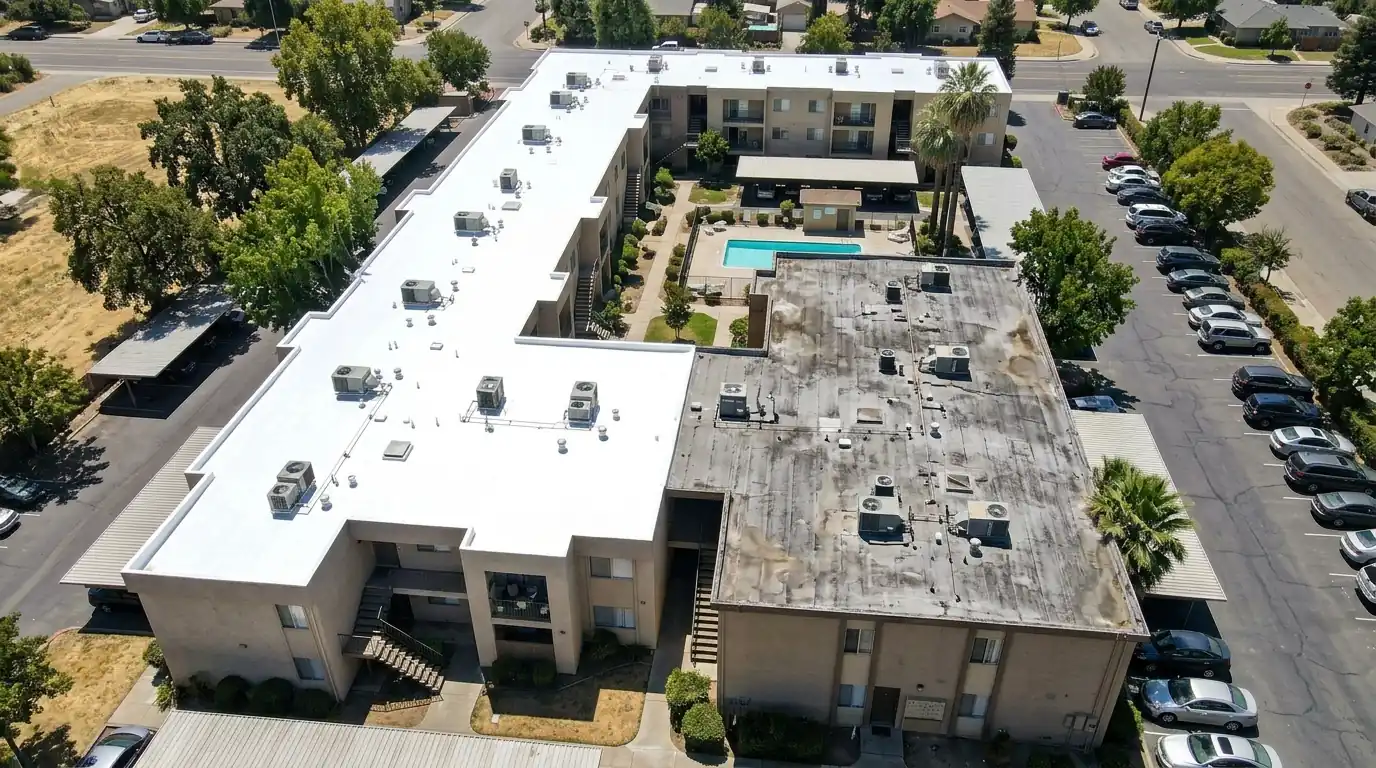
Cool roof coating is a reflective white or light-colored membrane that bounces sunlight away from the roof instead of absorbing it. It can lower surface temperature by a large margin and may help California Title 24 compliance. Typical Sacramento cost runs 1.55 to 3.60 per sq ft, with jobs taking one to three days.
What this job involves
A dark roof on a 105 F Sacramento afternoon can reach surface temperatures far above the air, and that heat moves down into the attic and rooms below. A cool roof coating counters this with high solar reflectance and high thermal emittance. Reflectance is how much sunlight is bounced off. Emittance is how well the roof releases the heat it did absorb. Cutting that peak heat is the whole point of the coating.
Both numbers matter, and both fade as dirt builds up and coatings age. That is why a cool roof is not a one-time fix. Regular washing and eventual recoating keep the benefit alive. Cool roof coatings work on flat and low-slope roofs of many types, including foam, metal, mod-bit, built-up and mobile home roofs, and they pair well with a repair or restoration project. We explain both ratings so you can compare products.
Signs a cool roof coating would help
If top-floor rooms or rooms under a flat roof run well above the rest of the building, roof heat gain is likely a major cause.
Black, tan or weathered gray roofs absorb most sunlight. A white reflective coating changes that on the same roof surface.
Air conditioning load climbs as roof heat enters the building. Reflective coating can reduce that load, though savings vary by building.
A dry, well-attached roof that still has life left is the right candidate. Coating protects it and adds reflectivity in the same visit.
Some reroofs and re-covers in California must meet cool roof requirements. A qualifying coating can help comply on eligible low-slope projects.
HVAC units working on a hot roof use more power. A cooler roof surface around the equipment can ease the strain on the system.
What reflectance and emittance mean
Solar reflectance is a number between zero and one that describes how much sunlight a surface reflects. Fresh white coatings often rate well above 0.80, while a dark roof may be 0.05 to 0.15. Thermal emittance describes how readily the roof gives off absorbed heat as infrared. Cool roof ratings combine both, and many products are listed with an independent rating body. These ratings are measured on new samples. Real roofs lose reflectance as dust, pollen and mildew collect, so aged values are lower. When we recommend a coating we look at both the initial and aged values, because the aged rating shows what the roof will actually do after a couple of dry seasons in the valley.
Choosing between white coating types
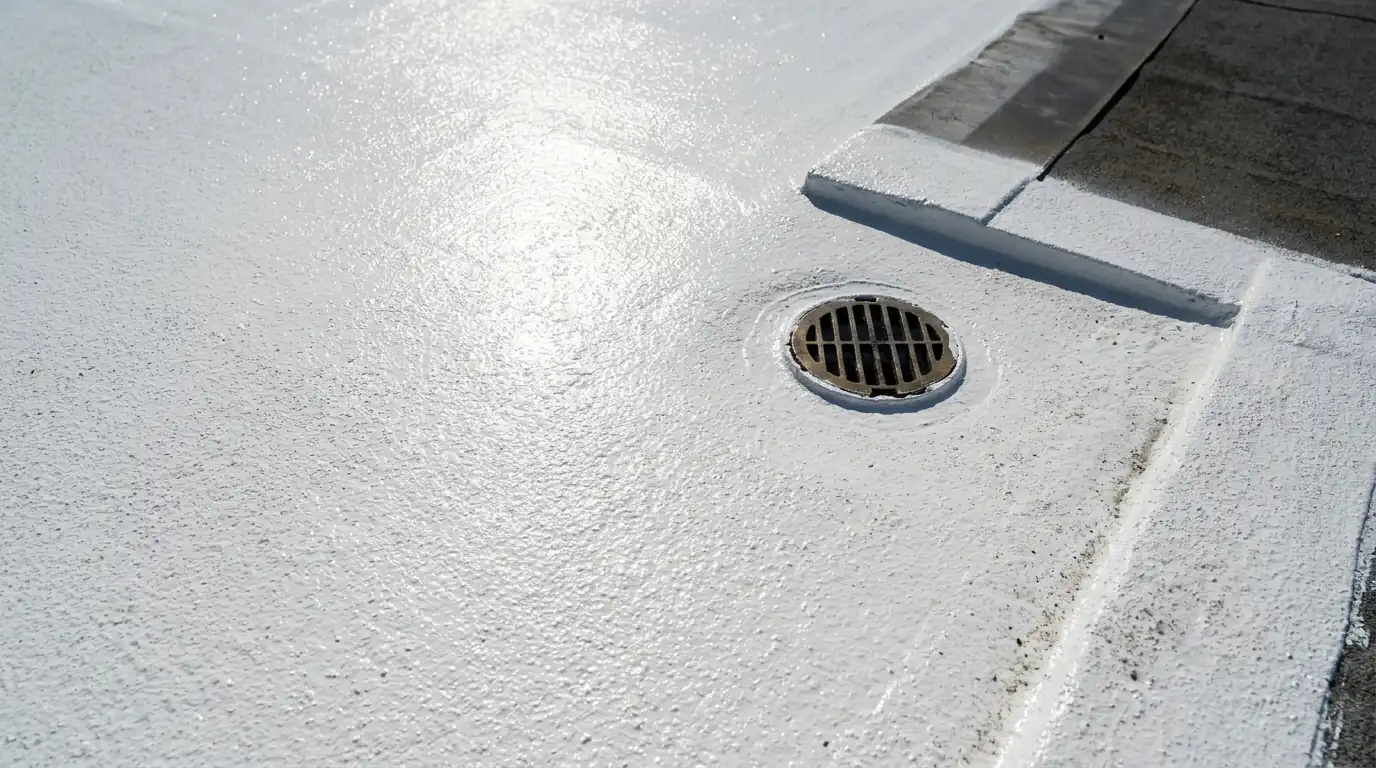
Acrylic cool roof coatings are the most common and cost less. They work well on roofs that drain properly. Silicone holds up under standing water and keeps its flexibility, and it stays clean-looking longer in some conditions, though it picks up dirt. Polyurethane topcoats add toughness where foot traffic is heavy. Beyond the chemistry, thickness decides performance. Thin coatings let dark colors show through and wear sooner. We apply to a target dry mil thickness and check it with a gauge, rather than guessing from the bucket count. White is the default for peak reflectance, though lighter tan and gray options exist for appearance, with slightly lower reflectance.
- Acrylic for drained roofs and lower cost
- Silicone for ponding and long life
- Polyurethane base where traffic is heavy
- Aged reflectance, not just new, compared
- Dry mil thickness verified by gauge
Setting expectations on savings
A cool roof will not make your building cold, and it will not help the winter heating bill. Savings depend on insulation, ductwork, windows, equipment and how much of the building is under the coated roof. Buildings with flat roofs and little attic insulation tend to see the biggest change. Buildings with thick attic insulation see a smaller one. A cool roof also reduces thermal stress on the roof materials, which can slow aging. That is a real benefit, but it is not a guarantee of a set number of years. We would rather tell you what is typical than promise a percentage. Pairing coating with added insulation, such as spray foam, often gives the best combined result.
Our process for cool roof coating
Six steps, in the order the crew does them on a Sacramento roof.
- Step 1Review roof and goals
We check the roof type, condition and drainage, and talk about heat, bills and any Title 24 questions to choose the right coating.
- Step 2Clean and dry
The roof is pressure washed to remove dirt and chalk, since a clean surface is what lets the coating reflect and bond.
- Step 3Repair weak spots
Cracks, seams, flashings and fasteners are sealed with fabric and mastic before any reflective layer goes on top. Cracks, seams, flashings and fasteners are sealed with fabric and mastic before any reflective layer goes on the roof.
- Step 4Prime and test patch
Where the old surface needs it, a primer is applied and a small test patch confirms adhesion before the whole roof is coated.
- Step 5Apply reflective coat
Coating is rolled or sprayed in crossing coats to the specified dry mil thickness, with extra attention at edges and curbs.
- Step 6Final check and care plan
We inspect the roof, clear drains and give you a simple washing schedule to keep reflectance high through the dry season.
What cool roof coating costs in Sacramento
A 2,400 sq ft flat roof on a small commercial building, cleaned, repaired and coated with white acrylic, typically costs near 4,300 to 6,200.
- Acrylic or silicone choice
- Condition and repair needs
- Dry mil thickness
- Roof size and access
Planning a recoat? The coating calculator turns roof area, coating type and target thickness into gallons and pails.
Sacramento conditions that matter
Sacramento's long hot summers are the case for cool roofs. Many days top 100 F from June through September, and the Delta breeze often arrives only in the evening, so roofs bake through the afternoon peak that SMUD customers pay the most for. Dusty summers and orchard pollen lower reflectance if the roof is never washed. California Title 24 can require cool roof properties for some low-slope reroofs, and local rules differ by project type, so check the details before you plan. Winter rain actually helps by rinsing the roof, but fog and dew can delay application, so coating work targets the dry months.
Often paired with this service
Silicone Roof Coating
Ponding-resistant liquid roof membrane
View serviceAcrylic Roof Coating
Reflective elastomeric roof coating
View serviceRoof Ventilation
Let the attic breathe
View serviceSpray Foam Insulation
Insulating and air sealing the roof
View serviceRead before you decide
Silicone vs Acrylic Roof Coating in Sacramento Heat
Silicone and acrylic coatings both reflect heat, but they behave very differently under standing water, dirt and recoating. This guide compares them for Sacramento summers and winter rain.
Read the guideCool Roof Rules When You Reroof in Sacramento
California's Title 24 energy code can require a cool roof when you replace or recover a roof. This guide explains solar reflectance, thermal emittance and how to plan a reroof so it passes.
Read the guideAttic Heat: Better Vents or Spray Foam?
A Sacramento attic can top 130 degrees in July, and there are two main ways to fight it. This guide compares balanced ventilation with spray foam at the roof deck, and when each makes sense.
Read the guideQuestions about cool roof coating
What is the difference between reflectance and emittance?
Reflectance is the share of sunlight the roof bounces away. Emittance is how well it releases heat it has absorbed. A good cool roof needs both. Metal can reflect well but emits poorly when bare, which is why coated metal often performs better than bare metal for heat control.
Does a cool roof coating help in winter?
It does not add winter heat, and it can slightly reduce solar gain on sunny cold days. In Sacramento, where winters are mild and cloudy, that effect is small compared with the summer cooling benefit. Most owners see the net benefit in lower summer cooling load.
How often should I wash a cool roof?
Once or twice a year is a good rule, usually after the dry season dust and pollen settle. Washing with water and mild detergent restores much of the reflectance. Pressure should be moderate so the coating is not damaged. We can show you a safe method.
Can a cool roof coating be applied to a pitched roof?
Yes, on metal and some low-slope pitched roofs, with the right product. Tile and shingle have their own cool roof products, and coating them is a different process. For steep roofs, we usually suggest a cool-rated shingle or tile replacement instead of coating. Ask us for the right product.
Will a white roof show dirt quickly?
It shows some, especially near construction, orchards or busy roads. Acrylic tends to hold dirt in its surface. Silicone can pick up dust but sheds some in rain. Either way, expect a gradual dulling and plan on regular washing to keep the roof bright and cool.
Roof leaking, peeling or baking in the sun?
Call the 24/7 line. Tell us the roof type, where the water shows up or what the coating looks like, and we will tell you what we would check first and when a crew can be there.