Fix the wood under the roof
Dry rot and roof deck repair in Sacramento, CA
Soft, crumbling sheathing under a roof means water has been getting in for a long time, and covering it with new roofing only hides a deck that cannot hold fasteners.
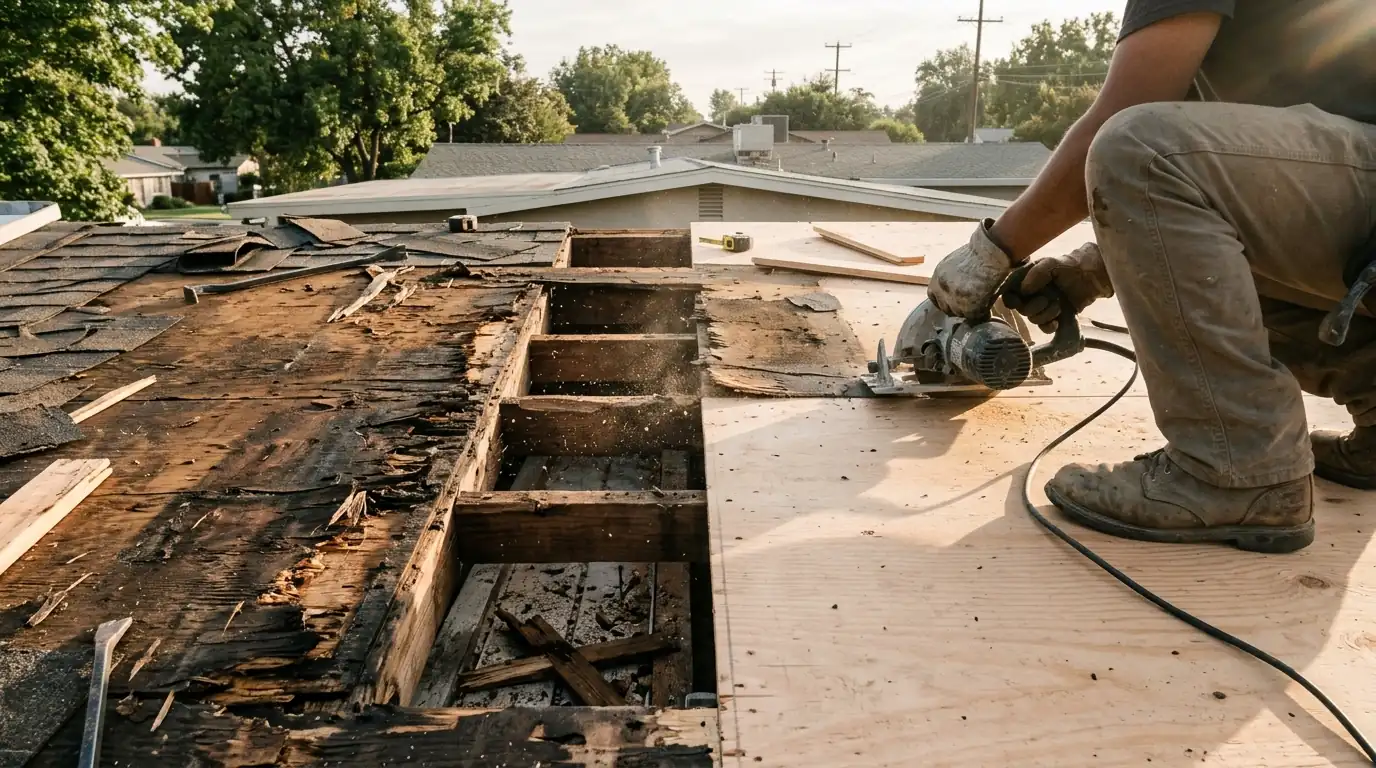
Dry rot repair cuts out decayed roof sheathing, fascia or rafter ends and replaces them with sound wood after the water source is fixed. Small patches typically cost 385 to 1,260. Full deck replacement runs 3.20 to 6.90 per sq ft. Most patch jobs take half a day, and larger areas one to three days.
What this job involves
Dry rot is wood decay caused by moisture, and it is not really dry. Fungi break down wood fibers when decking, fascia or rafters stay damp for long periods. The result is soft, crumbly or cracked wood that cannot hold nails and no longer supports the roofing on top of it.
The first step is to find why it got wet: a leaking flashing, a clogged gutter, poor ventilation or a roof that has ponded for years. If the cause is not fixed, new wood will rot too. We cut out damaged areas back to solid wood, replace them with matching sheathing or lumber, and re-cover with new underlayment and roofing. On flat roofs, decks under foam or coating can be repaired while the roof is open.
Signs of rot in your roof structure
A roof that flexes or feels spongy when walked on probably has decayed or delaminated sheathing underneath, not just worn roofing.
A dip across a roof plane or visible waves in the shingles often show sheathing that has weakened and is no longer holding its shape.
Wood at the roof edge that flakes, splits or can be pierced with a screwdriver shows long-term gutter or edge leaks.
Black or brown, fuzzy or checked sheathing and a damp smell in the attic point to a slow leak or condensation problem.
Nails or screws that pop up or no longer hold in the deck mean the wood around them has softened or dried and cracked.
Rot often centers on penetrations and wall joints where water has entered repeatedly, so check there first.
Plywood versus plank decking
Most homes built after the 1960s have plywood or OSB sheathing in 4x8 sheets, typically 1/2 or 5/8 inch thick. Older homes, especially pre-1960s ranch and craftsman houses, often have 1x6 or 1x8 plank decking with gaps. Plank decking is solid wood but can crack and split, and gaps make it harder to nail new roofing evenly.
When we replace plank, we may use matching boards, or sheet over sections with plywood to give a flat surface. Plywood patches must land on rafters, with proper edge support, so the repair is stable.
- Plywood or OSB sheets
- Plank decking with gaps
- Fascia and rafter tails
- Soffit boards
- Flat roof decks under membrane
How we cut out and rebuild
We mark the damaged area with a moisture meter and probe, cutting back to solid, dry wood, usually to the next rafter. Rafter tails with rot can be repaired by sistering a new board alongside or by cutting out and splicing, depending on the extent and the structure's needs.
The replacement deck is nailed to code spacing, sealed at seams if needed, covered with underlayment and tied into the existing roof. Where the surface is foam, the repair area gets foam and coating that is tied into the surrounding roof.
Fix the cause or it will rot again
New wood in the same wet conditions will fail. We look for flashing failures, clogged gutters, ponding, lack of ventilation, condensation from bath fans and plumbing leaks. If the water source is unclear, we recommend a leak trace first.
If rot is widespread, partial repair may not be worth it, and a full reroof with a deck replacement may make more sense. We give you options and typical price ranges before any decision.
Our process for dry rot & roof deck repair
Six steps, in the order the crew does them on a Sacramento roof.
- Step 1Find the extent
We probe suspect areas, use a moisture meter and check the attic and fascia so we know how far the decay really goes.
- Step 2Identify the water source
We trace what let water in: flashing, gutter, ponding or condensation, and note it in the repair plan so it gets fixed as well.
- Step 3Cut out damaged wood
Rotted sheathing, fascia or rafter tails are cut back to solid, dry wood, and the area is cleaned of debris and mold-prone material.
- Step 4Install new framing and deck
New sheathing is fastened to rafters at the proper spacing, and sistered or spliced rafter repairs are made where needed.
- Step 5Waterproof and reroof
Underlayment, flashing and roofing are installed over the repair and tied into the surrounding roof, or foam and coating is applied on flat decks.
- Step 6Final check
We confirm the deck is firm, the repaired area drains properly, and we photograph before, during and after for your records.
What dry rot & roof deck repair costs in Sacramento
Replacing about four sheets of rotted plywood sheathing plus a short section of fascia typically costs around 1,180 to 2,140 including new underlayment.
- Area of damaged deck
- Plywood or plank decking
- Rafter or fascia repair
- Roof type and access
Compare this job with others in the Sacramento roofing cost guide.
Sacramento conditions that matter
Rot in the Sacramento area often starts at gutters, valleys and roof-to-wall joints where winter rain and fall leaves hold moisture. Older ranch homes with plank decking and little attic ventilation can see condensation rot in winter from tule fog and damp mornings. Summer heat then dries and cracks the wood, so nails loosen. Flat roofs with long-standing ponding also rot at low spots. Termites and carpenter ants can follow moisture-damaged wood, and a pest inspection is wise when rot is widespread, especially on foothill homes with tall trees nearby.
Questions about dry rot & roof deck repair
How do you know how much roof decking is rotted?
We probe the wood with a screwdriver, take moisture readings from above and below and look at the attic side for dark staining. Rot usually extends beyond the visible damage, so we cut back to firm, dry wood and mark the repair area before pricing it.
Can I just cover soft decking with new shingles?
It is not recommended. Soft wood cannot hold nails, so new roofing can loosen, blow off or sag. It also hides a leak that is still active. Damaged sheathing should be replaced so the new roof has solid support and can pass inspection.
What is the difference between rotted fascia and rotted decking?
Fascia is the board at the roof edge where gutters attach, while decking is the sheathing under the roofing. Fascia rot usually comes from gutter overflow or edge leaks, and decking rot from leaks higher up. Both can be present, and we check both when we inspect.
Do you repair rotted rafter tails?
Yes. Rafter tails at the eaves often rot from gutter or edge leaks. Depending on the extent, we can sister a new board beside the damaged one or cut and splice sound lumber. Larger structural issues may need a framer, and we tell you if so.
Can rot under a flat foam or coated roof be fixed without a tear-off?
Often yes. We scan for wet areas, cut out the foam and the damaged deck in that section, replace the wood, and then rebuild with new foam and coating tied to the surrounding roof. Widespread rot may call for a larger replacement.
Roof leaking, peeling or baking in the sun?
Call the 24/7 line. Tell us the roof type, where the water shows up or what the coating looks like, and we will tell you what we would check first and when a crew can be there.