Seams, ponding, blisters, punctures
Flat roof repair in Sacramento, CA
Flat and low-slope roofs hold water instead of shedding it, so a small crack or open seam becomes a leak, and a stain, within a single storm.
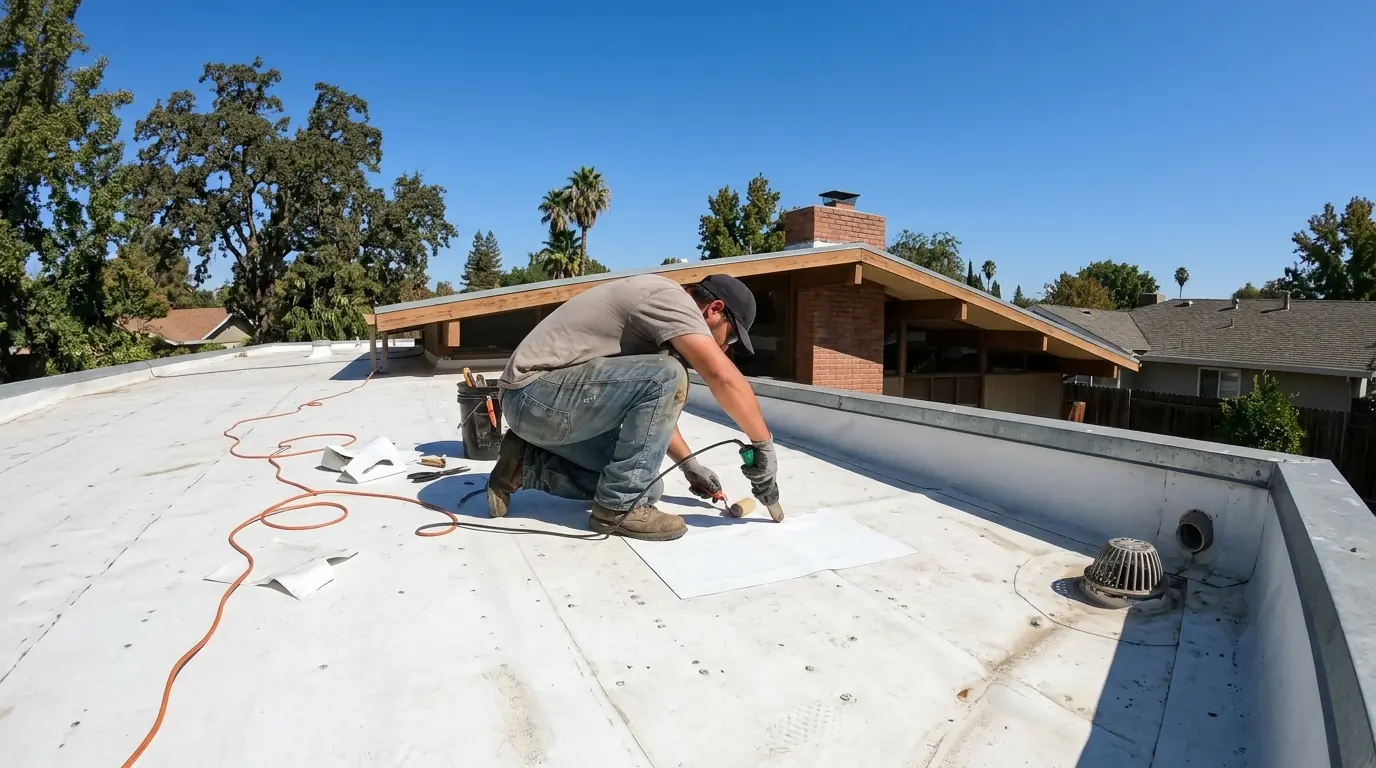
Flat roof repair fixes seams, blisters, punctures, failed flashing and low spots before leaks spread into the deck. Typical Sacramento repairs run 560 to 3,940 per job, and most take half a day to two days. The right fix depends on membrane type, age and whether the insulation below is wet.
What this job involves
Low-slope roofs are common here, on mid-century homes, additions, garages, small apartment buildings and thousands of commercial properties. They drain slowly, so any weakness gets tested. Seams open from heat cycling, flashing at walls pulls away, and standing water speeds up wear. Because water travels under the membrane before it shows up inside, the stain on the ceiling can be well away from the real opening. Small cracks grow fast on a flat roof.
We repair TPO, modified bitumen, built-up, EPDM and older rolled roofing. A good flat roof repair starts with finding wet areas, cutting out failed membrane and rebuilding the layer with the right material, not just coating over it. When the roof is mostly sound but worn, we can also offer a coating or foam as an alternative to replacement. That is often the lower-cost path for a worn but dry roof.
Signs your flat roof needs repair
Puddles that remain more than a day or two mean low spots or clogged drains. Ponding speeds up membrane wear and can overload the structure.
Raised areas in built-up or modified bitumen roofs trap moisture or air under the surface. Once they split, water gets directly into the layers below.
Seams that lift or show gaps, especially along walls and at penetrations, are the number one entry point for leaks on single-ply roofs.
Cracks along parapets, curbs and pipe collars show where movement has broken the seal. Old caulk usually fails before the membrane does.
Foot traffic, dropped tools and HVAC service can puncture membranes. Even small holes let water into the insulation below. Check them after any service visit.
A soft area when you walk on the roof often means saturated insulation. That section generally needs to be cut out and replaced.
Repair methods by membrane type
TPO and PVC are repaired by cleaning the area, then heat-welding a new patch with a hot-air gun. EPDM uses primer and splice tape or liquid adhesive. Modified bitumen is patched with torch-applied or cold-applied cap sheet. Built-up roofs get fresh plies mopped or cold-applied, with gravel removed and replaced. Matching the repair method to the existing material matters, because incompatible products can bubble or not bond at all. On older roofs, patches also need compatible primer, since a new patch on dusty, chalky membrane will peel at the edges within a season.
- TPO patches are hot-air welded over a cleaned surface
- EPDM seams use primer and splice tape, not tar
- Mod-bit patches are torched or self-adhered, depending on the roof
- BUR repairs replace failed plies and re-flood the surface
Fixing the cause, not the symptom
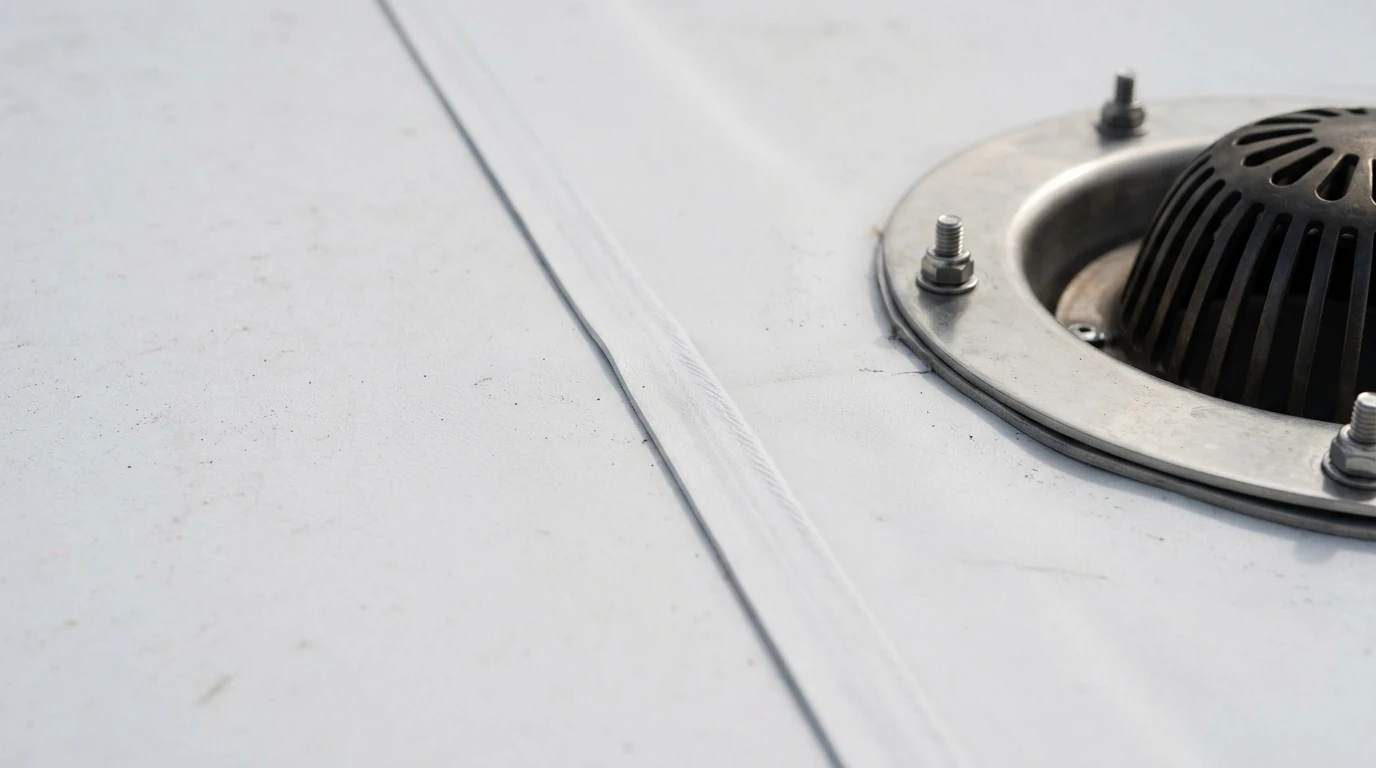
A flat roof leak is rarely only at the spot where water appears. We check drains, scuppers, curbs, penetrations and low spots. If ponding is the cause, patching a seam without addressing the low spot just resets the clock. When wet insulation is found, we cut out the saturated section and replace it with dry material before patching the membrane. Sealing over wet insulation traps moisture and leads to blisters later. We also mark every repair on a roof diagram so you know what was touched.
When repair is not the right call
If the membrane is cracked across the field, chalky, or has multiple failed seams, repairs may only delay the inevitable. A roof with soaked insulation over a large area may be a candidate for replacement. If the membrane is sound but worn, a fluid-applied coating or foam over the existing roof can be a more economical option, and we will explain the trade-offs for your roof. A fair price comparison between repair, coating and replacement is part of every inspection, and we put the numbers side by side.
Our process for flat roof repair
Six steps, in the order the crew does them on a Sacramento roof.
- Step 1Inspect surface and drains
We walk the roof, check seams, flashing, drains and low spots, and look for blisters, wet insulation and prior repairs.
- Step 2Locate the water path
We use moisture meters or infrared methods where appropriate, plus attic inspection, to find where water enters and travels. Readings are marked right on the roof.
- Step 3Clean and prepare
The repair area is cleaned, dried and prepped, with failed membrane cut out and any wet insulation removed. Edges are cut back to sound material.
- Step 4Install the repair
A matching patch or new plies are installed using the right method for the roof type, with proper overlap and sealed edges.
- Step 5Reseal flashing details
Walls, curbs, drains and pipe collars are re-flashed or resealed with compatible materials, not generic caulk. Each detail gets compatible sealant and a fabric reinforcement layer.
- Step 6Test and review
We inspect all seams, water test where needed, and explain remaining wear and what to watch before the next rainy season.
What flat roof repair costs in Sacramento
A typical repair of two seams, one blister and a cracked pipe flashing on a residential low-slope roof runs about 890 to 1,640.
- Membrane type and age
- Amount of wet insulation
- Roof access and height
- Number of penetrations and flashing details
Compare this job with others in the Sacramento roofing cost guide.
Sacramento conditions that matter
Sacramento summers bake flat roofs, and the heat cycle between hot afternoons and cool Delta breeze nights stresses seams and flashing. Winter rain then finds those weak spots. Many mid-century homes, including Streng Bros. style houses in Sierra Oaks, Wilhaggin, Carmichael and Davis, have flat or low-slope sections with older built-up or roll roofing. Commercial strip centers and warehouses add large TPO and mod-bit roofs. Ponding is common where drains clog with leaves from valley oaks and sycamores, and standing water in summer heat accelerates membrane failure. Low drains tend to clog after fall leaf drop.
Often paired with this service
Flat Roof Coating
Restoring flat roofs without tear-off
View servicePonding Water Repair
Fixing puddles on flat roofs
View serviceFlat Roof Replacement
New membrane, insulation and drainage
View serviceFoam Roof Repair
Fixing damaged spray foam roofs
View serviceRead before you decide
Questions about flat roof repair
Can a flat roof leak be fixed without replacing the whole roof?
Often yes. If the membrane is mostly sound, we cut out the damaged area and install a matching patch or new plies. Widespread cracking, soaked insulation or multiple failed seams change that answer. We inspect and show you the extent of damage before recommending repair or replacement.
Why does my flat roof leak when I see no hole?
Water often enters at a seam, flashing edge or penetration, then travels along the deck or between layers before dripping inside. The visible stain may be several feet away from the opening. That is why we trace the water path instead of patching the stain location.
Is roof tar a good fix for a flat roof?
Tar and roof cement are short-term fixes at best. They crack under heat and do not bond well to TPO or EPDM. Used on the wrong membrane, they can damage it. We use patches and sealants compatible with the existing roof type. Tar can also void some membrane warranties.
How do you handle wet insulation under the membrane?
We find it with moisture detection, cut out the wet section, and replace it with dry insulation before patching the membrane. Sealing over wet insulation traps moisture and leads to blisters or deck rot. We show you the removed material so you can see the extent.
How soon should ponding water be dealt with?
Water standing longer than about 48 hours after rain deserves attention. It speeds up membrane wear, grows algae and adds weight to the structure. Solutions include clearing drains, adding tapered insulation, or a foam fill, depending on the roof condition and budget. A tapered fill or added drain is the permanent fix.
Roof leaking, peeling or baking in the sun?
Call the 24/7 line. Tell us the roof type, where the water shows up or what the coating looks like, and we will tell you what we would check first and when a crew can be there.