New membrane, insulation and drainage
Flat roof replacement in Sacramento, CA
When a flat roof has soaked insulation, split seams and ponding that keeps coming back, the membrane has reached the end and patching only spends money.
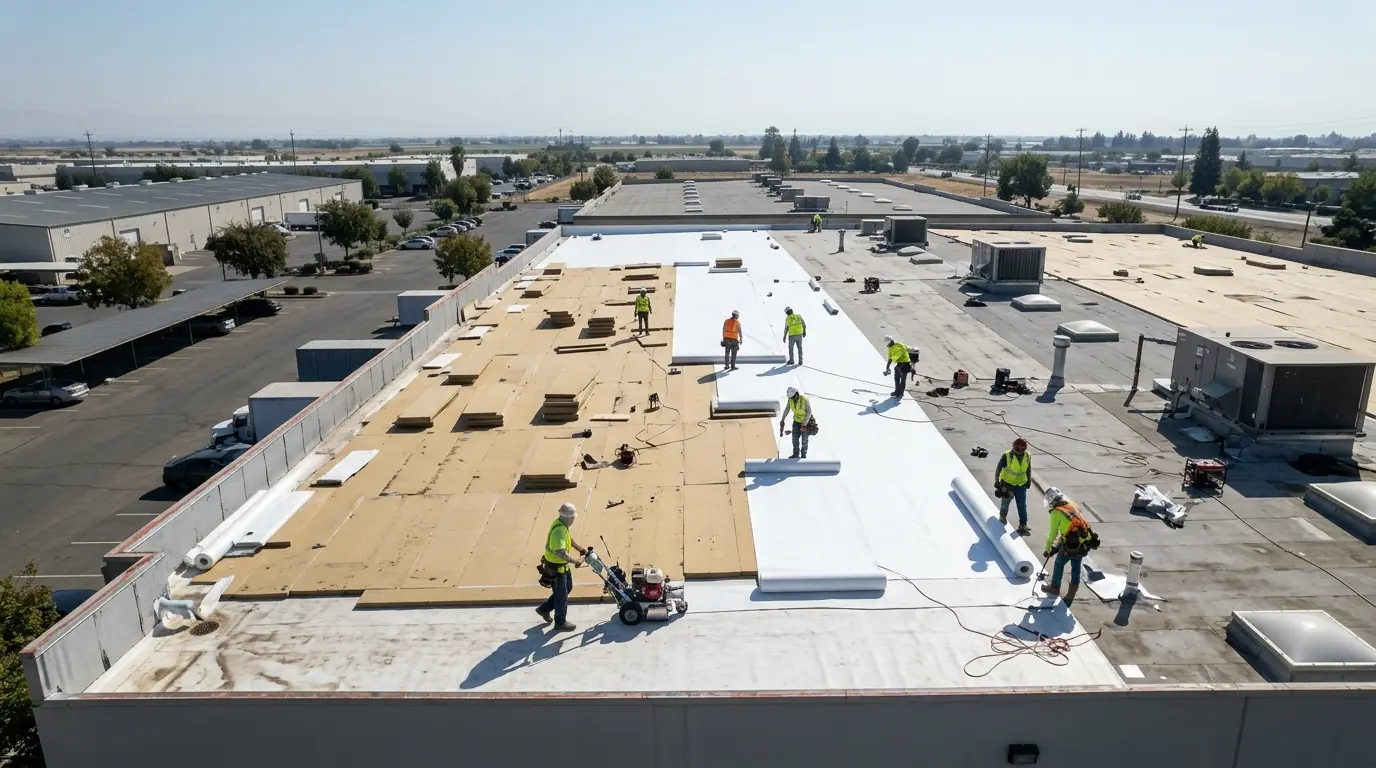
Flat roof replacement removes failed layers, repairs wet insulation and deck, and installs a new membrane system such as TPO, modified bitumen, EPDM or spray foam. In Sacramento, typical costs run 6.40 to 15.80 per sq ft, with most residential roofs finished in one to four days. We price after inspection.
What this job involves
A flat roof is really a low-slope roof, and the way it drains matters as much as the membrane. Many older roofs in the Sacramento area were laid nearly dead flat, with too few drains and layers added over layers. When we replace one, we look at slope, drains, insulation and deck, not just the surface. Fixing the drainage during replacement is the cheapest time to do it. We explain the trade-offs honestly.
The main options are single-ply membranes like TPO and EPDM, modified bitumen, built-up roofing, and spray polyurethane foam with a protective coating. Each has trade-offs in cost, heat reflectivity, life span and how it handles foot traffic. Foam is our specialty and can be a strong fit for a roof with sound decking and insulation, but we also install the other systems and recommend the best fit for your building.
Signs a flat roof needs replacing
If moisture surveys or core samples show saturation across a large area, patching the membrane will not dry it out. Replacement is the practical fix.
A roof that keeps splitting at seams, even after repair, is shrinking or brittle. The membrane has lost the flexibility it needs for heat cycling.
Surface cracking in a pattern across the field, or exposed felt, shows the protective layer is gone and the roof is aging out.
Chronic standing water means the deck sagged or the slope is wrong. Replacement lets us add tapered insulation to move water to the drains.
Roofs with several old layers may be overweight and hide problems. A full tear-off exposes the deck and resets the structure.
A dark, aged membrane soaks up heat. Replacing with a reflective white membrane or coated foam can lower rooftop temperatures noticeably.
Choosing a replacement system
TPO is a white, heat-welded single-ply membrane and a popular choice for reflectivity and cost. EPDM is a black rubber membrane, durable and easy to repair, often used on residential flat roofs. Modified bitumen has multiple layers that handle foot traffic well. Built-up roofing is the traditional tar and gravel option. Spray foam creates a continuous, insulating layer when finished with a coating. Budget, building use, drainage and Title 24 cool roof requirements all shape the choice. Cost, reflectivity and warranty length differ between them, so we put prices for two or three options side by side.
- TPO: reflective, heat-welded seams, moderate cost
- EPDM: rubber sheet, simple repairs, often black
- Modified bitumen: layered, tough, handles foot traffic
- Spray foam: insulating, no seams, needs a protective coating
Doing the details right
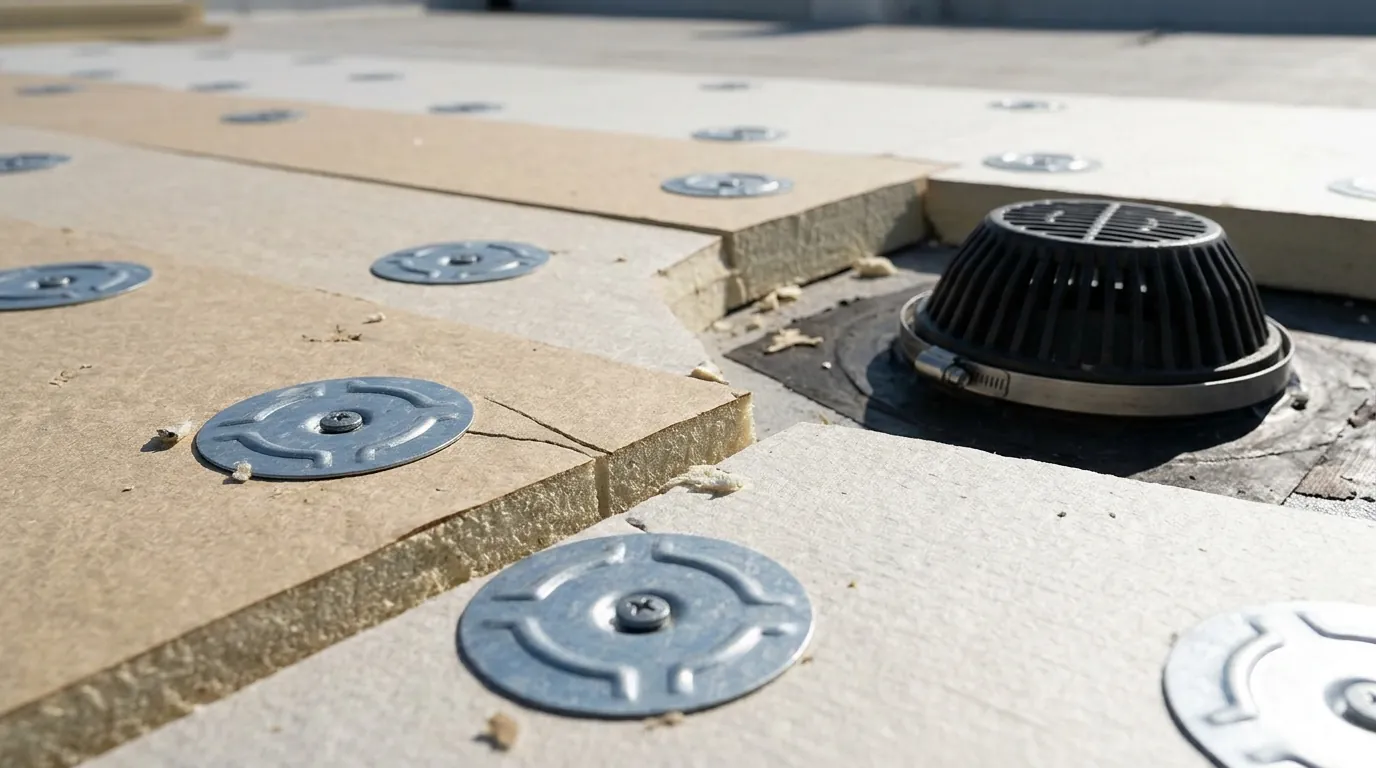
The membrane gets the attention, but details decide how long it lasts. We replace wet insulation, install tapered insulation where water has to move to drains, and make sure parapet walls, curbs and penetrations are flashed with the same system. Edge metal, scuppers and drains get new or reworked components, since a new membrane with an old, leaking drain is still a leaky roof. Fasteners and adhesive have to match the deck type. Plywood, concrete and metal decks each need different attachment methods.
What to expect on the job
Most flat roof replacements start with tear-off of the old membrane, then insulation and deck repair, new insulation boards or tapered system, and the new membrane. Noise and some dust are normal, and we protect HVAC units, skylights and landscaping. On occupied buildings, we plan work in sections so the roof is watertight at the end of each day. Your own schedule matters too. We tell you ahead of time which days will be loud, when the crane or hoist arrives, and when rooftop units need to be shut down for flashing work. Tenants and neighbors get a heads-up from you, and we keep walkways clear.
Our process for flat roof replacement
Six steps, in the order the crew does them on a Sacramento roof.
- Step 1Inspect and test
We check slope, drains, insulation moisture and deck condition, and measure the roof area and all penetrations. We also photograph existing conditions.
- Step 2Select the system
We compare TPO, mod-bit, EPDM, BUR and foam against your budget, usage and rooftop equipment, then agree on one. You see prices side by side.
- Step 3Tear off and clean
Old membrane and failed layers come off, and the deck is swept and checked for rot, rust or delamination. Debris goes straight to a dump trailer.
- Step 4Repair deck, add insulation
Damaged deck sections are replaced, then new insulation or tapered boards are installed to create positive drainage. Joints are staggered to avoid thermal leaks.
- Step 5Install new membrane
The new membrane goes on with sealed seams, properly lapped edges and manufacturer-approved fasteners or adhesives. Seams are checked before anything is flashed.
- Step 6Flash and finish
Walls, curbs, drains and penetrations are flashed, edge metal is installed, and the finished roof is inspected before cleanup. You get a plan for yearly drain upkeep.
What flat roof replacement costs in Sacramento
A 1,400 sq ft low-slope roof with TPO and tapered insulation commonly runs about 11,800 to 17,900 installed.
- Membrane type chosen
- Insulation and slope work
- Deck repair needed
- Roof access and equipment on the roof
Compare this job with others in the Sacramento roofing cost guide.
Sacramento conditions that matter
Sacramento roofs face intense summer sun and big daily temperature swings, which stress membranes and seams. A white or reflective surface can cut rooftop heat significantly, and Title 24 cool roof requirements may apply when a low-slope roof is replaced. Winter rains expose weak drains and ponding. Many mid-century homes in Sierra Oaks, Wilhaggin and Carmichael have flat roofs over living space, while commercial areas along Folsom Boulevard and in West Sacramento have large flat roofs with rooftop HVAC. SMUD rebates and utility costs make reflective roofing worth discussing. Drain upkeep matters year round.
Often paired with this service
Spray Foam Roofing
Sprayed-in-place SPF roof systems
View serviceTPO Roofing
White heat-welded single-ply membrane
View serviceModified Bitumen Roofing
Torch-down and self-adhered mod-bit
View serviceFlat Roof Repair
Seams, ponding, blisters, punctures
View serviceRead before you decide
Questions about flat roof replacement
How do I choose between TPO, EPDM and modified bitumen?
TPO suits reflectivity and heat-welded seams. EPDM is simple and flexible on small residential roofs. Modified bitumen is tough under foot traffic. Roof size, rooftop equipment, budget and how long you plan to keep the building decide it. We compare options on your actual roof.
Does a new flat roof need tapered insulation?
Often, yes. Many flat roofs have too little slope, and tapered insulation creates a gentle pitch toward drains. It adds cost but reduces ponding and extends membrane life. We measure existing slope and drain locations to decide how much taper is needed. We measure slope on site before pricing it.
Can the new roof go over the old one?
Sometimes, if the existing roof is dry and the building code allows another layer. Wet insulation, multiple layers, or uneven decking usually require tear-off. We test the existing roof before recommending recover or full replacement. We usually run a few moisture checks first, then explain whether a recover or tear-off is the safer choice for your roof and your budget.
How long does flat roof replacement take?
Small residential roofs often take one to two days. Larger commercial roofs may take a week or more, depending on size and weather. We stage the work so the roof is sealed at the end of each day, avoiding open sections in rain. Weather delays are communicated promptly.
Is spray foam better than a new membrane?
Foam provides insulation and a continuous surface, and works well over a sound deck. It is not ideal if the deck or insulation is badly damaged. We install both foam and membranes, and recommend whichever fits the building condition and your budget. Both are priced on request.
Roof leaking, peeling or baking in the sun?
Call the 24/7 line. Tell us the roof type, where the water shows up or what the coating looks like, and we will tell you what we would check first and when a crew can be there.