Single-ply rubber membrane for flat roofs
EPDM rubber roofing in Sacramento, CA
EPDM is a simple, flexible rubber membrane that works well on small flat roofs, as long as seams, tape and edges are done carefully.
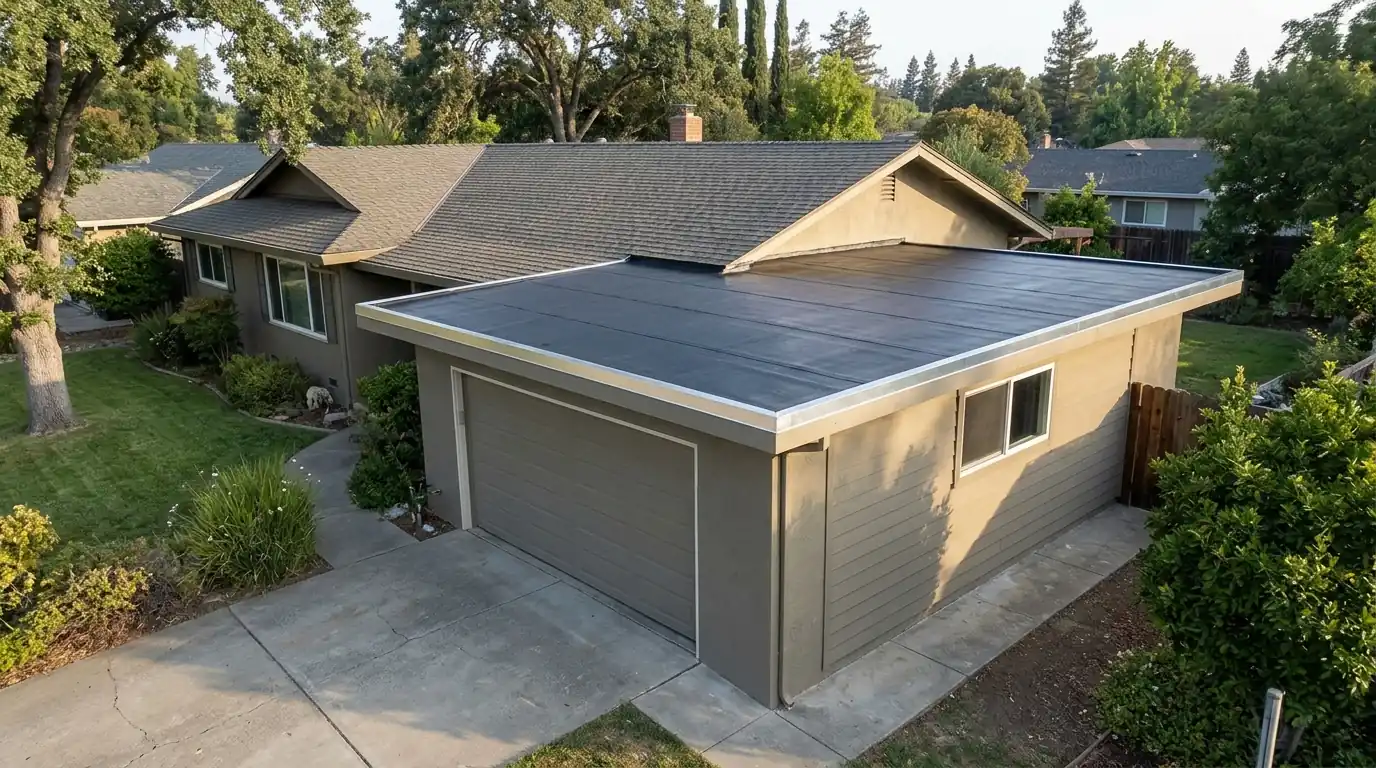
EPDM is a synthetic rubber single-ply membrane for flat and low-slope roofs. In Sacramento, installed cost typically runs 5.40 to 10.90 per sq ft, and most residential jobs take one to two days. Seams use splice tape or adhesive, and white EPDM is available for better heat reflection.
What this job involves
EPDM stands for ethylene propylene diene monomer, a durable rubber sheet sold in 45 and 60 mil thicknesses and in widths up to 50 feet. A small roof can often be covered in one piece, which means no field seams at all. It is popular on residential flat roofs, porch and patio covers, garages, RV covers and small commercial roofs because it is flexible, simple to repair and relatively low cost.
Standard EPDM is black, which absorbs heat, but white EPDM is available and reflects more sun. The membrane can be fully adhered, mechanically attached or ballasted with stone. Quality depends on clean substrate, correct adhesive and careful seam work. We install EPDM as part of a system with insulation and proper flashing, and compare it with TPO, foam and coatings so you get a fit for your roof. We keep the plan simple and honest.
When EPDM is a good fit
A single sheet can often cover a whole garage, addition or porch roof without field seams, which means fewer places to leak.
EPDM is among the lower-cost membranes, particularly for small roofs with simple shapes and few penetrations. Material costs stay low on simple shapes with few penetrations.
Light framing and low slopes suit a lightweight rubber membrane, and we can pair it with proper edge trim. Edge trim also keeps water off the fascia.
Punctures and small tears can be patched with primer and splice tape, so repairs do not need specialty equipment. No heat gun or welder is needed.
EPDM tolerates leaves and light debris well, and cleaning is simple, though sharp branches can still puncture it. Walkway pads protect it from foot traffic.
EPDM stays flexible in cold, which matters little in Sacramento but helps in foothill locations with winter freezes. That also helps in higher-elevation foothill spots.
Seams, tape and adhesive
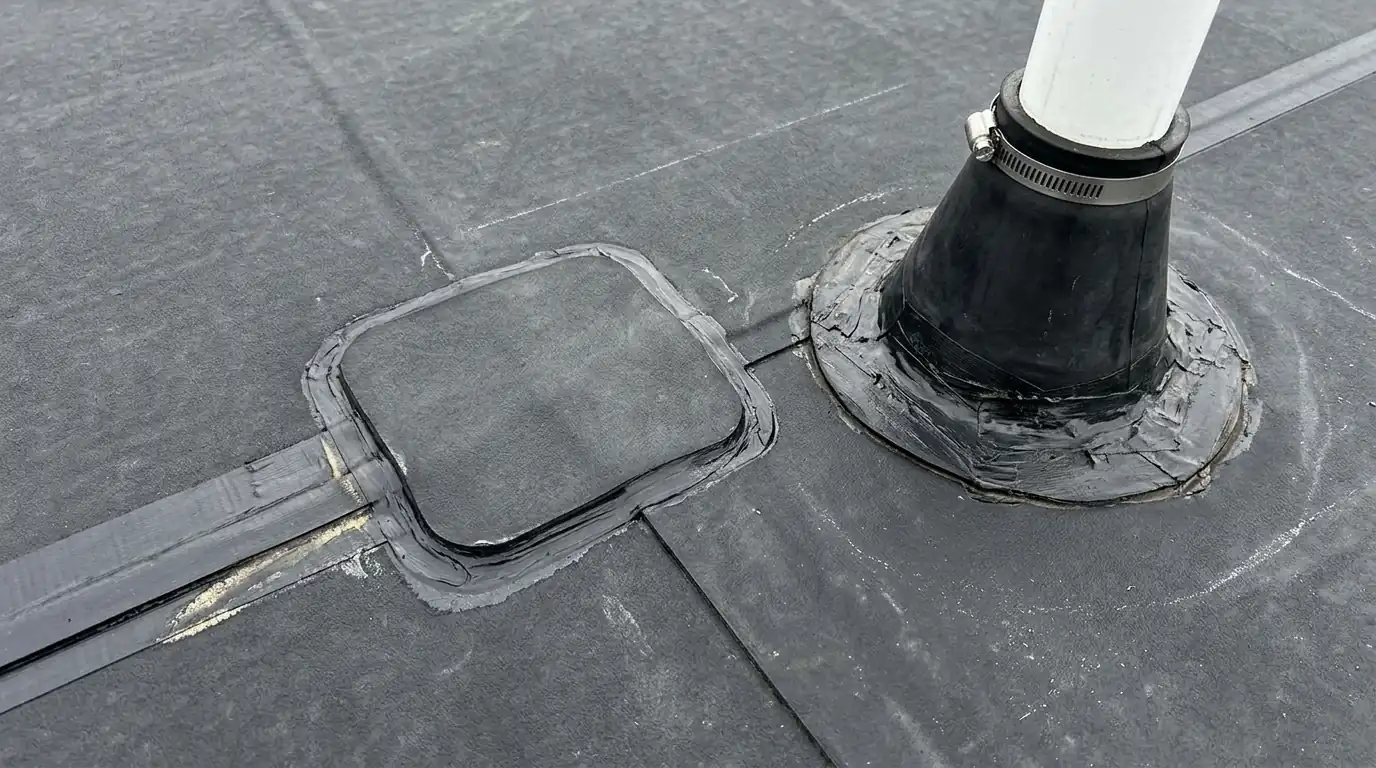
EPDM seams are not heat-welded like TPO. They use primer and factory-applied splice tape, or a liquid seam adhesive, pressed with a roller. Surfaces must be clean, dry and free of dust or oils, and the primer must flash off before tape goes on. Weather and cleanliness affect results, so seam work is where installers earn their keep. Where seams cross, a T-joint patch adds protection. Seam edges are often sealed with lap sealant as a final step. Humidity, dust and temperature all affect adhesion, so we pick the working hours accordingly.
- Primer and splice tape on clean, dry rubber
- Rolled with a hand roller to remove air and set the bond
- T-joint patches at seam intersections
- Lap sealant along exposed seam edges
Attachment and flashing
Fully adhered EPDM bonds to insulation or a smooth deck with bonding adhesive. Mechanically attached systems use fastening plates along seams. Ballasted systems rely on stone weight, which is rarely suitable for lightweight residential framing. At walls, curbs and penetrations, we use pre-formed boots or cured flashing and tape. Edge metal or termination bars secure the perimeter, with sealant at the top edge to keep water from getting behind. We also trim membrane edges neatly and seal every termination, since the perimeter is where wind pulls first and where water finds a gap if the top edge is left unsealed.
Limits and trade-offs
Black EPDM gets very hot in Sacramento summers, and can raise cooling loads and age faster than reflective membranes. White EPDM costs a little more and helps with Title 24 cool roof needs where they apply. EPDM can also be punctured by foot traffic or sharp debris, so walkway pads are a good idea around equipment. Seams are the weak point over decades, which is why we pay close attention to prep. For larger roofs, TPO or foam may be a better fit.
Our process for epdm rubber roofing
Six steps, in the order the crew does them on a Sacramento roof.
- Step 1Inspect and measure
We check the deck, slope, drainage and existing roof, and measure for a single-sheet layout where possible. We also photograph existing conditions.
- Step 2Prepare the substrate
The deck is repaired and cleaned, and insulation board or a cover board is installed for a smooth, firm surface.
- Step 3Roll out and relax
The EPDM sheet is unrolled and allowed to relax in the sun, so wrinkles settle before it is fused. Wrinkles flatten out in the sun.
- Step 4Adhere or fasten
Bonding adhesive is applied to the substrate and underside, then the sheet is rolled into place without wrinkles. We roll the sheet slowly to avoid trapped air.
- Step 5Tape seams and flash
Seams get primer and splice tape, and walls, curbs and penetrations are flashed with cured rubber and sealed edges. Pre-formed boots fit tightly around pipes.
- Step 6Terminate and inspect
Edge metal or termination bars are fastened and sealed, walkway pads are added where needed, and every seam is checked.
What epdm rubber roofing costs in Sacramento
A 600 sq ft garage and patio flat roof with fully adhered 60 mil EPDM, new edge metal and flashing commonly runs 4,200 to 6,100.
- Membrane thickness and color
- Attachment method
- Insulation or cover board
- Edge metal and flashing details
Compare this job with others in the Sacramento roofing cost guide.
Sacramento conditions that matter
EPDM is common on Sacramento residential flat roofs, garages, additions and patio covers, especially on 1950s to 1970s ranch homes with low-slope sections. Black EPDM absorbs a lot of summer heat, so many owners choose white EPDM or add a reflective coating. Winter rain tests seams and edges, and valley oak and sycamore leaves collect in corners and drains, so cleaning matters. Mobile home parks around the region also use rubber roofing in some cases, and Title 24 cool roof rules may apply to some reroofs on low-slope buildings. Leaves collect in corners fast.
Often paired with this service
Questions about epdm rubber roofing
How do EPDM seams stay sealed over many years?
Seams rely on primer, splice tape and a firm roller pass over clean rubber. Many failures trace to dust, moisture or oil during install. We clean with the manufacturer's cleaner, let primer flash off, and finish with lap sealant. Periodic inspection catches lifted edges early.
Is black or white EPDM better in Sacramento?
White EPDM reflects more sun and can lower roof temperatures and cooling loads. Black EPDM absorbs heat but costs a little less. For a conditioned space under the roof, we generally recommend white. For an unheated garage, black may be acceptable. We show you samples so you can compare color.
Can EPDM be patched if it gets punctured?
Yes. We clean the area, apply primer, and set a splice-tape patch rolled firmly over the hole. Small punctures are simple to fix, and the patch bonds well to clean rubber. Old, weathered EPDM needs a thorough cleaning first for the patch to bond. Old rubber needs a thorough cleaning first.
Can a patio cover or addition use EPDM?
Yes, it is a common choice. Lightweight rubber suits light framing, and a single sheet can cover a small roof with no field seams. We install proper edge metal and slope so water drains. Check any local permit requirements for the structure. We also check framing capacity for roof loads.
What is the difference between EPDM and TPO?
EPDM is rubber with taped or glued seams. TPO is plastic-based with heat-welded seams and is usually white. TPO suits larger roofs and reflectivity. EPDM suits small, simple roofs and easy repairs. We compare both for your building and budget. Both are priced on request.
Roof leaking, peeling or baking in the sun?
Call the 24/7 line. Tell us the roof type, where the water shows up or what the coating looks like, and we will tell you what we would check first and when a crew can be there.