Roof work around your solar array
Solar panel removal and reinstall in Sacramento, CA
You cannot reroof or repair under solar panels without taking them off, and every racking foot is a hole in the roof that has to be flashed properly again.
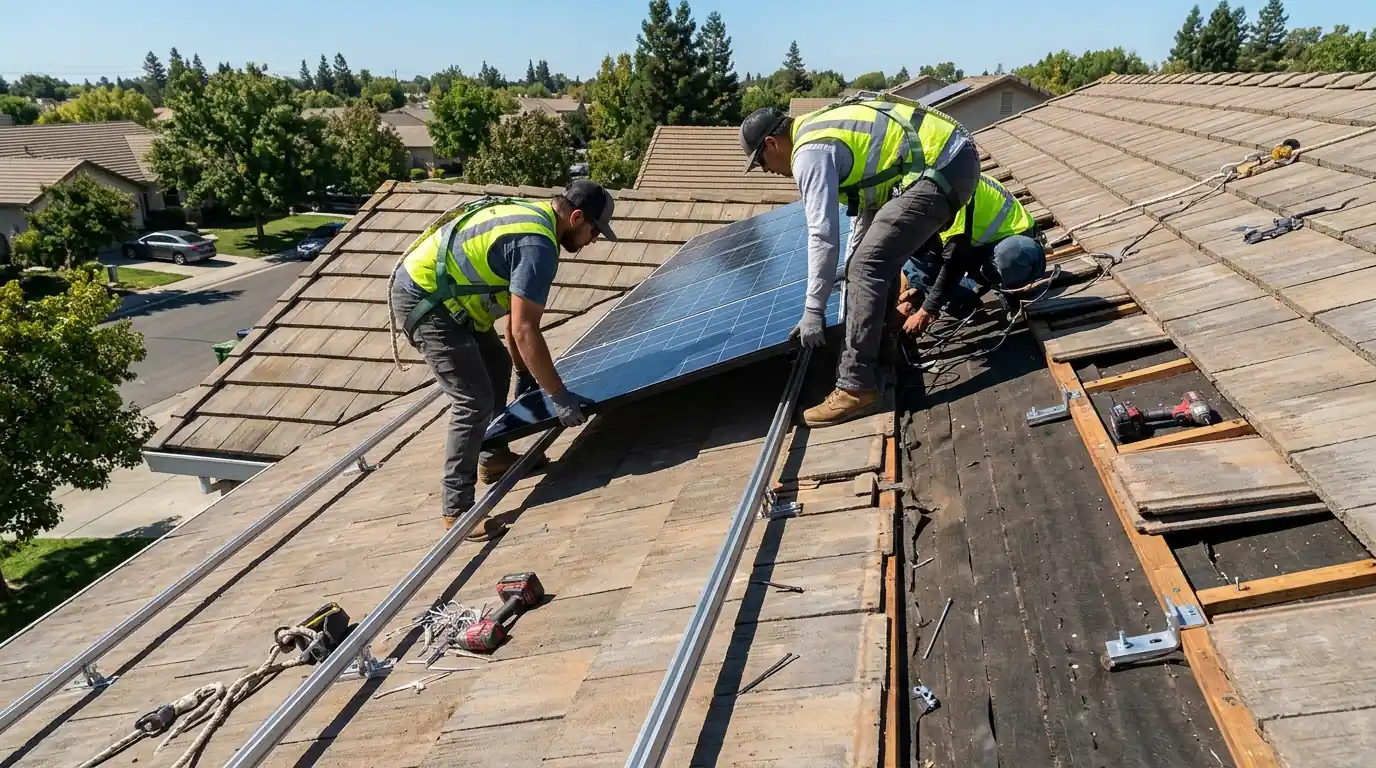
Solar removal and reinstall means detaching panels and racking so the roof beneath can be repaired or replaced, then resetting the array with new flashings. Panel handling typically costs 180 to 410 per panel, depending on rails and wiring. A residential array usually takes one to three days off and one to two days to reset.
What this job involves
Sacramento has one of the highest rates of rooftop solar in the country, and many of those systems were installed over roofs that now need work. Shingles and underlayment under a ten-year-old array may be worn out while the panels still run fine. To fix the roof, the panels have to come off.
We coordinate the roofing side: the safe removal of panels and racks, the roof repair or replacement and the proper flashing of every penetration when the racking returns. Electrical disconnection and reconnection is done by a qualified solar or electrical contractor, and we schedule around them. Roof work beneath an array is one of the best times to replace old flashing, because it is already exposed.
When panels need to come off
Stains below a solar section often come from failed mount flashing or worn roofing around the posts, and the cause cannot be reached with panels in place.
If shingles or tile are brittle and the array is still working, reroofing before the panels age out saves paying for removal twice.
Tile roofs often crack around racking feet. Leaks begin where tile was cut or replaced badly during the original solar install.
Lifted or cracked shingles near rails and conduit show water is getting under the roofing around penetrations.
Adding panels or batteries is easier with a new roof underneath, and many owners reroof first so the system does not have to be moved later.
Impact from a limb or hail can damage both panels and the roof under them, and repairs need both layers handled together.
How racking and flashing work
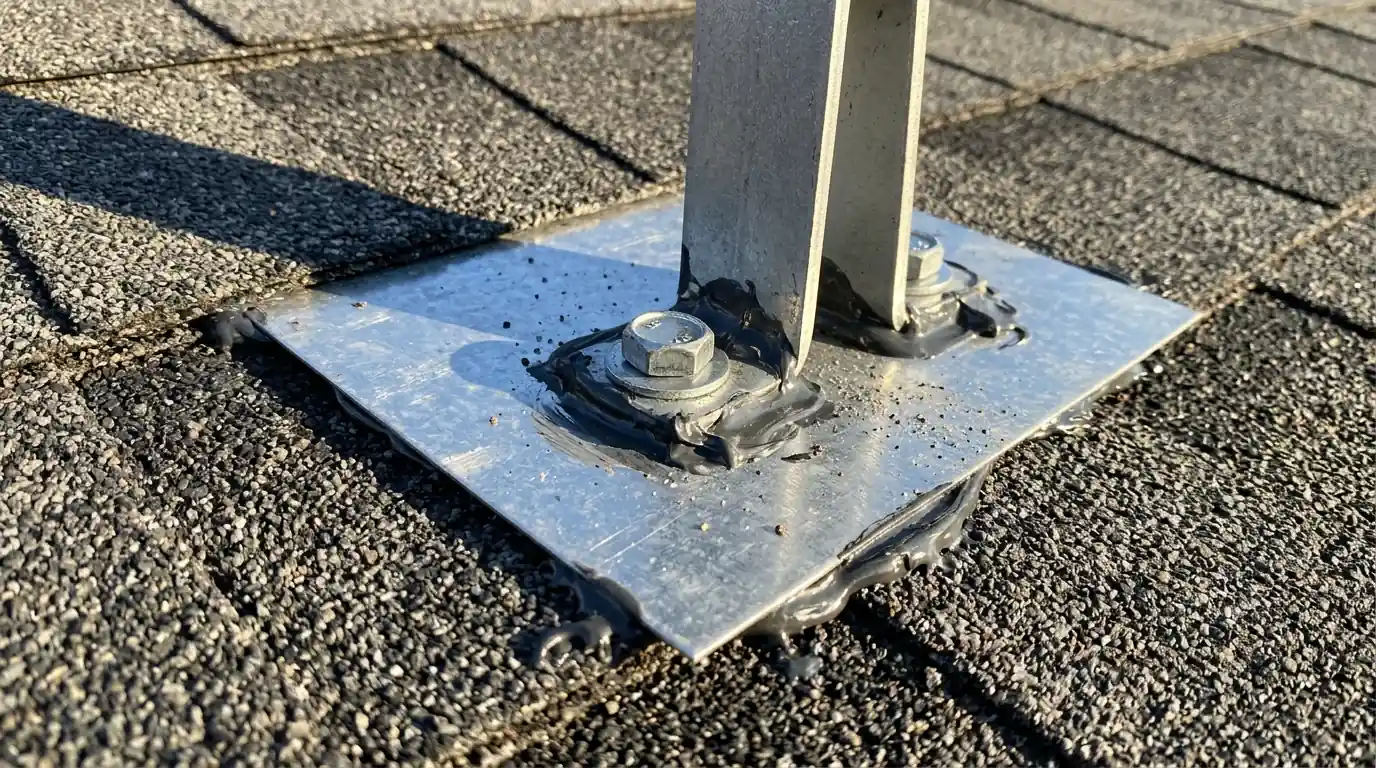
Most roof-mounted arrays use rails attached to the deck with stand-offs or L-feet. Each foot is a penetration. On shingle roofs, an aluminum flashing plate sits under the shingle above and over the one below, and the lag bolt goes into a rafter with sealant under it. On tile, a tile hook or replacement mount with a flashing plate sits under the tile.
Foam roofs and low-slope roofs use a different approach: ballasted systems, or curbed mounts flashed with foam and coating or membrane. We follow the racking maker's flashing guidance and add redundant sealing where it counts.
- Rail and stand-off layout
- Lag bolts into rafters
- Flashing plates under shingles
- Tile hooks on tile roofs
- Curb or ballast on flat roofs
Removal, storage and reinstall
Panels are disconnected electrically by the solar contractor first, then lifted, labeled by row and stacked flat on padded supports, or stored at ground level out of the way. Racks and mounts are removed, and the roof is cleaned of old sealant and debris. We photograph the layout and note the rafter lines so racking returns to the same structure.
After the new roofing is installed, the rails are reset in fresh flashings, and the panels are placed back. The solar contractor tests and recommissions the system.
Mistakes to avoid with solar and roofs
Do not reroof around the array. Leaving panels in place means old roofing stays under the racking, and the new roof will have seams and cuts that leak. Do not reuse old stand-off flashings on a new roof either, because they often corrode or have deformed sealant.
Also, plan the schedule. Solar production stops while panels are off, and net metering credits can shift in the meantime. Short, well-planned downtime is better than a long gap. We aim to coordinate crews so the roof is ready and the panels return quickly.
Our process for solar panel removal & reinstall
Six steps, in the order the crew does them on a Sacramento roof.
- Step 1Plan with the solar contractor
We confirm who handles electrical shutdown and restart, review the system layout, and agree the schedule so downtime stays short.
- Step 2Document the layout
We photograph rails, panel positions and wiring, and mark rafter lines so racking can return to solid framing.
- Step 3Detach and store panels
After electrical disconnection, panels and rails are lifted off, labeled and stored flat on padded supports away from the work area.
- Step 4Repair or replace the roof
The roof under the array is repaired or fully replaced, with new underlayment, roofing material and flashings in all former mount locations.
- Step 5Reset racking with new flashing
Mounts go back on solid rafters with new flashing plates or tile hooks, sealant and bolts, replacing old hardware wherever needed.
- Step 6Recommission and inspect
Panels are reset, the solar contractor reconnects and tests, and we photograph each mount and the surrounding roof.
What solar panel removal & reinstall costs in Sacramento
A 20-panel residential array removed and reset around a shingle reroof typically adds about 4,100 to 7,800 to the roofing job, depending on racking and wiring.
- Number of panels and rails
- Roof material under the array
- Wiring and electrical work
- Access and roof pitch
Compare this job with others in the Sacramento roofing cost guide.
Sacramento conditions that matter
Many Sacramento neighborhoods, from Natomas and Elk Grove to Roseville and Folsom, have a lot of solar on 1990s and 2000s concrete tile roofs that are now hitting the age where underlayment fails. SMUD customers and net-metering rules make downtime matter, so planning is important. Summer roof surfaces under panels can be extreme, so we schedule heavy work for cooler hours. California Title 24 requirements and local permits can apply to the reroof and to the reinstalled system, and inspectors may want to see flashing and rafter attachment.
Often paired with this service
Roof Replacement
Full tear-off and new roof system
View serviceTile Roof Underlayment Replacement
Lift tile, replace failing underlayment
View serviceRoof Repair
Leaks, lifted shingles, bad flashing
View serviceRoof Inspection
Know your roof's real condition
View serviceRead before you decide
Questions about solar panel removal & reinstall
Do I have to remove solar panels to replace my roof?
For a full reroof, yes, in nearly every case. Panels and racking sit on top of the old roofing, and new underlayment and shingles or tile must run continuously beneath the mounts. Working around the array leaves seams and old penetrations that are likely to leak.
Who disconnects and reconnects the electrical side?
A qualified solar or electrical contractor should handle disconnection, shutdown and recommissioning. We handle panel removal, the roofing and the physical remount, and coordinate dates with your solar company so the system is off for as little time as possible.
Will removing panels void my solar warranty?
Panel and inverter warranties vary by manufacturer and installer, and some require the work to be done by an approved party. Check your documents or ask your solar company first. We follow the racking maker's instructions, label everything and photograph the work to support any claim.
How do you flash racking mounts on a tile roof?
We lift the tile at each mount, install a flashing plate or tile hook that seals into the underlayment, bolt into the rafter and then reset or replace the tile above. Cracked tile near mounts is replaced, since cracks there are a common leak source.
Can you coat or foam the roof under solar panels?
On flat and low-slope roofs, yes. Panels are lifted, the roof is repaired and coated or foamed, and the racking returns on curbs or flashed mounts. A reflective coating can reduce surface heat under the array. Application timing depends on weather and cure time.
Roof leaking, peeling or baking in the sun?
Call the 24/7 line. Tell us the roof type, where the water shows up or what the coating looks like, and we will tell you what we would check first and when a crew can be there.