Find the leak, not the stain
Roof leak detection in Sacramento, CA
Water travels along rafters and insulation before it shows on a ceiling, so the stain you see is rarely where the roof is actually open.
Leak detection finds the exact point where water enters a roof using visual tracing, moisture meters, infrared scans and controlled water testing. Most leaks are located in one visit of one to three hours. Detection typically costs 245 to 780 per job, and repair is quoted separately once the source is confirmed.
What this job involves
A leak is a path, not a point. Water enters at a cracked boot, slides down the underlayment, follows a rafter, soaks insulation and finally drips from a recessed light two rooms away. If someone patches the stain's location, the roof keeps leaking and the ceiling keeps rotting.
We start at the inside, noting the stain shape, the attic condition and what the weather was doing when it leaked. Then we work uphill on the roof, checking everything above the damage. Wind-driven rain, condensation and plumbing can all mimic a roof leak, so we rule those out. When the cause is a failed foam or coated roof, we can show you the exact seam or blister and fix it with matching materials.
Signs you have an active roof leak
Leaks that appear only in wind-driven rain usually come through side-lap gaps, a loose flashing edge or a vent hood facing the storm.
A persistent damp odor and darkened sheathing points to a slow leak or poor ventilation that soaks the wood without a visible drip.
A ring that expands after each rain, or comes back after repainting, means the entry point is still open and the material above is staying wet.
Pinholes of light in the attic or compressed, discolored insulation shows where water is traveling and where the roof has been breached.
Blistered fascia, stained soffits and peeling exterior paint near the roof edge suggest water backing up behind gutters or edge metal.
Soft blisters under a flat membrane or coating can mean trapped moisture, which often has a pinhole leak somewhere nearby.
Tools and methods we use to trace a leak
Visual tracing comes first: following the stain upslope and examining flashings, boots, nail pops and cracked tile. A pinless moisture meter then maps damp material on the surface of a flat roof or inside an attic. For low-slope roofs, an infrared camera scan in the evening shows wet insulation as a warm or cool zone.
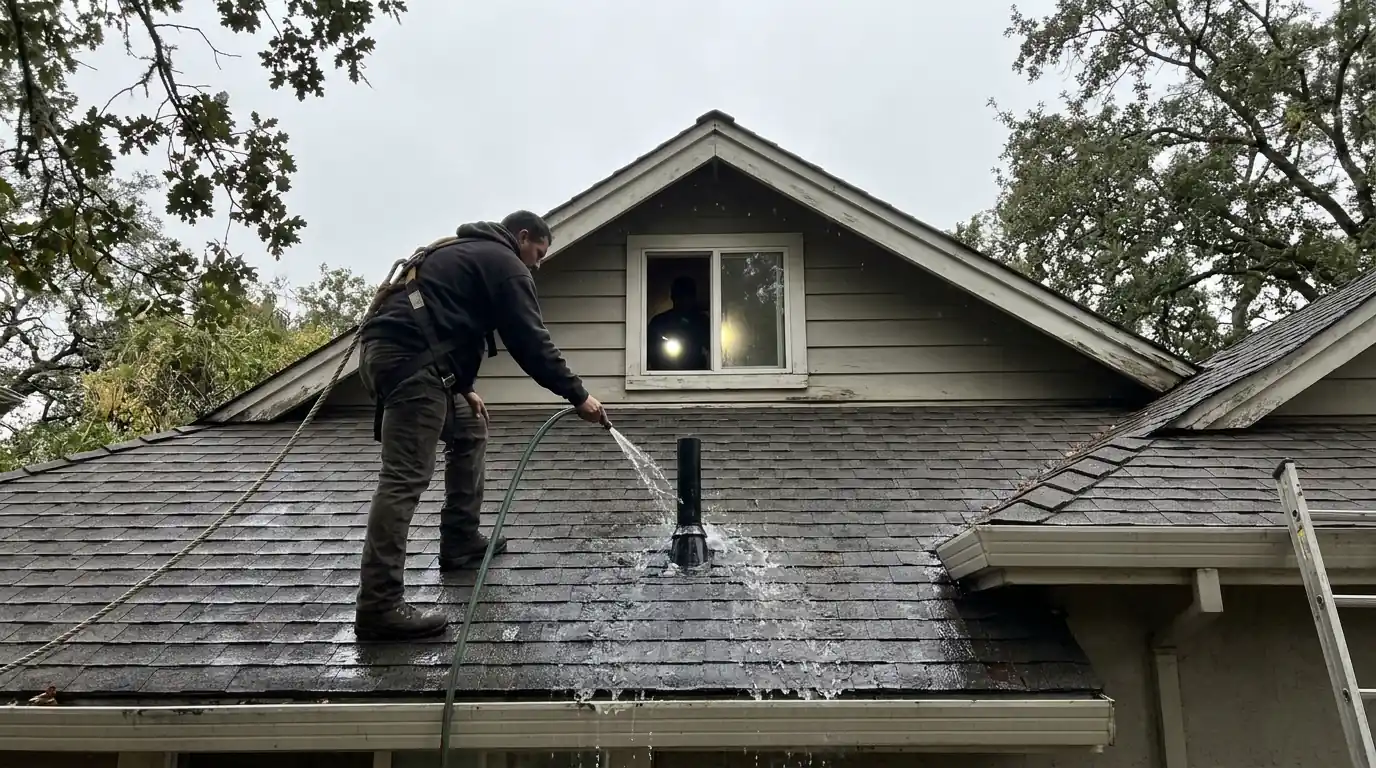
When none of that is conclusive, we run a controlled water test: isolating one roof section at a time with a hose while someone watches inside. We start low and work upward, so the first section that leaks tells us exactly where the problem begins.
- Visual and attic tracing
- Pinless moisture meter
- Infrared scan on flat roofs
- Section-by-section hose test
The usual suspects on shingle, tile and flat roofs
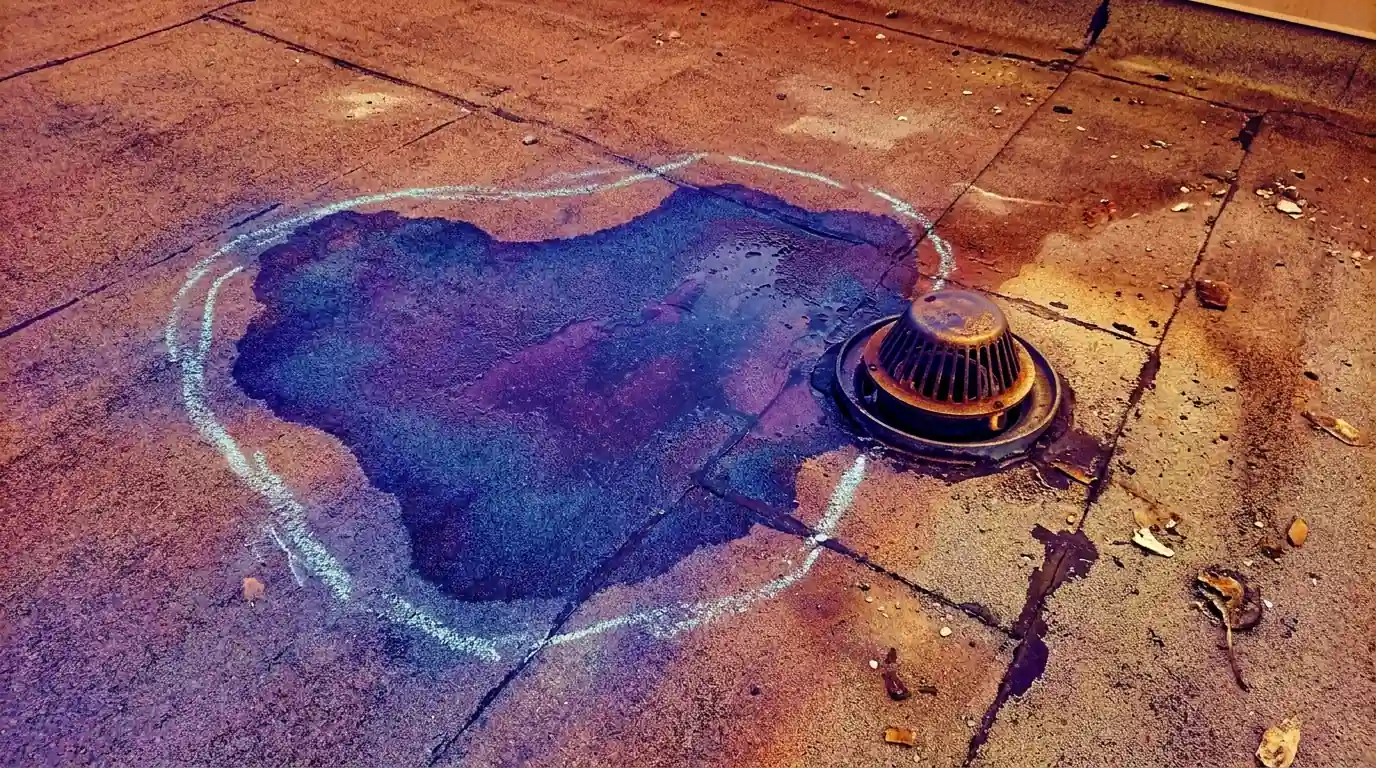
On shingle roofs, cracked neoprene pipe boots, exposed nails and failed chimney flashing top the list. On tile, broken pieces and failed underlayment at valleys and walls are common. On flat roofs, the culprits are open seams, punctured membrane near equipment, clogged drains and failed pitch pockets.
Skylights and solar mounts add their own paths. Many leaks that look like the roof are actually condensation, a plumbing vent, or an HVAC drain line, and we check for those so you do not pay for a roof repair that was never needed.
Why quick patches fail
A tube of sealant on a stain location feels like progress and is often the reason a leak runs for years. Sealant over a failing seam only hides it until the next heat cycle. Water then finds the next weakest spot and spreads into the deck.
We confirm the entry point first, then repair with the right method: new flashing, replacement boot, welded patch, foam repair or recoat. If the source cannot be proven yet, we say so, and we do a temporary protection while a test is scheduled.
Our process for roof leak detection
Six steps, in the order the crew does them on a Sacramento roof.
- Step 1Interview and interior check
We look at the stain, ask when it appears, and check for plumbing or condensation causes before going on the roof.
- Step 2Attic and underside tracing
We follow the water path along rafters and sheathing, marking wet and dry zones and noting where nails, daylight or rust appear.
- Step 3Roof surface survey
We inspect every penetration, flashing and seam above the damage, then widen the search to nearby details upslope.
- Step 4Moisture and infrared mapping
On flat roofs we scan for wet insulation, mark the boundary, and record the area that will need repair.
- Step 5Controlled water test
If the cause is still unclear, we spray sections starting at the lowest point while someone inside watches for drips.
- Step 6Report and repair plan
You get photos of the entry point, the cause in plain words, and a price range for the correct repair.
What roof leak detection costs in Sacramento
A hard-to-find leak on a single-story home with attic access and a one-visit water test typically costs around 395 to 560 for detection alone.
- Roof type and access
- Infrared or water test needed
- Number of suspected entry points
- Attic accessibility
Compare this job with others in the Sacramento roofing cost guide.
Sacramento conditions that matter
Sacramento leaks often show up in the first storms of November, when summer heat has cracked sealant and dried out pipe boots. Winter rain is short but intense, and atmospheric river events can push water sideways under flashings. Tule fog and morning dew create condensation on cold roof decking, which sometimes looks like a leak. Mid-century homes with low-slope additions, 1990s tile roofs with aging underlayment and flat commercial roofs each have their own typical weak points. Roof penetrations from solar and rooftop HVAC are common additional sources in newer retrofits.
Often paired with this service
Roof Repair
Leaks, lifted shingles, bad flashing
View serviceRoof Flashing Repair
Fix the metal where roofs leak
View serviceSkylight Repair & Replacement
Stop skylight leaks for good
View serviceEmergency Roof Repair
Active leak, storm or tree damage
View serviceRead before you decide
Questions about roof leak detection
Why does my ceiling stain not line up with the hole in the roof?
Water runs along decking, rafters and insulation before it drips. A hole near the ridge can show up at a bathroom fan ten feet lower. That is why we trace upslope from the stain and use meters and water tests instead of looking only at the spot above it.
How do you tell a roof leak from condensation?
Condensation tends to appear on cold mornings, with frost or droplets on nail tips and bare sheathing, even in dry weather. A roof leak correlates with rain. We check attic humidity, bath fan ducts and insulation to tell them apart before recommending any roof work.
Will a water test damage my house?
Not if done carefully. We use a garden hose at modest flow, start at the lowest section and keep a person inside with a flashlight. If a drip starts, we stop and mark the spot. The water amount is far less than a regular storm.
Can you find leaks in a foam or coated roof?
Yes. On foam, leaks usually come from a crack, an exposed edge or a worn coating that let water into the foam. We find the damaged spot, cut out wet foam if needed, and repair with matching foam and fresh coating. Infrared helps map any wet foam.
Do I have to pay for detection if I then hire you for the repair?
Detection is a separate scoped service because it takes time and tools, and the findings are yours either way. When the repair is simple and found quickly during the same visit, we often finish it then, and the price is quoted before work begins.
Roof leaking, peeling or baking in the sun?
Call the 24/7 line. Tell us the roof type, where the water shows up or what the coating looks like, and we will tell you what we would check first and when a crew can be there.