Stop skylight leaks for good
Skylight repair and replacement in Sacramento, CA
Skylights leak at the flashing far more often than through the glass, and resealing the outside rarely fixes a unit that was flashed badly or has aged out.
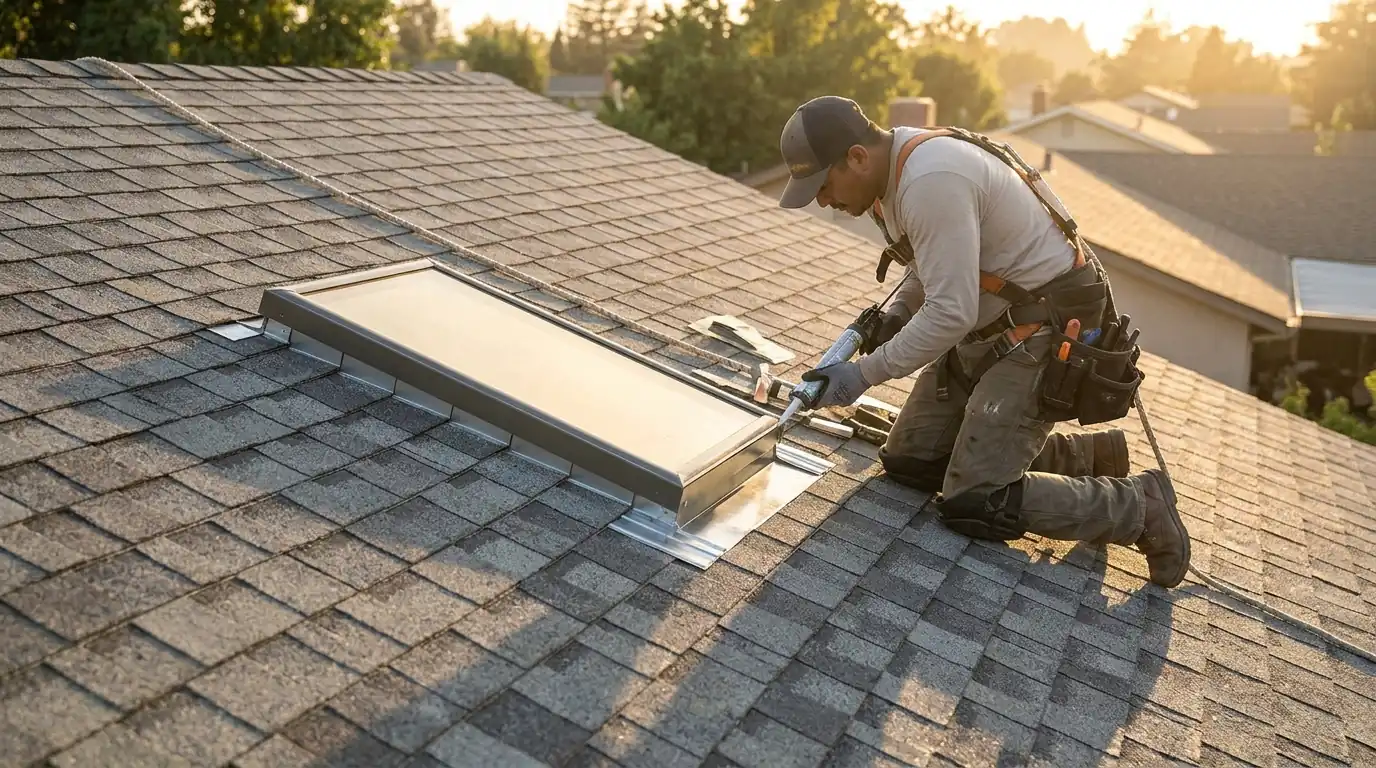
Skylight repair fixes leaking flashing, failed seals, cracked domes and rotted curbs, while replacement swaps the whole unit when it is fogged or too old. Repairs typically cost 285 to 940, and full replacement with new flashing runs 1,150 to 3,480 per unit. Most jobs take half a day to one day.
What this job involves
A skylight is a hole in the roof with a frame and glass in it. The weak link is almost always the transition between the unit and the roof, where step flashing, a curb or a sealant bead does the real work. Sun, heat and thermal movement degrade that seam over time.
Some leaks are not leaks at all. Condensation on the glass, a failed double-pane seal that fogs between layers, or a drip from a nearby vent can look like a roof problem. We check what the unit actually is, how it was installed, and whether it can be repaired or should be replaced. When the surrounding roof is flat or low-slope, we can also coat or foam the area around a curb for added water protection.
Signs your skylight is failing
Water that appears at the frame corners after rain usually comes from failed corner flashing or a seam where the head and side flashings meet.
Moisture trapped inside a double-pane unit means the seal has failed. Cleaning will not help, and the glass or the whole unit needs replacing.
Brown streaks on the light shaft walls show water entering near the frame or rolling down the curb sides, even if the glass is dry.
Acrylic domes craze and discolor after decades of sun. Hairline cracks can open wide in heat and let rain in at the next storm.
Rotted curb lumber or deck near a skylight shows long-term leaking. Repairs there go beyond sealant and need carpentry.
Corroded metal, gaps at the high side or bent step pieces let wind-driven rain run behind the flashing and into the roof.
Curb-mounted and deck-mounted skylights
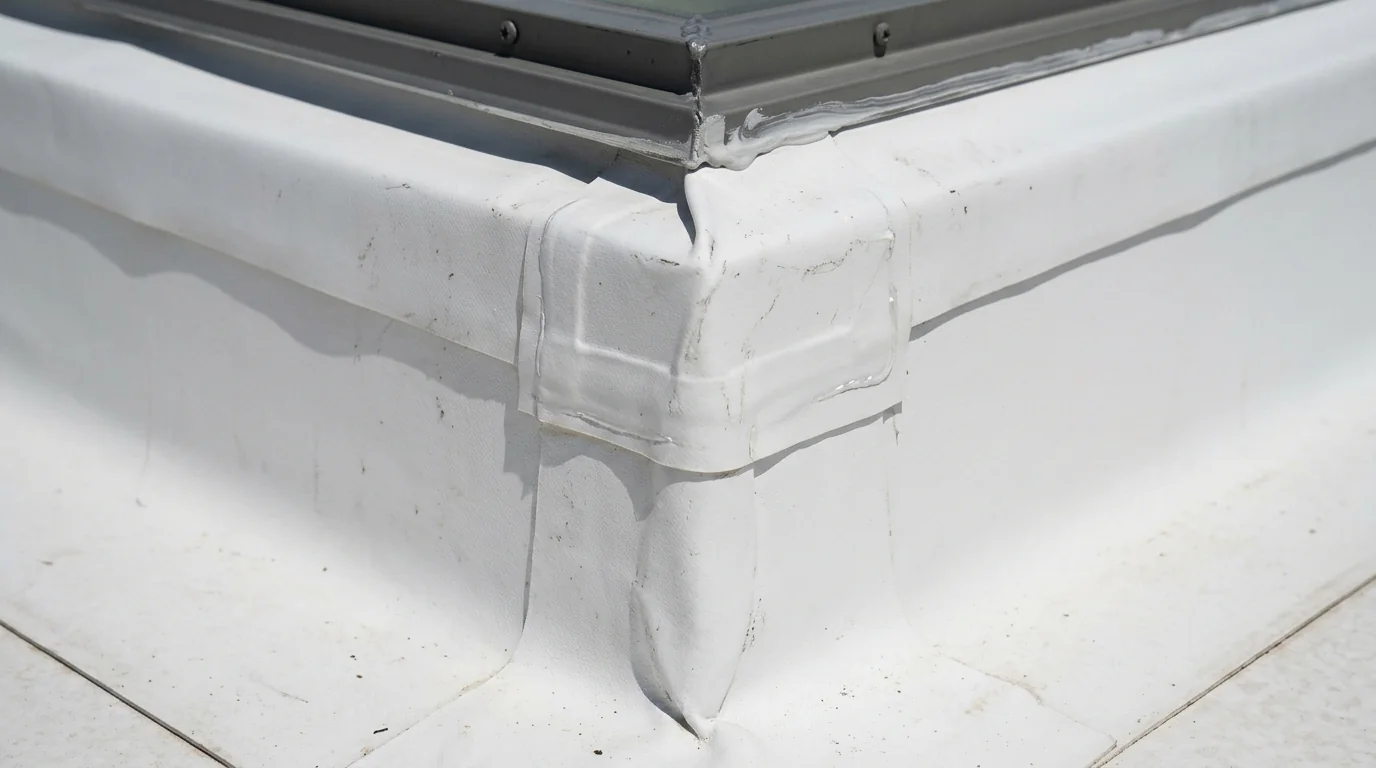
A curb-mounted skylight sits on a raised wood frame built above the roof surface, then is flashed on all four sides. It is common on flat and low-slope roofs and on many older tubular and dome units. A deck-mounted skylight attaches directly to the roof deck with its own flashing kit and sits low, which suits pitched shingle and tile roofs.
The two types leak in different ways. Curbs fail at the base where roofing meets the curb sides. Deck-mounted units fail at the head or corners where step flashing and counter-flashing overlap.
- Curb-mounted: raised wood frame
- Deck-mounted: low profile, kit flashing
- Tubular: small dome with a flexible tube
- Fixed, venting and solar-powered options
Repair or replace: how we decide
If the glass is sound and the frame is solid, re-flashing and resealing is usually the right call. If the unit is fogged, cracked, more than about twenty years old or the curb is rotted, replacement is a better value because labor to repair costs nearly as much as a new unit.
We match replacement units to the opening where possible so the interior shaft does not need rework. When the curb is rotted, we rebuild it with treated lumber, add a proper cant and waterproof it before installing the new skylight.
How flashing is done right
On a shingle roof, each side gets individual step flashing woven with the courses, with the head flashing lapping over the top and the sill flashing lapping the shingles below. Tile roofs need a pan or pre-formed flashing and careful cutting of tile around the unit. Low-slope roofs need a membrane or foam-and-coating flashing taken up the curb and over the top edge.
Roof cement alone is not flashing. It is a temporary fix at best, and we will tell you if that is all that is there.
Our process for skylight repair & replacement
Six steps, in the order the crew does them on a Sacramento roof.
- Step 1Diagnose the source
We check the glass, the frame, the interior shaft and the surrounding roof to see whether water comes from the flashing, the seal or condensation.
- Step 2Test and trace
Where needed, we hose each side of the unit in turn from the bottom up to confirm the exact entry point.
- Step 3Remove old flashing
We lift roofing around the unit, remove old sealant and metal, and inspect the curb and deck for rot or soft wood.
- Step 4Repair framing
Rotted curb boards or decking get replaced, and the curb is squared up and given a slight cant on the high side.
- Step 5Flash and reroof
New flashing, underlayment and roofing material are installed in the correct overlap order, then sealed at the final edge only.
- Step 6Final water check
We hose the finished skylight, check the interior shaft for dryness, and clean up debris from the roof and the room below.
What skylight repair & replacement costs in Sacramento
A leaking deck-mounted skylight on a shingle roof typically costs around 465 to 890 to re-flash, while replacing the unit with new flashing often runs 1,380 to 2,260.
- Repair or full replacement
- Unit size and glass type
- Rotted curb or deck repair
- Roof type and access
Compare this job with others in the Sacramento roofing cost guide.
Sacramento conditions that matter
Sacramento's summer sun is hard on acrylic domes and sealants, and many homes from the 1970s through 1990s have original skylights that are well past their service life. Mid-century flat-roof houses often have curb-mounted domes that were patched with roof cement over decades. Heavy winter storms test the flashing, and morning fog can make a skylight sweat enough to mimic a leak. Title 24 energy rules can apply to replacement glazing, so unit specs matter. On tile roofs, careful tile cutting around the opening is important to avoid cracked pieces and leaks.
Questions about skylight repair & replacement
Can a skylight be repaired without replacing the whole unit?
Yes, when the glass and frame are in good shape. Most leaks come from flashing and sealant, which can be removed and rebuilt around the existing unit. If the unit is fogged, cracked or too old, repair labor often costs about as much as a new skylight.
Why does my skylight leak only during heavy rain?
Small gaps in flashing or sealant only let water through when rain is heavy or wind-driven, or when debris dams water above the unit. A missing head flashing or short step flashing is a typical cause. We trace it with a controlled hose test.
How do I know if my skylight is condensing or leaking?
Condensation shows as droplets on the glass or frame in cool mornings and dries by midday, with no relation to rain. A leak shows staining at the frame edges or in the shaft after rain. We also check for bath fans or humid rooms feeding the moisture.
Do tubular skylights leak often?
They can, mostly at the base flashing and the dome seal. The small footprint makes them easy to replace. We swap the flashing ring and dome, check the tube for condensation and make sure the roofing is lapped over the base on the high side.
Can you add a skylight to a flat roof?
We can, usually as a curb-mounted unit. The curb is framed, flashed with membrane or foam and coating, and sealed. We also confirm the ceiling framing and shaft layout first so cutting the opening does not weaken a joist.
Roof leaking, peeling or baking in the sun?
Call the 24/7 line. Tell us the roof type, where the water shows up or what the coating looks like, and we will tell you what we would check first and when a crew can be there.