Ponding-resistant liquid roof membrane
Silicone roof coating in Sacramento, CA
Your flat roof holds water for days after a storm and the old coating is breaking down, which is exactly where silicone outperforms other coatings.
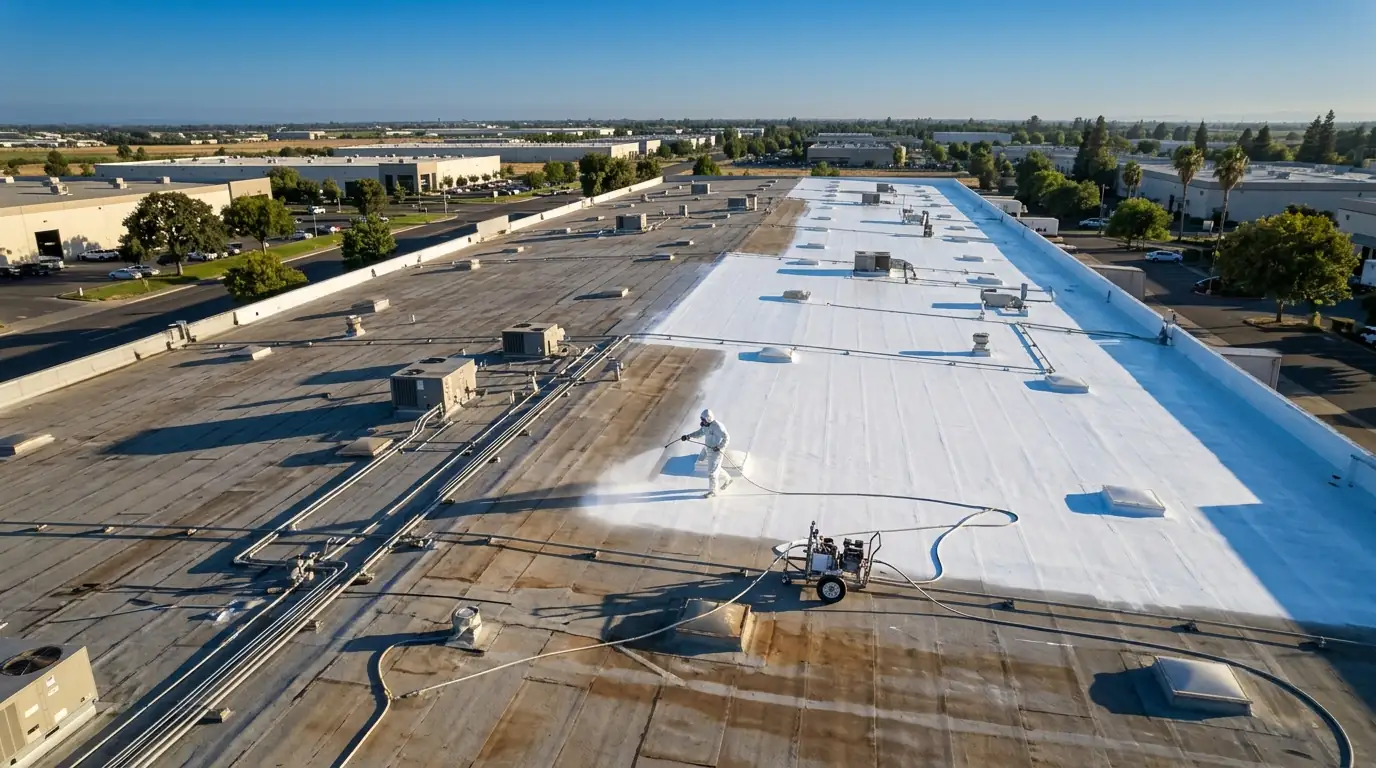
Silicone roof coating is a liquid membrane rolled or sprayed over a cleaned roof that cures into a flexible, waterproof, reflective skin. It handles standing water better than acrylic. Typical Sacramento cost runs 2.15 to 4.30 per sq ft, and most roofs take one to three days depending on repairs.
What this job involves
Silicone coatings are built on a silicone polymer that does not break down in water or sunlight the way many other coatings do. After curing, the film stays flexible across big temperature swings, which suits Sacramento roofs that go from a frosty January dawn to a 105 F July afternoon. High-solids products leave a thick dry film in fewer coats, and the white finish reflects a large share of solar heat.
The main reason to pick silicone is water. Flat and low-slope roofs in the valley often have low spots that hold puddles for days after rain. Acrylic can soften and blister under that kind of exposure, while silicone shrugs it off. The trade-offs are cost, dirt pickup and a firm rule: nothing sticks to cured silicone except more silicone. Plan around those limits and silicone repays the extra cost in fewer failures.
Signs a silicone coating makes sense
If water remains on the roof 48 hours after rain, you need a coating rated for ponding. Silicone cures into a film that tolerates continuous immersion.
Acrylic or asphalt coatings that blister and peel in low spots have failed from water exposure. Silicone is the usual replacement in those areas.
Seams in metal, mod-bit or single-ply roofing open with heat. Silicone, reinforced with fabric at joints, bonds and bridges them without a tear-off.
A dark or aged surface can run far above air temperature on a summer afternoon. A white silicone film reflects much of that heat away.
When the existing roof is dry and mostly sound, a restoration coating costs a fraction of replacement and avoids tear-off and landfill fees.
Spray foam roofs rely on their coating for UV protection. Silicone is a common recoat for foam that sees ponding or heavy sun exposure.
Solids by volume and why they matter
Silicone products are sold by solids by volume, and the number tells you how much film stays on the roof after the carrier evaporates. A 95 percent solids silicone loses almost nothing as it cures, so 20 wet mils leaves close to 19 dry mils. A lower solids product might lose a third or more of its thickness, leaving you with a thinner membrane than you paid for. Ask any contractor for the product data sheet and compare the solids number, since two buckets with the same price can leave very different films.
We specify the target in dry mils, not gallons, and calculate coverage from the product data sheet. A typical restoration might call for 20 to 30 dry mils across the field and more at seams and flashing. We check wet film with a gauge during application and record coverage by the bucket, so the thickness you pay for is the thickness on the roof.
Primers, seams and the silicone adhesion rule
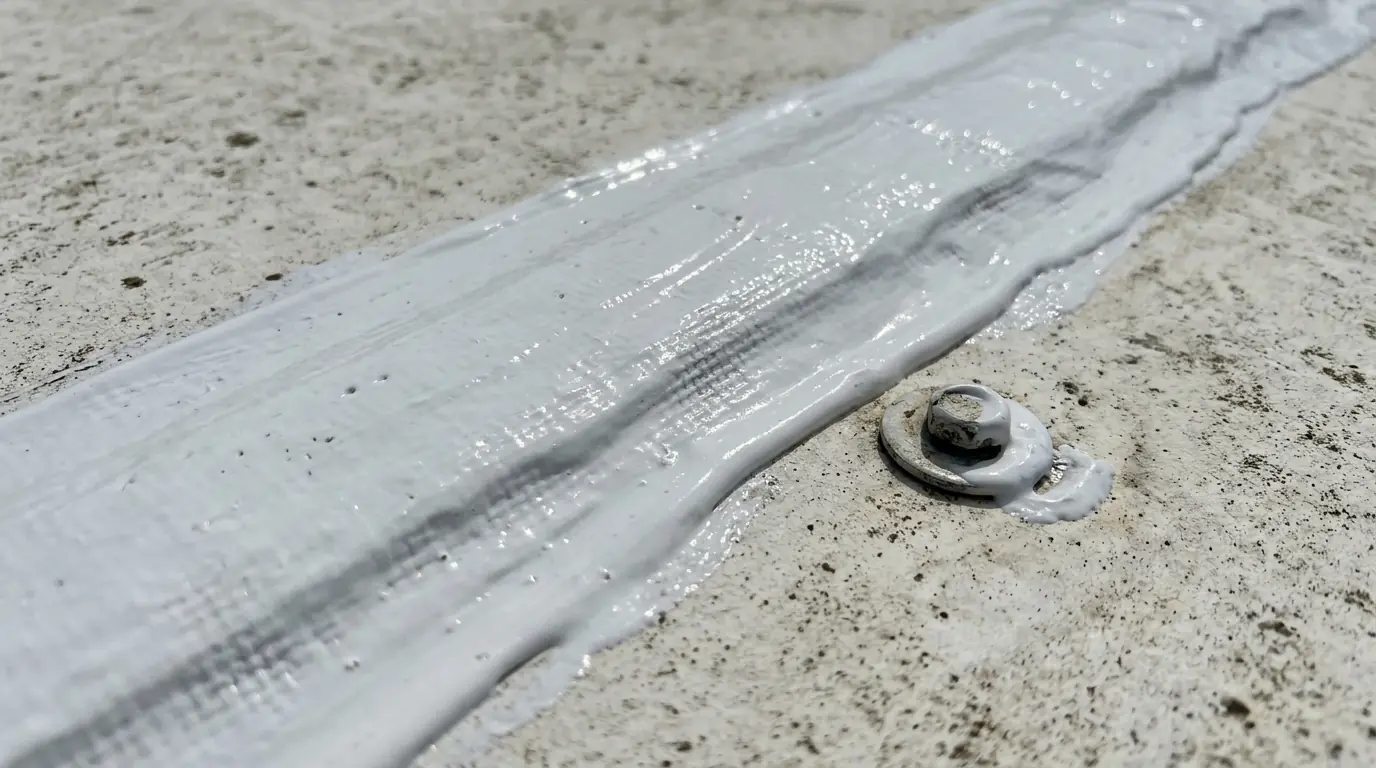
Silicone sticks hard to clean, sound surfaces but very poorly to anything contaminated. Chalky coatings, oily roof cement and some asphalt surfaces need a primer or a tie coat. Metal roofs may need a rust-inhibiting primer after treating corrosion. We run an adhesion test patch on every roof and let it cure before we commit to a full coat. Seams, fasteners and penetrations get extra work before the main coat. We treat seams with reinforcing fabric embedded in silicone sealant, cap exposed fasteners and detail curbs and pipe boots with a thicker build. The field coat then goes over a surface where the weak points are already covered, which is where silicone roofs usually succeed or fail.
- Adhesion test on a small patch
- Fabric-reinforced seam treatment
- Primer on rust or glazed surfaces
- Cap all exposed fasteners
- Heavier build at curbs and drains
Drawbacks to know before you buy
Silicone costs more per square foot than acrylic, and it attracts dust and pollen, so a white roof near orchards, dirt lots or freeways will turn gray unless it is washed. The slick surface is also slippery when wet, so we add granules or walk pads where people travel on the roof. Because later coatings will not stick to it, silicone locks you in. Any future recoating or repair must be silicone or require removal of the old film. If you may reroof within a few years, a less permanent system might make more sense. If you want a roof you can renew by cleaning and adding a maintenance coat, silicone is hard to beat.
Our process for silicone roof coating
Six steps, in the order the crew does them on a Sacramento roof.
- Step 1Test and inspect
We scan for moisture, check old coating adhesion with a test patch and confirm the roof is dry and sound enough to coat.
- Step 2Wash and prepare
The roof is pressure washed to remove dirt and chalk, rust is treated and loose material is cut out or fastened down.
- Step 3Seal seams and fasteners
Seams get fabric and sealant, fasteners are capped, and curbs, vents and pipe boots are detailed before the field coat.
- Step 4Prime where needed
Surfaces such as rusted metal, old bitumen and glossy membranes receive the specified primer and are left to cure fully.
- Step 5Apply the silicone
Silicone is sprayed or rolled in one or two coats to the target dry mil thickness, checked with a wet film gauge.
- Step 6Cure check and walk pads
We let the film cure, inspect for pinholes and thin areas, and add granules or walk pads in traffic areas before sign-off.
What silicone roof coating costs in Sacramento
A 3,000 sq ft low-slope commercial roof with seam treatment and a two-coat silicone system typically costs near 9,400 to 12,200.
- Dry mil thickness specified
- Seam and fastener count
- Primer needs on metal or bitumen
- Roof access and size
Planning a recoat? The coating calculator turns roof area, coating type and target thickness into gallons and pails.
Sacramento conditions that matter
Sacramento's winters bring weeks of wet weather, then months of dry heat. A flat roof that ponds in January and bakes in July is an ideal candidate for silicone. The valley dust, almond and walnut orchard pollen, and tule fog moisture all affect application: surfaces must be dry, and the dew point must sit several degrees below the roof temperature before we spray. Silicone's reflectivity helps with California Title 24 cool roof rules where they apply to a reroof, and lower roof surface temperatures can ease SMUD cooling bills on large flat roofs in Natomas, Rancho Cordova and downtown Sacramento.
Often paired with this service
Acrylic Roof Coating
Reflective elastomeric roof coating
View serviceCool Roof Coating
Reflective coatings for valley heat
View serviceFlat Roof Coating
Restoring flat roofs without tear-off
View servicePonding Water Repair
Fixing puddles on flat roofs
View serviceRead before you decide
Questions about silicone roof coating
Why is silicone better than acrylic for ponding water?
Silicone does not absorb water or break down under continuous wetting, so it can sit under puddles for days without softening. Acrylic can re-emulsify, blister and wash out in low spots. If your roof drains well, acrylic may be enough, but silicone is the safer pick for a roof that holds water.
Can I paint or coat over silicone later?
Only with more silicone, in practice. Cured silicone is slick and low in surface energy, so acrylics, urethanes and asphalt coatings will peel. If you ever want a different system, the silicone must be removed or a specialty primer proven in an adhesion test. Plan on staying with silicone.
What dry mil thickness should my silicone roof have?
Most restoration jobs target about 20 to 30 dry mils in the field, with more at seams, curbs and drains. The right number depends on roof condition and the product's warranty requirements. We measure wet film during application and calculate dry thickness from the solids by volume.
Will a white silicone roof turn gray?
It will pick up dust over time, especially near orchards, construction or busy roads. Washing with water and mild detergent restores most of the brightness. Some reflectivity loss is normal, which is why a maintenance wash every year or two helps the roof keep its cooling benefit.
Is silicone slippery for workers on my roof?
Yes, especially when wet or dewy. We broadcast granules into the wet coating at walkways and place walk pads at access points and equipment. If people service rooftop units, tell us and we will plan a traction surface along that path. Slip resistance matters most at roof hatches and ladders.
Roof leaking, peeling or baking in the sun?
Call the 24/7 line. Tell us the roof type, where the water shows up or what the coating looks like, and we will tell you what we would check first and when a crew can be there.