Full tear-off and new roof system
Roof replacement in Sacramento, CA
When shingles crumble, leaks return after every repair and the deck feels soft underfoot, a new roof system costs less than another round of patching.

Roof replacement removes the old roofing, repairs the deck, and installs a new underlayment and surface. In Sacramento, most replacements run 9,400 to 31,800 for a typical house, or roughly 5.60 to 14.20 per sq ft depending on material. Most homes take one to four working days. Final pricing follows an inspection.
What this job involves
A roof is a system, not just the shingles you see. Underneath are underlayment, flashing at every wall and valley, ventilation, and a wood deck that has to be flat and dry. A proper replacement renews every layer that matters instead of laying a new surface over problems. That is why the price depends as much on what is under the old roof as on the material you pick. It also keeps the price honest.
In the Sacramento area we replace asphalt shingle, concrete and clay tile, and metal roofs, and we also replace flat and low-slope roofs with membrane systems. We use our own crews from tear-off to final cleanup. If the roof is a candidate for foam or a coating instead of a full tear-off, we say so, since that can be a lower-cost path for a sound low-slope roof. We explain every option plainly.
When replacement beats repair
Asphalt shingles in valley heat often wear out sooner than their stated life. Widespread curling, cracking and bare mat mean the surface is finished.
Two or three unrelated leaks usually point to system-wide age, not one bad detail. Repairs become a rolling expense at that point.
A spongy feel underfoot or visible sag between rafters means the decking has absorbed water for a long time and needs replacing, which requires tear-off.
Concrete tile outlasts its underlayment. If the felt below is brittle, the tile roof needs lifting and relaying even though the tiles look fine.
A roof covered in tar patches and mismatched shingles is telling you the base layers are failing, and more patches will not hold.
Impact bruising, torn shingles or bent metal across a slope can make replacement the practical fix, especially if damage is widespread.
Tear-off versus overlay
California code generally allows a limited number of roofing layers, and most reputable contractors tear off the old roof before installing a new one. A tear-off lets us inspect the deck, replace rotten plywood, and install fresh underlayment and flashing correctly. An overlay saves labor, but it traps heat, hides deck problems, and often shortens the life of the new shingles. Overlay can make sense in narrow cases on low-slope roofs, for example a coating or spray foam over a sound existing membrane. For steep-slope roofs, we recommend tear-off in nearly every case.
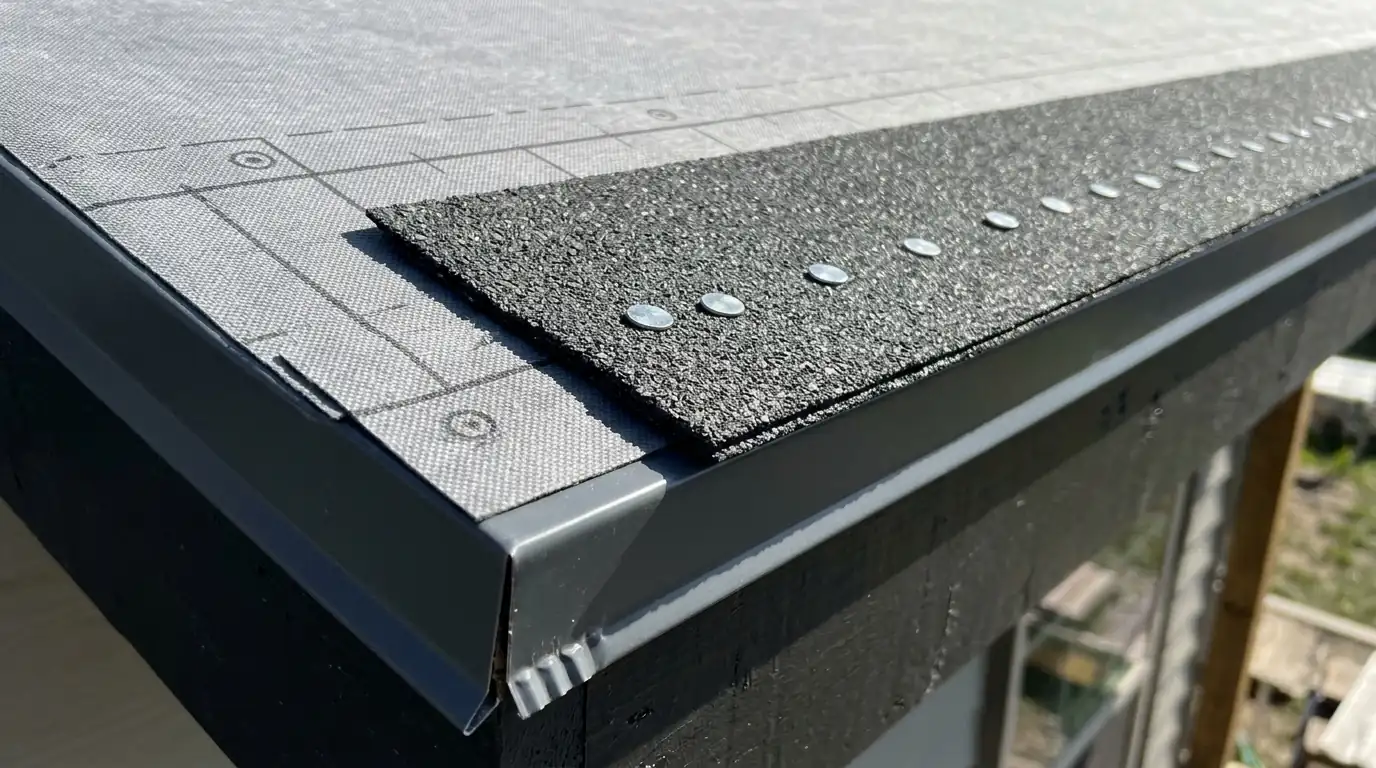
What goes into a new roof system
A new roof starts at the deck. We replace damaged plywood, then install a drip edge, underlayment (synthetic is our usual choice for shingle roofs, and a heavier felt or synthetic over a sound deck for tile), valley flashing, and a starter course along eaves and rakes. Then comes the main surface, hip and ridge caps, and sealed penetrations. We also check the attic for ventilation, since intake at the eaves and exhaust at the ridge keep deck temperatures down and help the new roof reach its full life. Poor airflow shortens shingle life more than most owners expect.
- Drip edge at eaves and rakes to guide water into the gutter
- Valley flashing set in metal, not just shingles woven over felt
- Starter strip at the eaves for a sealed first course
- Ridge and hip caps matched to the roof material
- New pipe boots and vent flashings on every penetration
Choosing the material
Asphalt shingle is the most economical and fits most Sacramento homes. Concrete tile is heavy and durable, and common on newer tract homes. Metal roofing reflects heat and sheds fire embers, a good fit for foothill properties. Flat roofs use TPO, modified bitumen, EPDM or foam. The right choice depends on pitch, framing, budget, and how long you plan to stay. Title 24 cool roof rules can apply to some reroofs, so we talk through reflective options early. We walk you through each choice.
Our process for roof replacement
Six steps, in the order the crew does them on a Sacramento roof.
- Step 1Inspect and measure
We check the roof surface, attic and deck condition, measure every slope, and note penetrations, valleys and any structure that affects the plan.
- Step 2Choose system and color
You pick material and color with our guidance on durability, heat and budget, and we confirm what code and any HOA rules require.
- Step 3Protect property and tear off
Landscaping and walls are covered, then the old roofing and underlayment come off. Debris goes into a dump trailer, not your yard.
- Step 4Repair the deck
Soft, split or delaminated plywood is replaced, nails are reset, and the deck is made flat and clean before anything new goes down.
- Step 5Install the new system
Underlayment, drip edge, flashing, starter, field material and ridge go on in sequence so every lap sheds water correctly. We check laps as we go.
- Step 6Final walk and cleanup
We magnet-sweep the property, clear gutters, and go over the finished roof with you, including care tips and the product warranty details.
What roof replacement costs in Sacramento
A 1,900 sq ft single-story home with architectural asphalt shingles and moderate deck repair commonly lands between 11,600 and 17,300.
- Roof size and pitch
- Material selected
- Deck repair needed
- Number of valleys, skylights and penetrations
Compare this job with others in the Sacramento roofing cost guide.
Sacramento conditions that matter
Sacramento summers push roof surface temperatures far above the air temperature, and shingles age faster here than the same product in cooler climates. Most rain falls November through March, so scheduling a tear-off between storms matters, and we plan around the forecast. Many 1950s to 1970s ranch homes have thin plank or skip sheathing that needs upgrading. Tract homes in Elk Grove, Natomas and Folsom often have concrete tile with underlayment that fails first. Foothill homes in Auburn and El Dorado Hills may need Class A fire rated systems, and Title 24 cool roof requirements can apply to some reroofs.
Often paired with this service
Asphalt Shingle Roofing
Architectural shingles, installed right
View serviceTile Roof Underlayment Replacement
Lift tile, replace failing underlayment
View serviceMetal Roofing
Standing seam and ribbed metal panels
View serviceRoof Inspection
Know your roof's real condition
View serviceRead before you decide
Cool Roof Rules When You Reroof in Sacramento
California's Title 24 energy code can require a cool roof when you replace or recover a roof. This guide explains solar reflectance, thermal emittance and how to plan a reroof so it passes.
Read the guideGetting Your Roof Ready Before Solar Goes On
Solar panels can outlast an old roof by a decade, which means removing and reinstalling them later. This guide covers roof age, racking penetrations and what to fix before the install.
Read the guideQuestions about roof replacement
How long does a full roof replacement take in Sacramento?
Most single-family shingle roofs take one to three working days from tear-off to final cleanup. Tile roofs and larger homes take longer, often three to five days, because tile has to be lifted and stacked. Weather and deck repair can add a day, and we watch the forecast to avoid leaving the roof open.
Will my attic be affected during a tear-off?
Some dust and debris can fall through gaps in the deck, so we recommend covering stored items in the attic and removing fragile items from walls below. We lay protection around the house and sweep the exterior, but the attic cannot be fully sealed during tear-off.
Do I need a new permit for a roof replacement?
Most roof replacements in the Sacramento region require a building permit from the city or county. Requirements vary by jurisdiction, and some include inspections of deck, underlayment and final installation. We tell you what your location requires and handle the permit steps as part of the job.
Can a roof be replaced in the winter?
Yes. Sacramento winters are mild, and most tear-offs can proceed between storms. We schedule around rain, tarp open areas the same day, and stage work so no section is left exposed overnight. Some adhesives work better in warmer weather, so material choice can matter. We always confirm the forecast first.
What happens if the deck is rotten once the old roof comes off?
We replace the affected plywood or boards and tell you the cost before continuing. Deck repair is billed by sheet or by section, typically a small fraction of the total. We take photos so you can see the condition, and we only replace what is actually damaged.
Roof leaking, peeling or baking in the sun?
Call the 24/7 line. Tell us the roof type, where the water shows up or what the coating looks like, and we will tell you what we would check first and when a crew can be there.