Tough coating for hard-use roofs
Polyurethane roof coating in Sacramento, CA
Your commercial or foam roof sees steady foot traffic, hail or equipment service, and a soft coating keeps wearing through at the same paths.
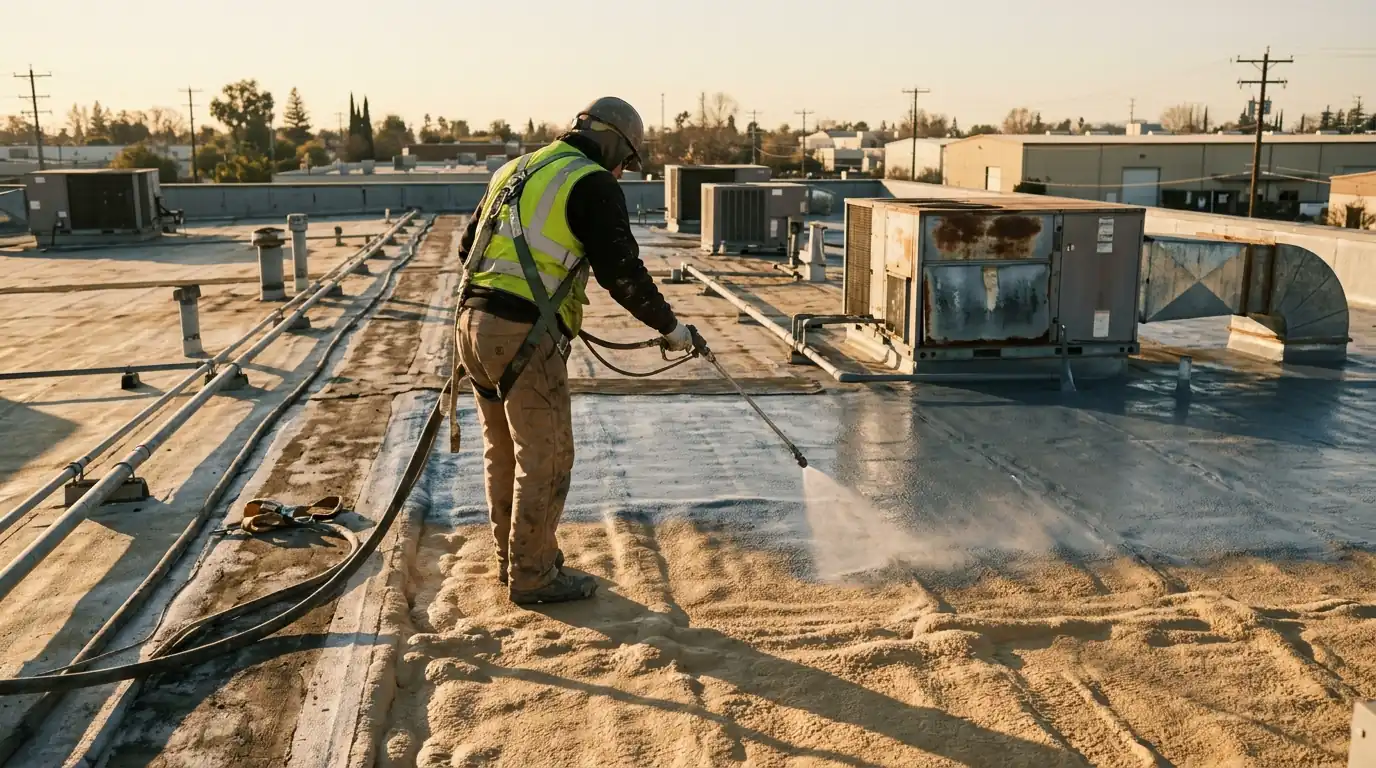
Polyurethane roof coating is a tough, abrasion-resistant membrane, often applied over spray foam or as a base coat under a UV-stable topcoat. It stands up to traffic and impacts. Typical Sacramento cost is 2.40 to 4.90 per sq ft, and most roofs take two to three days.
What this job involves
Polyurethane roof coatings are known for toughness. The cured film is harder than silicone or acrylic, resists abrasion and handles impacts and hail better. That makes it a strong choice for roofs where technicians walk to rooftop equipment, where tree debris scrapes the surface, or where foam needs a durable skin beyond what a soft coating can offer. On busy commercial roofs, that extra hardness often decides the choice. Cost is higher than acrylic.
There are two main types. Aromatic urethane is cheaper and cures fast but yellows and chalks in sunlight, so it must be topped with a UV-stable coating. Aliphatic urethane resists UV directly and holds color but costs more. A common system on foam is a urethane base coat for strength followed by a silicone or acrylic topcoat for sun and ponding protection. We explain the system before we start so you know which layer does which job.
Signs you need a tougher coating
Bare, scuffed lanes leading to HVAC units and hatches show where traffic is wearing the coating thin. Urethane resists that abrasion far better than soft coatings.
Dimples and punctures in spray foam after a storm mean the topcoat lacks impact resistance. A urethane layer adds toughness against future hits.
Branches, gravel and wind-blown debris scrape thin coatings on roofs near trees. A harder film reduces that surface damage. Look for scratches near edges and trees.
Buildings with rooftop units, antennas or solar maintenance need a surface that withstands repeated foot traffic without cracking. Regular visits wear thin coatings fast and leave bare spots.
Newly sprayed foam can take a urethane base coat that adds strength before the UV-stable topcoat goes on. This builds a stronger roof surface from the start.
If a softer coating has worn through in under ten years on a busy roof, switching to urethane is often the fix.
Aromatic versus aliphatic urethane
Aromatic polyurethane is the workhorse base coat. It bonds strongly to spray foam, cures quickly and costs less, but ultraviolet light makes it chalk and yellow, so it cannot be left exposed on a Sacramento roof. It always needs a UV-stable topcoat, usually silicone, acrylic or an aliphatic urethane. Aliphatic polyurethane is color stable and handles sunlight directly, so it serves as a topcoat. It costs more per gallon but can be applied thinner and gives a long-lasting, abrasion-resistant surface. The right choice depends on traffic, budget and whether the roof is ponding. Aliphatic urethanes handle water better than aromatics but not as well as silicone, so ponding roofs still lean toward silicone.
Application details that matter
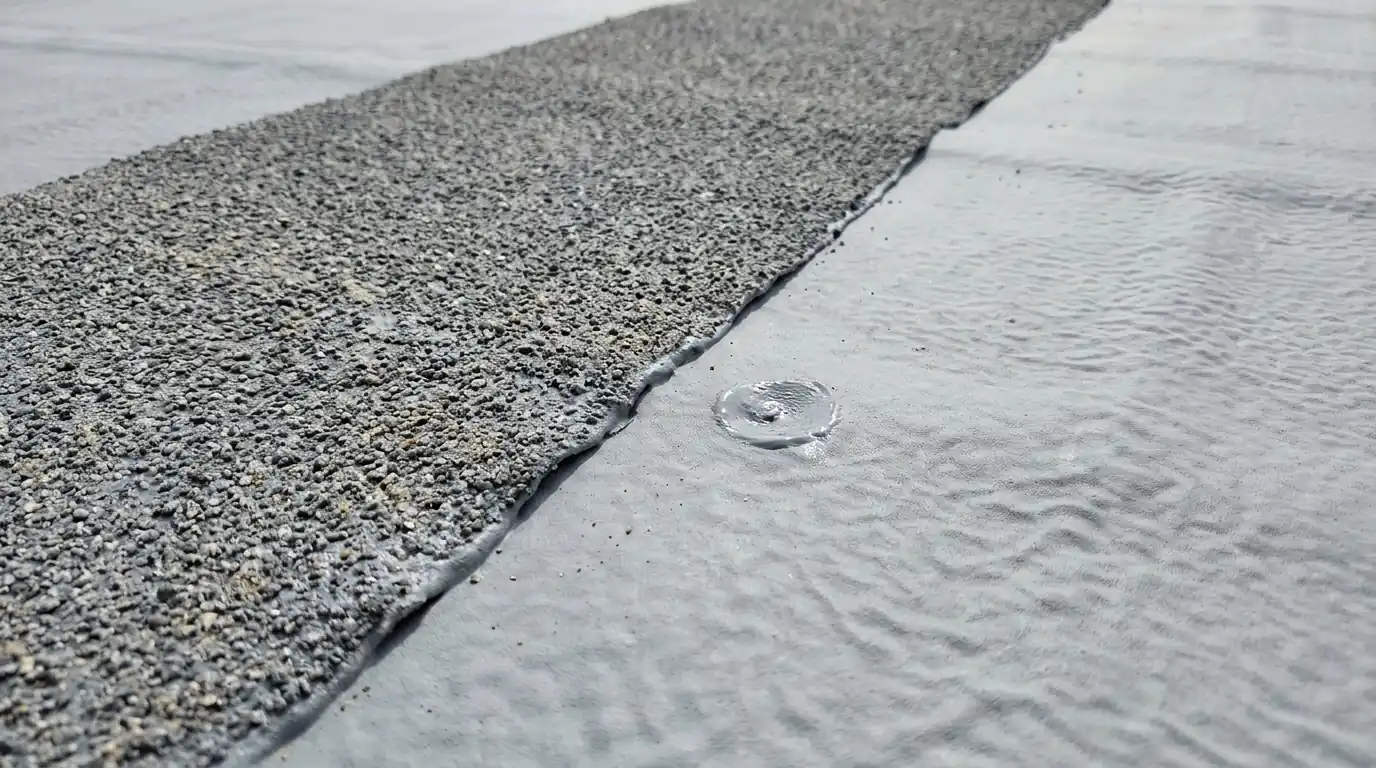
Urethanes are sensitive to moisture during cure. Applied to a damp surface or in humid conditions, they can foam, bubble or lose adhesion. We check the surface with a moisture meter, watch the dew point and avoid application near morning fog. Primer is used when the substrate calls for it, and we check adhesion with a test patch. Thickness is set by the system spec, typically 20 to 40 dry mils for the full build over foam, and checked as we go. Seams, penetrations and edges get extra build. Walk pads or granules are added in traffic areas, since even a tough coating benefits from a sacrificial surface where people walk every day.
- Moisture meter check before coating
- Dew point monitored all day
- Primer and adhesion test
- Extra build at penetrations
- Granules in the wet coat at walkways
When urethane is not the best fit
Urethane is not ideal for roofs with heavy ponding, since water can break down the film over time. It is also a poor match when the roof will see little traffic, because cheaper coatings do the job. Mixing urethane with other coatings requires careful adhesion testing, because not every topcoat bonds to every urethane. Old silicone surfaces are a definite no for urethane, since it will not bond. If your roof is silicone-coated now, stay with silicone. If the roof is dry, drains well and sees real traffic, urethane over foam with a UV-stable topcoat is a proven system that holds up under hard use.
Our process for polyurethane roof coating
Six steps, in the order the crew does them on a Sacramento roof.
- Step 1Assess traffic and drainage
We map foot traffic routes, check drainage and look at the existing coating or foam to choose a urethane system that suits the roof.
- Step 2Clean and test
The roof is washed, moisture is checked and an adhesion test patch confirms the urethane will bond to the substrate.
- Step 3Repair and detail
Foam damage and cracks are repaired, and seams, curbs and penetrations are reinforced before any field coat is applied. Every weak spot is covered first.
- Step 4Prime if specified
Where the substrate requires it, a primer is applied and left to cure so the urethane base coat has a sound bonding surface.
- Step 5Apply urethane base
The urethane base coat is sprayed or rolled to the specified dry mil thickness, with extra build around equipment and edges.
- Step 6UV topcoat and walk pads
A UV-stable topcoat goes on, granules or walk pads are added in traffic lanes, and we inspect before cleaning up.
What polyurethane roof coating costs in Sacramento
A 2,500 sq ft commercial foam roof with a urethane base coat, silicone topcoat and walk pads typically costs near 8,200 to 11,000.
- Base coat and topcoat system
- Dry mil thickness
- Walk pad and granule area
- Foam repair needed first
Planning a recoat? The coating calculator turns roof area, coating type and target thickness into gallons and pails.
Sacramento conditions that matter
Sacramento commercial roofs carry a lot of traffic from HVAC technicians, solar installers and roof inspectors, and valley storms can bring hail and wind-blown debris. Urethane's toughness fits those conditions, particularly on foam roofs in West Sacramento, Rancho Cordova and Natomas business parks. Heat is the other factor. Summer surface temperatures soften some coatings, but urethane holds its shape. Winter moisture and fog are the problem for application, since urethane needs a dry surface, so work is planned for the dry months. California Title 24 cool roof rules may influence the topcoat color and reflectivity on a reroof.
Often paired with this service
Questions about polyurethane roof coating
Why does aromatic urethane need a topcoat?
Sunlight breaks down aromatic urethane, causing it to chalk, yellow and lose thickness within a season or two. A UV-stable coating on top blocks the sun and protects the urethane underneath. Skipping the topcoat to save money usually costs more in repairs within a couple of years.
Is urethane better than silicone for foot traffic?
Generally yes. Urethane has higher abrasion and impact resistance than silicone, which is softer and slicker. For busy rooftop paths, urethane with granules holds up better. For ponding roofs, silicone usually wins on water resistance. Some systems use urethane at traffic lanes and silicone elsewhere.
Can urethane be applied over old silicone coating?
No. Urethane does not bond to cured silicone, and the film will peel off. If a roof has a silicone coating, it should be recoated with silicone. Changing to urethane would require removing the silicone entirely, which is rarely practical on a large roof. Ask us before any change of system.
How long does urethane take to cure?
Surface cure is often within hours, but full cure takes days and depends on temperature and humidity. Light foot traffic may be possible the same day. We avoid heavy traffic and rain exposure during the first day or two, and we check for tackiness before releasing the roof.
Does hail damage urethane-coated foam?
Large hail can still dent foam, but a urethane base coat reduces punctures compared with softer coatings. After a storm, inspect for dimples or cracks and repair promptly. Small damage is patched with new foam and recoating, which keeps water from reaching the foam below.
Roof leaking, peeling or baking in the sun?
Call the 24/7 line. Tell us the roof type, where the water shows up or what the coating looks like, and we will tell you what we would check first and when a crew can be there.