Insulating and air sealing the roof
Spray foam insulation in Sacramento, CA
Your attic is an oven in July, the ducts sweat, and fiberglass has not kept the heat out, so spraying foam at the roof deck deserves a look.
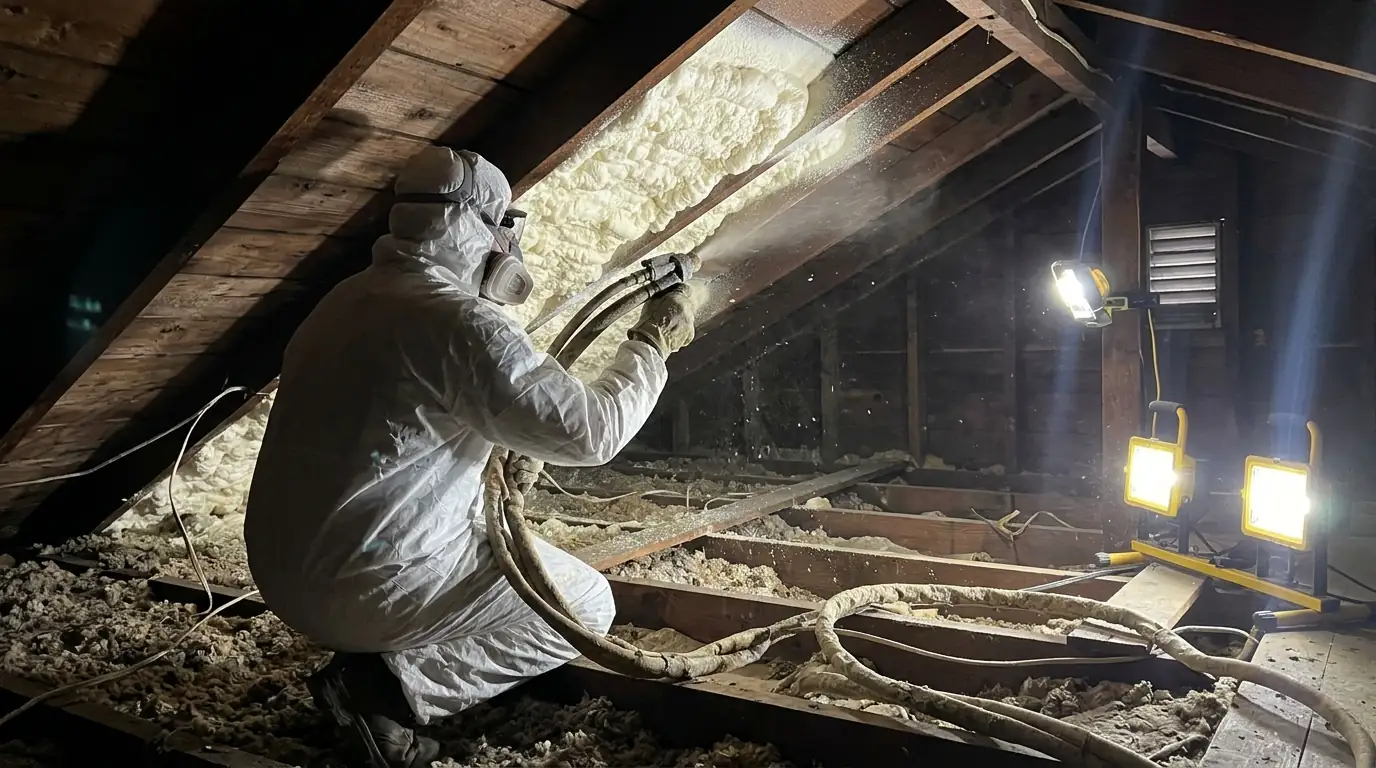
Spray foam insulation is applied to the underside of the roof deck or attic floor to add R-value and seal air leaks in one step. Closed-cell foam gives about R-6 to R-7 per inch, open-cell about R-3.5. Typical Sacramento cost is 1.45 to 3.95 per sq ft of surface, with most attics done in one to two days.
What this job involves
Spray foam goes on as a liquid and expands to fill every gap, which is why it insulates and air seals at once. In a Sacramento attic, that matters because ducts and air handlers often sit in an attic that reaches 130 F or more in summer. Moving the thermal boundary to the roof deck brings that attic closer to the temperature of the living space and takes stress off the ducts.
There are two types. Closed-cell foam is dense, about 2 pounds per cubic foot, and adds strength and a moisture barrier. Open-cell foam is lighter, about 0.5 pounds, softer and lower cost, with less R-value per inch. This service is separate from roof foam: roofing SPF is a heavier, 2.5 to 3 pound closed-cell product sprayed on top of the roof, while insulation foam goes underneath. Keep that difference in mind when comparing quotes.
Signs spray foam insulation may help
If the attic is far hotter than outside air in summer, heat is flowing into the rooms below. Foam at the roof deck cuts that gain at the source.
Air handlers and ductwork in a vented attic lose cooling capacity to the heat. Bringing the attic inside the thermal boundary improves performance.
Air leaking through ceiling gaps carries dust and pollen. Foam seals those paths along with adding insulation. Air leaking through ceiling gaps carries dust and pollen indoors. Foam seals those paths while it adds insulation.
Old batts and blown insulation compress and gap over time. Spray foam does not settle and does not leave voids around framing.
If the system runs constantly and bills climb each summer, heat gain through the roof assembly is a likely cause worth fixing.
Rooms with no attic space have little room for batts. Foam adds high R-value in thin layers where depth is limited.
Open-cell versus closed-cell foam
Closed-cell foam has tiny sealed cells filled with gas, giving about R-6 to R-7 per inch. It resists water vapor, adds rigidity and works as a moisture barrier. It costs more per inch, so it is often used in thinner layers or where a vapor barrier is needed, such as flat roof assemblies and crawlspaces. Open-cell foam has broken cells that fill with air, giving about R-3.5 per inch. It is softer, expands more and costs less, and it works well for roof decks in dry climates like Sacramento when applied at a depth of several inches. Open-cell must not be exposed to liquid water, and it generally needs an ignition barrier or thermal barrier where code requires it in attics.

Roof deck foam and the unvented attic
Spraying the underside of the roof deck turns a vented attic into an unvented, conditioned one. Soffit and ridge vents are sealed or closed off, and the foam becomes the air barrier and insulation. This brings ducts and equipment inside the thermal envelope. It is a good fit in hot climates, though local code and the roof's condition must allow it. Before any foam goes on, we check the roof for leaks, since foam can hide a wet deck from view and trap moisture against wood. Fixing leaks and rotted sheathing comes first. We also review code requirements for insulation depth, ignition barriers and ventilation, which vary by project, and we help you understand what applies to your home.
- Roof leaks repaired before foam
- Soffit and ridge vents sealed as designed
- Ignition or thermal barrier where code requires
- Even thickness, checked with a depth gauge
- Combustion appliances reviewed for safe venting
Mistakes to avoid with spray foam
Spray foam applied over wet wood, in damp weather or too thick in a single pass can shrink, crack or fail to cure properly. Foam applied too thin gives less R-value than expected. Poor ventilation during and after application can leave odors that last, so we use proper masking, protective gear and ventilation for crews and occupants. Another common mistake is spraying foam without fixing a roof leak. Foam hides moisture and makes later leak tracing hard. A third is ignoring the need for a thermal barrier, which fire codes require in many cases. We plan these details before spraying, and we tell you honestly if a different insulation would suit your attic better.
Our process for spray foam insulation
Six steps, in the order the crew does them on a Sacramento roof.
- Step 1Attic and roof check
We inspect the roof deck, framing, ducts and existing insulation, and look for leaks or damp wood that must be fixed first.
- Step 2Plan the assembly
We choose open-cell or closed-cell, set thickness and decide how to treat vents, using code and your goals as the guide.
- Step 3Prep and mask
Floors, equipment and openings are covered, and vents and soffit paths are sealed where the design calls for it, before spraying starts.
- Step 4Spray in lifts
Foam is sprayed in controlled lifts to the target depth, with thickness checked with a depth gauge as the crew works.
- Step 5Trim and finish
Excess foam is trimmed at framing and access points, and a thermal or ignition barrier is applied where required. Excess foam is trimmed at framing and access points, and a thermal or ignition barrier is applied where code requires one.
- Step 6Ventilate and verify
The space is aired out, we check coverage for gaps, and we give you re-entry timing and any follow-up notes.
What spray foam insulation costs in Sacramento
A typical 1,600 sq ft attic roof deck sprayed with 3 inches of open-cell foam costs near 3,500 to 5,200, including prep and barrier.
- Open-cell or closed-cell foam
- Depth and R-value target
- Attic access and height
- Barrier and vent sealing work
Compare this job with others in the Sacramento roofing cost guide.
Sacramento conditions that matter
Sacramento attics reach extreme temperatures in summer, with 100 F days common and the heat building through late afternoon. Many 1950s to 1970s ranch homes have thin fiberglass and ducts running through the attic, so cooling bills climb. Roof deck foam brings ducts into a cooler space. Winter is milder, but tule fog and cold nights still make air sealing valuable. SMUD offers programs from time to time, so ask about any current options. In foothill areas such as Auburn and El Dorado Hills, foam must be handled with fire code in mind, and wildfire zone rules may apply to roofing and vents.
Often paired with this service
Roof Ventilation
Let the attic breathe
View serviceCool Roof Coating
Reflective coatings for valley heat
View serviceSpray Foam Roofing
Sprayed-in-place SPF roof systems
View serviceDry Rot & Roof Deck Repair
Fix the wood under the roof
View serviceRead before you decide
Questions about spray foam insulation
Is roof foam the same as insulation foam?
No. Roofing foam is a denser closed-cell product, about 2.5 to 3 pounds, sprayed on top of a roof and coated for waterproofing. Insulation foam goes on the underside of the roof deck or attic floor, and is lighter. The jobs, products and goals differ, though both are polyurethane.
How much R-value do I get per inch?
Closed-cell foam gives about R-6 to R-7 per inch, and open-cell about R-3.5. A three-inch layer of open-cell gives roughly R-10, while closed-cell gets there in about an inch and a half. The right pick depends on budget, moisture exposure and the space available. Thickness is measured as we spray.
Do I have to leave the house during spraying?
Yes, in most cases for the day of application and some time after. Foam gives off vapors while curing, so occupants and pets should stay out until the space is aired. We tell you the exact re-entry time for the product we use and give simple prep steps.
Can foam hide a roof leak?
It can, which is why we repair leaks first. Foam covers the framing and decking, and moisture trapped behind it can rot wood unseen. We check for stains, moisture readings and old repairs before spraying, and fix problem areas so the deck is dry and sound.
Will spray foam make my attic ventilation worse?
Roof deck foam creates an unvented attic by design, so the vents are sealed and the attic is conditioned. This works well with proper installation. If foam is sprayed on the attic floor instead, the attic stays vented. We explain which approach fits your home and local code.
Roof leaking, peeling or baking in the sun?
Call the 24/7 line. Tell us the roof type, where the water shows up or what the coating looks like, and we will tell you what we would check first and when a crew can be there.