Standing seam and ribbed metal panels
Metal roofing in Sacramento, CA
A metal roof can outlast two shingle roofs and shrug off embers, but only if the panels, clips, underlayment and flashing are installed for valley heat.
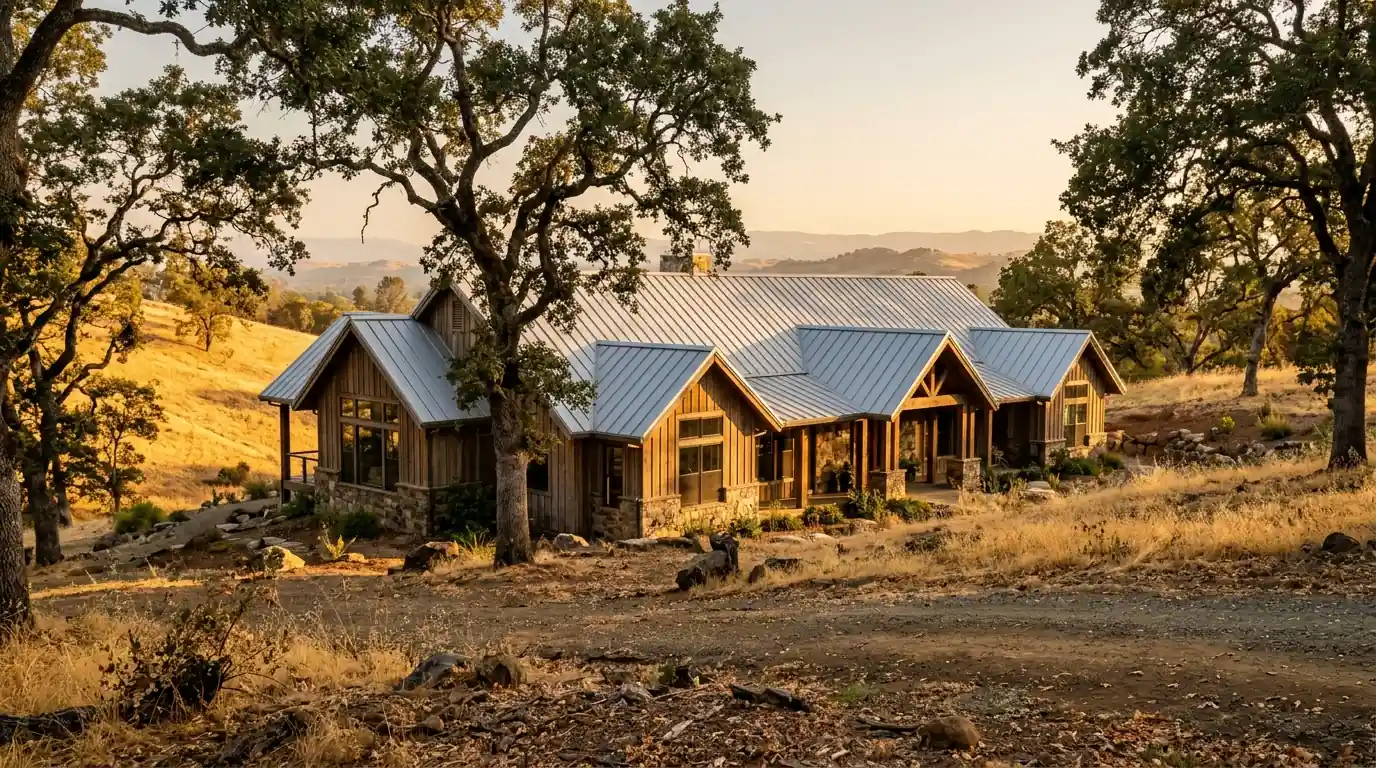
Metal roofing uses steel or aluminum panels, either standing seam or exposed-fastener ribbed panels, over synthetic underlayment. In Sacramento, typical installed cost runs 9.80 to 19.40 per sq ft, and most homes take three to six days. It reflects heat, resists fire embers and often lasts decades longer than shingles.
What this job involves
Metal roofing comes in two main families. Standing seam panels have raised, interlocking ribs with hidden clips, so there are no exposed screws in the field. Exposed-fastener panels, often called ribbed or corrugated, are screwed through the face with rubber washers. Standing seam costs more and lasts longer, while ribbed panels fit sheds, barns, patio covers and budget projects. Both are made from galvanized or Galvalume steel or aluminum, with factory paint finishes.
Metal sheds embers and is non-combustible, which is why it suits foothill homes near Auburn, Placerville and El Dorado Hills. It also reflects a lot of heat, especially in light colors with cool-roof pigments. We install metal over solid decking with a high-temperature underlayment, and handle all flashing in metal. If the roof has flat sections, we can pair metal with a foam or coating system there. Ask about our options.
When metal roofing makes sense
Foothill and wooded properties benefit from non-combustible roofing. Metal with a Class A assembly resists embers that could ignite shingles or debris.
If you replace shingles every 15 to 20 years in valley heat, a longer-lived metal roof can cost less over decades.
Reflective metal in light colors sends heat away from the attic, and can lower roof temperatures compared with dark shingles.
Shingles on very low slopes leak. A standing seam panel with a proper seam can work on lower pitches than shingles allow.
Rusting panels, loose screws and worn washers on an older metal roof can often be recoated or replaced, depending on condition.
Metal costs more upfront. It pays back best for owners who plan to keep the property for many years. It pays back over decades.
Standing seam or ribbed panel
Standing seam has concealed clips that let the panel expand and contract with heat, which matters in Sacramento where roof surfaces swing widely. There are no exposed fasteners in the field to back out. Exposed-fastener ribbed panels use screws with rubber washers that dry out and need replacement over time, so maintenance is part of ownership. Gauge matters too: 24-gauge steel resists denting and oil-canning better than 26 or 29 gauge. We help you choose panel type, gauge and finish based on slope, budget and use.
- Standing seam: hidden clips, longer life, higher cost
- Ribbed panel: exposed screws, lower cost, periodic washer upkeep
- Heavier gauge resists denting and panel waviness
- Factory finishes with cool-roof pigments for heat reflection
Installation details that matter
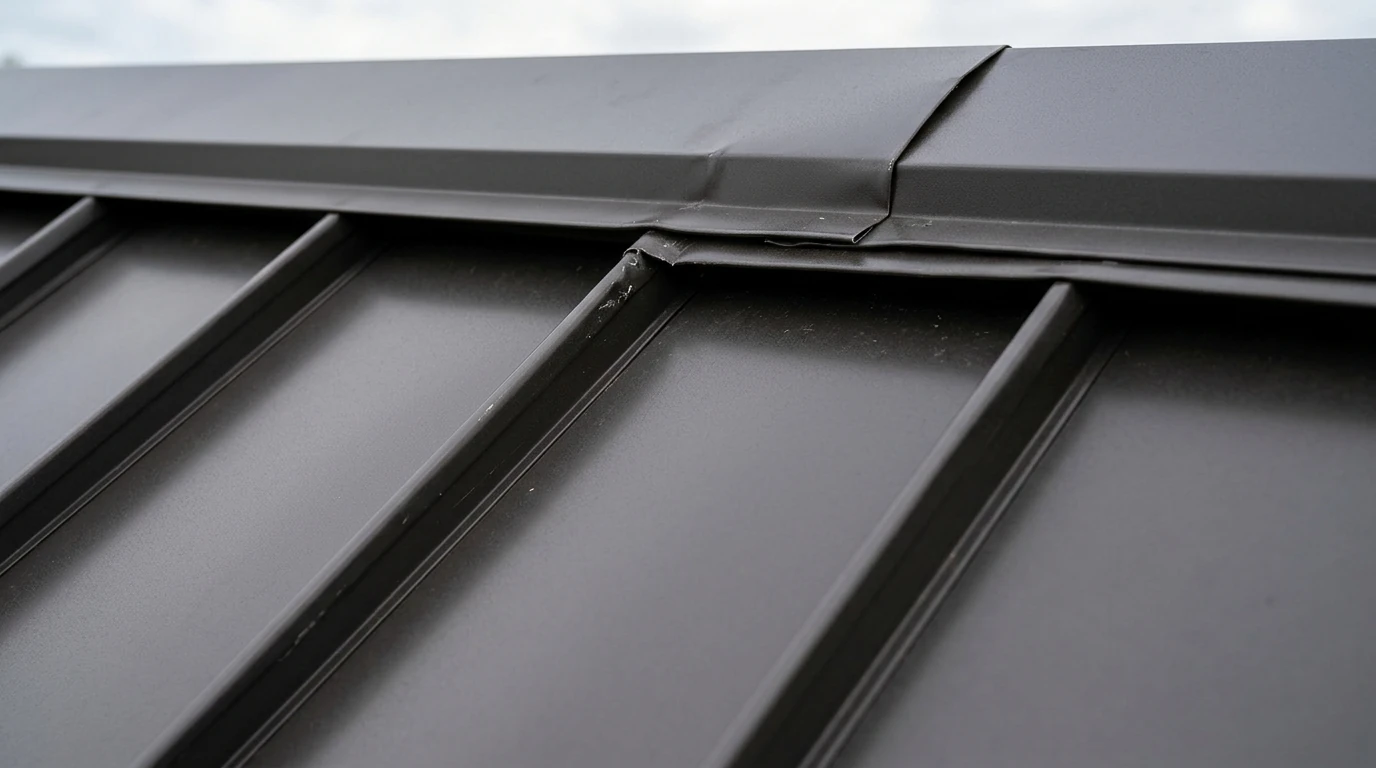
Metal needs a clean, flat deck, so we repair or replace bad plywood first. High-temperature synthetic underlayment goes down under the panels, since regular felt can bake under metal. Drip edge, eave closures, valley metal and ridge pieces all have to match the panel profile. Penetrations get proper boots or custom flashing, and we avoid dissimilar metals touching, which can cause galvanic corrosion. Panels are cut to length, locked with clips or fastened in the right pattern, and ridge details are sealed with closure strips to keep out pests and wind-driven rain.
Mistakes and trade-offs
Metal is not cheap, and a low bid often means thin panels, cheap fasteners or skipped underlayment. Another mistake is installing over an old roof without checking the deck, which can telegraph every bump. Noise is rarely an issue with solid decking and underlayment. Solar panels mount well on standing seam with clamps that do not penetrate the metal, which is a big plus for SMUD customers adding solar. We also explain panel finish warranties, which vary by manufacturer and paint system.
Our process for metal roofing
Six steps, in the order the crew does them on a Sacramento roof.
- Step 1Inspect and measure
We check slope, deck and framing, measure the roof, and plan panel layout, valleys and penetrations. We photograph the deck and framing for your records.
- Step 2Select panel and finish
You choose profile, gauge and color, with guidance on heat reflection, fire rating and HOA or code requirements. We also confirm HOA and fire code rules.
- Step 3Tear off old roofing
The existing roof comes off, and the deck is inspected, with rotted or uneven plywood replaced or fastened down. Nails are reset or removed from the deck surface.
- Step 4Install underlayment and trim
High-temperature underlayment, drip edge, eave and rake trim, and valley metal go on before panels. Closures keep pests and wind-driven rain out.
- Step 5Hang the panels
Panels are cut to length, locked or fastened to spec, and sealed at laps, with room for thermal movement. Clips are spaced for thermal movement.
- Step 6Flash and finish
Ridge, hips, boots and wall flashing are installed, fasteners are checked, and the roof is cleaned of metal shavings. Cut shavings are swept to prevent rust spots.
What metal roofing costs in Sacramento
A 2,200 sq ft home with 24-gauge standing seam panels, new underlayment and trim commonly runs about 26,800 to 38,500.
- Panel type and gauge
- Roof complexity and pitch
- Deck repair needed
- Trim, valleys and penetrations
Compare this job with others in the Sacramento roofing cost guide.
Sacramento conditions that matter
Sacramento sun and heat make reflective metal roofing attractive, especially in light colors with cool-roof pigments that can help with Title 24 requirements where they apply. Foothill communities like Auburn, Loomis, Placerville and El Dorado Hills face wildfire risk, and Class A metal assemblies shed embers. Winter storms bring heavy rain, which standing seam sheds quickly. Rooftop solar is common among SMUD customers, and standing seam accepts clamp-on mounts without roof penetrations. Metal is also common on barns, workshops and rural properties around Galt and Wilton. Light colors reflect more heat.
Often paired with this service
Questions about metal roofing
Does a metal roof make my house louder in the rain?
With solid decking and underlayment, a metal roof is usually not much louder than shingles. The noise stories come from metal over open framing, like barns. We install over a solid plywood deck with underlayment, and attic insulation dampens sound further. Attic insulation also dampens sound.
Can metal roofing go over my existing shingles?
Sometimes, with battens or a separation layer, but we usually recommend tear-off. A full tear-off lets us check decking, replace flashing and avoid hidden bumps showing through panels. Overlay may also trap heat and moisture under the new roof. Overlay also needs a separation layer in some cases.
What is the difference between 24-gauge and 29-gauge metal panels?
A lower gauge number means thicker steel. 24-gauge resists denting and oil-canning, which is visible waviness in flat panel areas. 29-gauge is lighter and cheaper, common on ribbed panels. We recommend heavier gauge for homes and where hail or branches are a concern. We show you sample panels to compare thickness.
Will a metal roof attract lightning?
No. Metal does not attract lightning more than other roofs. If struck, metal is non-combustible and spreads the charge across the surface. Lightning is uncommon in the Sacramento Valley, and a metal roof does not raise your risk. Proper grounding follows the building code. Grounding follows code.
Can I put solar panels on a standing seam metal roof?
Yes, and it is one of the easier roofs for solar. Clamps grip the raised seams with no screws through the panels. That avoids new roof holes and leak points. We coordinate with your solar installer on roof layout and any needed removal or reinstall.
Roof leaking, peeling or baking in the sun?
Call the 24/7 line. Tell us the roof type, where the water shows up or what the coating looks like, and we will tell you what we would check first and when a crew can be there.