Torch-down and self-adhered mod-bit
Modified bitumen roofing in Sacramento, CA
Modified bitumen is a tough, layered flat roof that handles foot traffic and heat, provided the plies, seams and base flashing are laid up correctly.
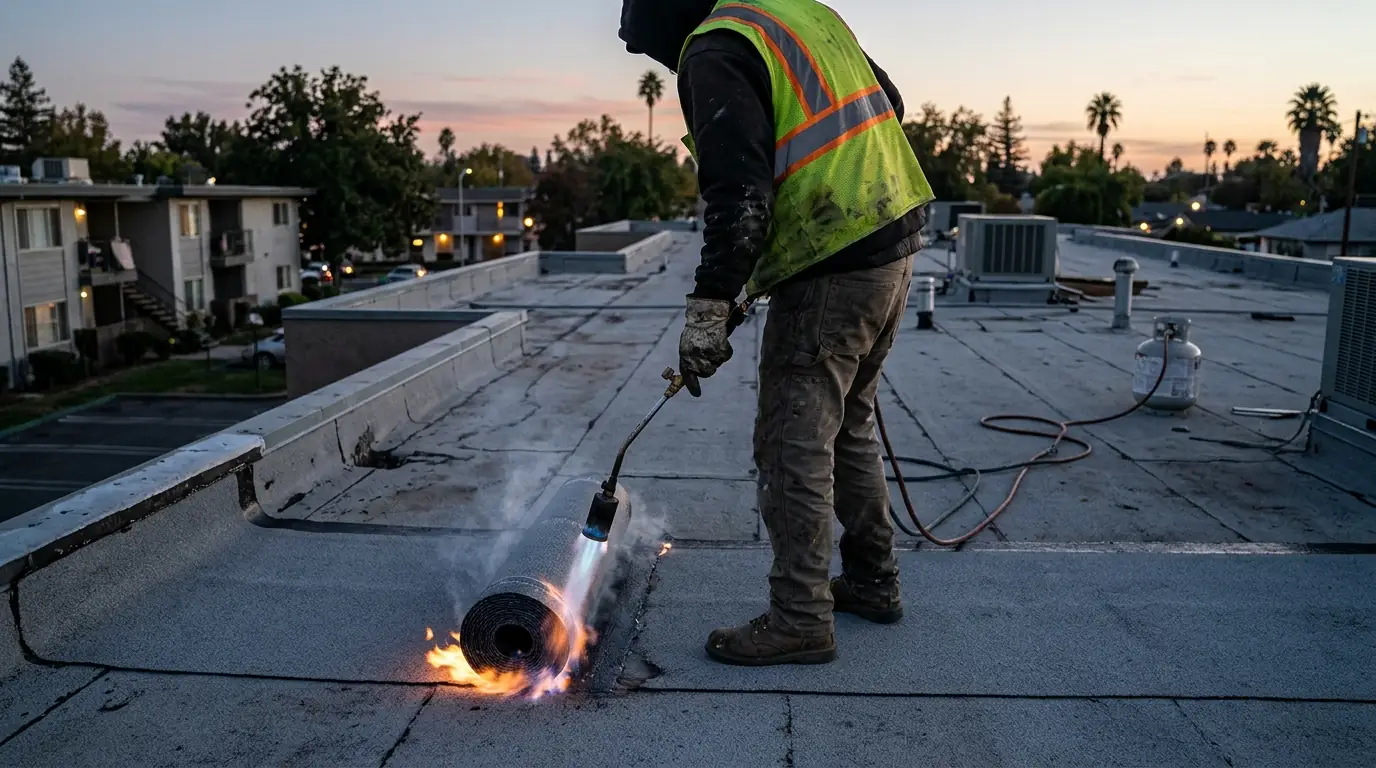
Modified bitumen, or mod-bit, is a layered asphalt membrane reinforced with polyester or fiberglass and made flexible with polymers. In Sacramento, installed cost typically runs 6.80 to 13.40 per sq ft, and most roofs take one to four days. Torch-applied and self-adhered versions are both available.
What this job involves
Modified bitumen is asphalt blended with SBS or APP polymers, then rolled into sheets with a reinforcing mat. A typical system has a base sheet and a cap sheet, and some roofs use two or three plies. The cap sheet usually has a mineral granule surface that protects the asphalt from UV and gives some fire resistance. It is a descendant of built-up roofing but easier to install, with fewer layers and cleaner seams.
Mod-bit is common on commercial buildings, apartments and older homes with flat roofs. It holds up well under foot traffic from HVAC service, and repairs are straightforward. We install both torch-applied and self-adhered systems, and also compare mod-bit with TPO, EPDM and foam so you can pick what suits your roof and budget. We compare each option for your roof and walk you through the cost and life of every one, so you can decide with the facts in front of you instead of guessing.
When mod-bit is the right choice
Roofs with rooftop equipment or regular access benefit from the thick, granule-surfaced cap sheet of mod-bit. The granules also protect the asphalt from sun.
Mod-bit is compatible with many existing asphalt-based roofs and details, making it a familiar replacement choice. It also tolerates older flashing details.
Two- and three-ply systems add redundancy. If one layer is damaged, the others still protect the deck. That added layer is cheap insurance.
Many mod-bit systems with granulated cap sheets carry Class A fire ratings, which matters near wooded or foothill areas. This is common on foothill-adjacent buildings.
Where open flame is a concern, self-adhered or cold-applied mod-bit avoids torching around combustible materials. It also suits tight rooftops and occupied buildings.
Mod-bit can be patched with compatible materials, and repairs are generally easy for experienced roofers. A mineral surface also holds up to repeated service visits.
Torch-down versus self-adhered
Torch-applied mod-bit uses a propane torch to melt the underside of the roll as it is rolled out, fusing it to the layer below. It makes strong bonds and is the traditional method. Self-adhered mod-bit has a peel-and-stick back, so no flame is needed, which is safer around wood framing and fuel sources. It can be slower in cold weather and needs a clean, primed surface, but it is a good choice for occupied buildings and tight rooftops. Both can deliver good life when installed to manufacturer specs.
- Torch-down: fused with flame, traditional, strong bond
- Self-adhered: peel-and-stick, no open flame, cleaner install
- Cold-applied adhesive systems for sensitive roof areas
- Granulated cap sheet for UV and fire protection
Getting seams and flashing right
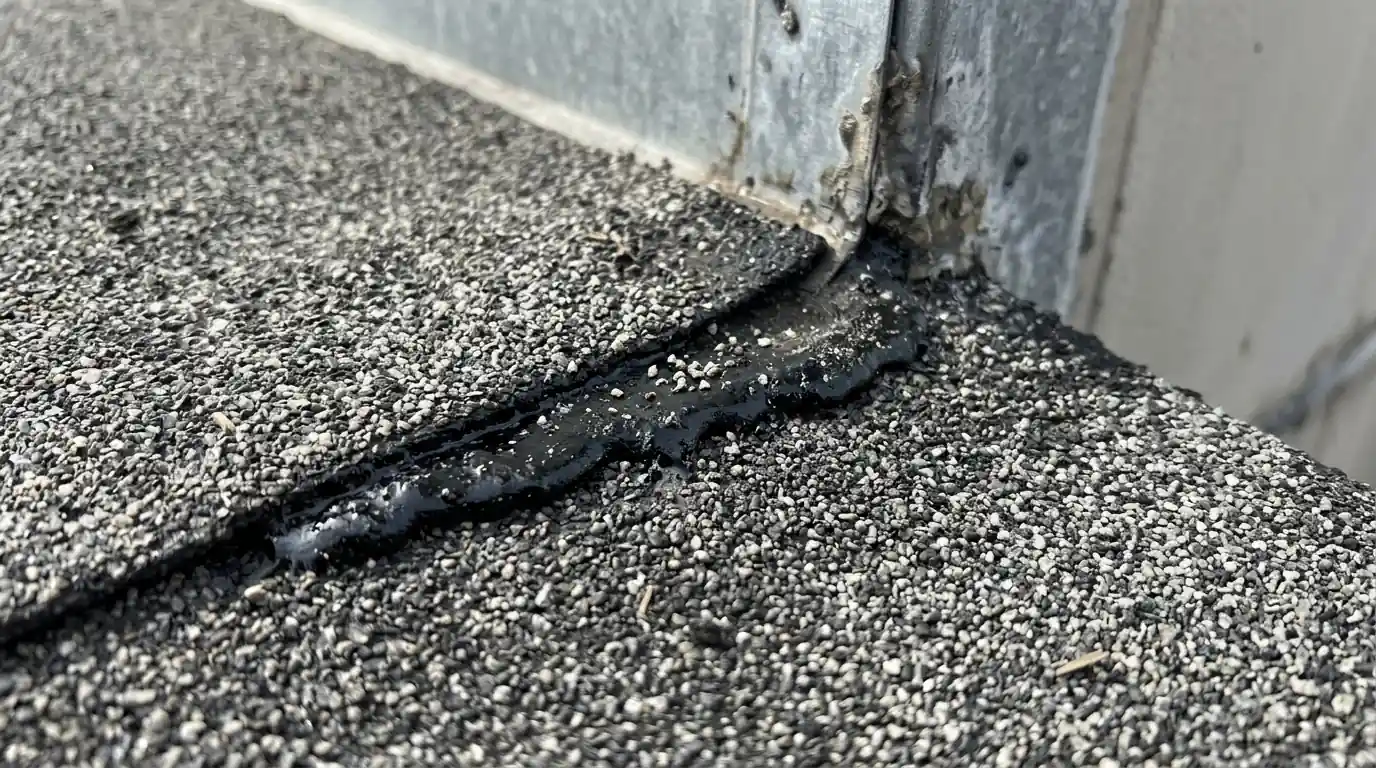
Seams must overlap properly, usually 3 to 6 inches on sides and ends, with a visible bleed-out of asphalt when torched. Base flashing runs up walls and curbs, with a cap flashing over it, and every corner needs a patch. Poor flashing is the most common leak source on mod-bit roofs. Granules can be embedded at laps to protect fresh seams, and we use compatible primers on masonry and metal. Seam laps should show a small bead of asphalt at the edge when torched, which tells us the layers fused. Self-adhered laps are rolled with a weighted roller and sealed at the edges, and cold weather calls for extra care and sometimes a heat gun to help the adhesive grab.
Trade-offs to know
Mod-bit is heavier than single-ply, and a dark granule surface absorbs heat unless a reflective coating is added. A light-colored cap sheet or a white coating can help with Title 24 cool roof requirements where they apply. Torch work needs a trained crew and fire watch, since open flame near old wood is serious. If the old roof is wet or damaged, tear-off may be needed instead of recover. We discuss each of these trade-offs plainly. Cost and fire safety both factor in.
Our process for modified bitumen roofing
Six steps, in the order the crew does them on a Sacramento roof.
- Step 1Inspect and test
We check existing layers, moisture, deck condition and flashing, and decide on tear-off versus recover. We also photograph the layers we find.
- Step 2Prepare the deck
Old roofing is removed as needed, the deck is repaired and cleaned, and insulation is installed where required. Insulation goes in with staggered joints.
- Step 3Install base sheet
A base sheet is mechanically fastened or adhered to the insulation or deck, with staggered side and end laps. Fasteners are placed in the correct pattern.
- Step 4Apply the cap sheet
The cap sheet is torched or self-adhered over the base, with proper overlap and visible asphalt flow at the seams.
- Step 5Flash walls and curbs
Base and cap flashings go up every wall, curb and penetration, with corner patches and sealed terminations. Terminations are sealed along the top edge.
- Step 6Inspect and finish
We check every seam and detail, add edge metal and coating if specified, and clean the roof before final review.
What modified bitumen roofing costs in Sacramento
A 2,800 sq ft apartment building roof with a two-ply torch-applied system commonly runs about 22,400 to 32,700.
- Number of plies and system type
- Torch or self-adhered method
- Insulation and deck repair
- Flashing details and rooftop equipment
Compare this job with others in the Sacramento roofing cost guide.
Sacramento conditions that matter
Mod-bit has a long history on Sacramento flat roofs, including older apartment buildings, offices and mid-century homes. It handles hot summers and winter rain well when seams and flashing are tight. Granulated cap sheets give Class A fire protection for foothill-adjacent properties. In summer, dark surfaces get hot, so reflective coatings or light-colored caps are worth considering, and Title 24 cool roof rules may apply to some reroofs. Roofs in West Sacramento, Midtown and along Folsom Boulevard often use mod-bit for its traffic tolerance. Reflective coatings can pay back in cooling costs.
Questions about modified bitumen roofing
Is torch-down roofing safe for an occupied building?
When done by trained crews with fire watch, torch-down is routinely done on occupied buildings. Risk goes up near old wood framing or fuel. For those cases we recommend self-adhered or cold-applied mod-bit, which uses no open flame. We assess the roof structure before choosing a method.
What is the difference between SBS and APP modified bitumen?
SBS has rubber-like polymers, so it stays flexible and handles movement well. APP uses plastic-like polymers that resist UV and heat. Both work, and the choice depends on climate, method and manufacturer. In Sacramento heat, either can perform when installed to specification. We help match the product to your roof.
Can I coat a mod-bit roof to make it reflective?
Yes. An acrylic or silicone coating over a sound mod-bit roof adds reflectivity and UV protection and can extend life. The roof must be clean and dry with no wet insulation. Coating is an alternative to replacement for roofs in good shape. We also check that the roof is dry first.
How many plies does a mod-bit roof need?
Most commercial systems use two plies, a base and a cap. Some use three for extra durability or a longer warranty. One-ply systems exist but offer less redundancy. We recommend based on building use, foot traffic and budget. We recommend one after inspection. Ask for a price on each.
Why do mod-bit roofs leak at the walls?
The wall transition is the most stressed spot. Poor base flashing, missing corner patches or unsealed terminations let water in. Good installers run flashing up the wall, add a cap flashing and seal the top edge, then check each corner carefully. Corner patches also add a layer of protection.
Roof leaking, peeling or baking in the sun?
Call the 24/7 line. Tell us the roof type, where the water shows up or what the coating looks like, and we will tell you what we would check first and when a crew can be there.