Fix the metal where roofs leak
Roof flashing repair in Sacramento, CA
Most roof leaks start at flashing, the thin metal and seals around chimneys, walls, vents and valleys, and caulk smeared over a failed detail only buys a few months.
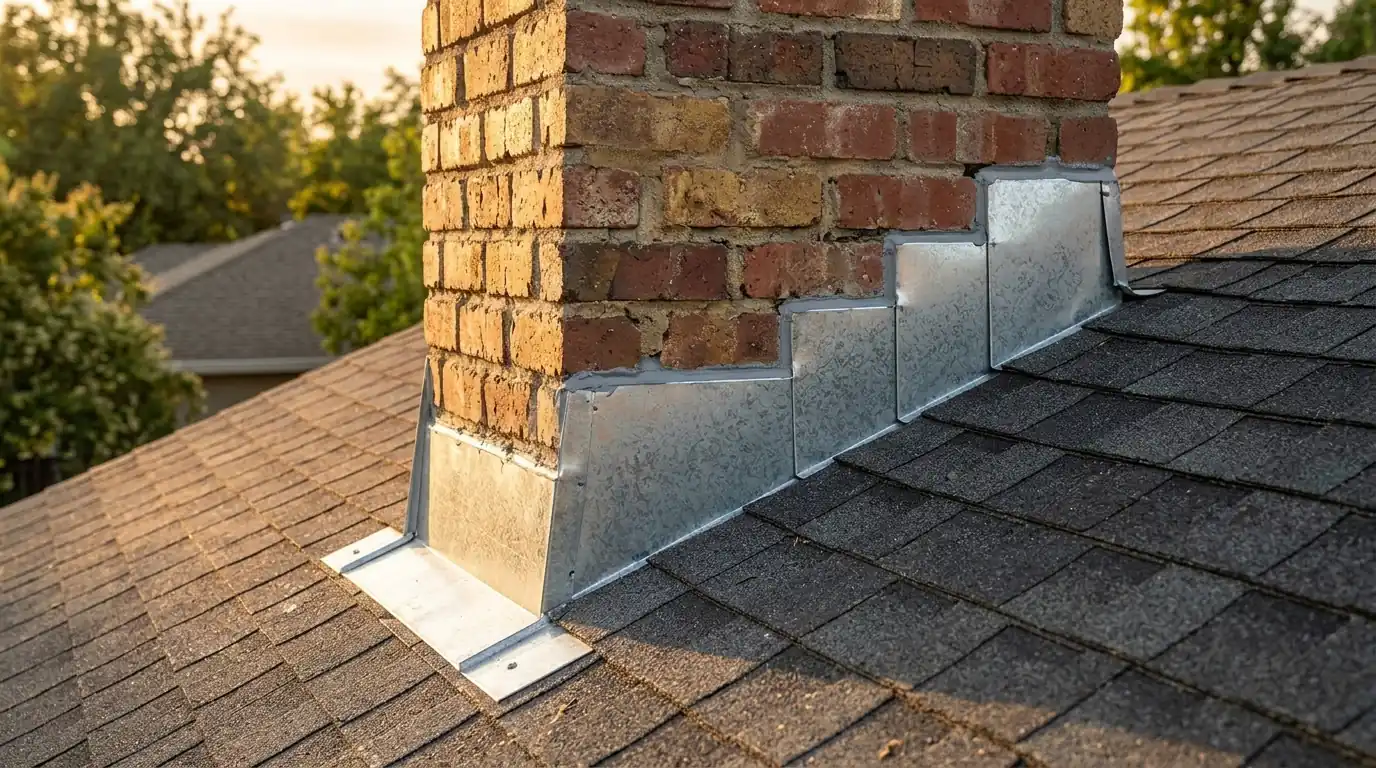
Flashing repair replaces or rebuilds the metal and sealed details where a roof meets a wall, chimney, vent or valley. Common types are step, counter, apron, valley and pipe-boot flashing. Repairs typically cost 265 to 1,420 per job, and most take two to five hours. Large chimney or wall runs cost more.
What this job involves
Flashing is the part of the roof most people never look at and the part most likely to leak. Shingles, tile and membranes shed water on their own across open areas. At every wall, chimney, skylight and pipe, water has to be redirected over a barrier. That barrier is flashing, and it has to lap correctly, because water only runs downhill.
Flashing fails from heat cycling, rust, poor installation and the sealants that were meant to help. A bead of caulk can crack in a summer and let water in all winter. We replace failing pieces with new metal, install them in the right overlap order and use sealant only as backup. On flat roofs, flashing may be membrane, foam with coating or both.
Signs your flashing has failed
Brown marks on the ceiling or wall near a fireplace point to failed counter-flashing, cracked mortar joints or a dry cricket behind the chimney.
Where a second story or addition meets a lower roof, damaged step flashing or siding that overlaps the metal wrongly can send water in.
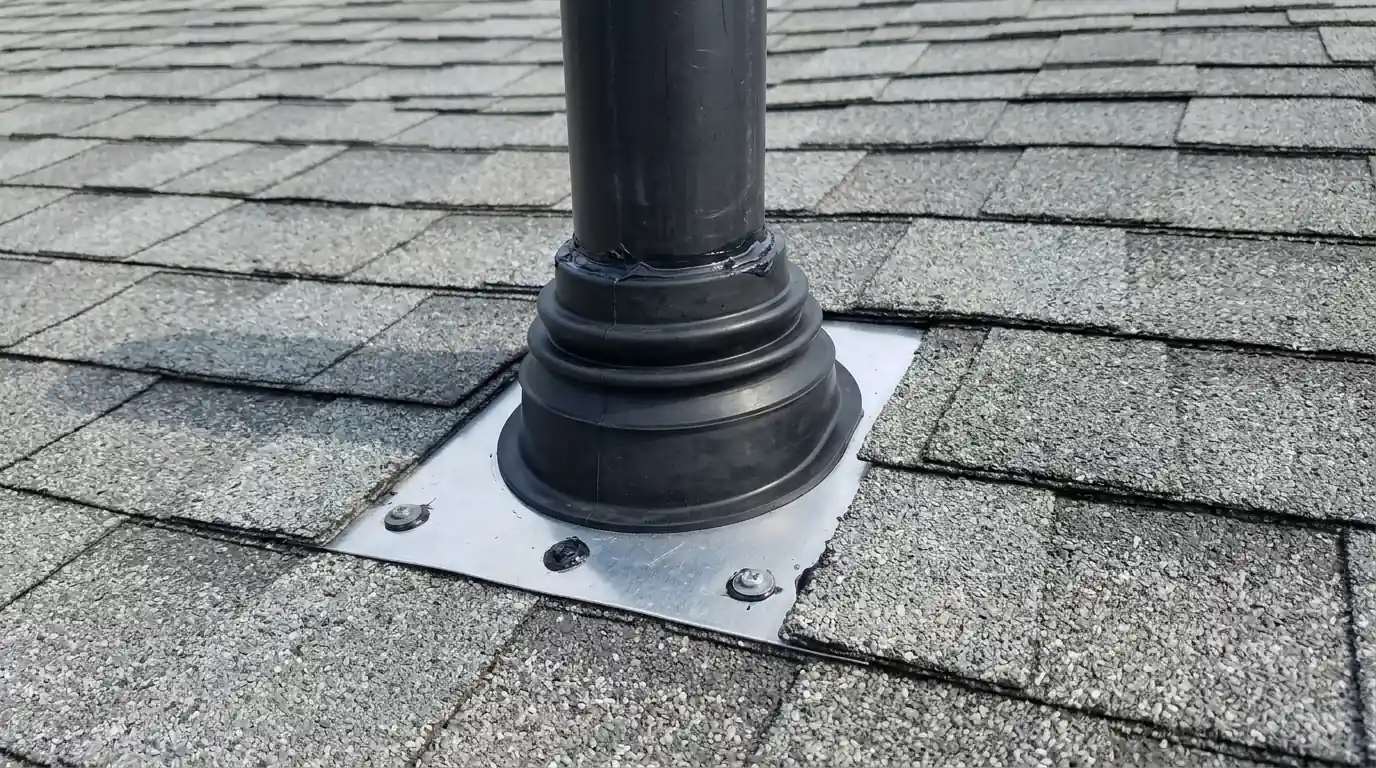
Neoprene collars on vent stacks dry out and split in the sun. Water then runs straight down the pipe and into the attic.
Rusted, bent or lifted metal along valleys and edges, or sealant that has pulled away from a surface, are clear signs of trouble.
Thick layers of black roof cement around details show repeated emergency fixes. Under it, the flashing is usually damaged or never installed properly.
When water enters only when rain comes sideways, a short or missing overlap at a counter-flashing or valley is a likely cause.
Step, counter, apron and pipe-boot flashing
Step flashing is made of small L-shaped pieces, one per shingle course, woven where a sloped roof meets a vertical wall. Counter-flashing is the second layer that tucks into the wall or chimney and laps over the step pieces so water cannot get behind. Apron flashing runs along the base of a chimney or wall at the low side.
Pipe boots seal vent stacks. Standard neoprene boots last roughly ten to fifteen years in valley heat, while lead or metal-base boots with a rubber collar tend to last longer. Valley flashing carries water between two roof planes and may be open metal or woven shingle.
- Step flashing at walls
- Counter-flashing on chimneys
- Apron flashing at chimney base
- Pipe boots on vents
- Valley and drip edge metal
Why caulk is not flashing
Sealant is a gasket, not a drainage path. It works only while it stays attached and flexible. Roof surfaces move many times a day in Sacramento heat, and sealant that is not protected cracks. Flashing is mechanical: overlapping metal that sheds water by gravity.
We use sealant at the final termination, such as counter-flashing into a chimney reglet, and never as the main defense. We also use compatible metals so that dissimilar metal corrosion does not eat through the new work.
Flat roofs, parapets and tile
On low-slope roofs, flashing means membrane or foam and coating turned up a wall and capped with metal. Parapet walls need coping or counter-flashing that sheds water outward. On tile roofs, flashing sits under the tile at walls and valleys, so the tile has to be removed and replaced to get at it.
Where flashing is fine but the surrounding roof is old, we say so, and outline whether a repair, a coating or a larger roof project makes more sense.
Our process for roof flashing repair
Six steps, in the order the crew does them on a Sacramento roof.
- Step 1Locate the failure
We trace the leak path, look at every flashing detail upslope of the stain and photograph cracked, lifted or missing pieces.
- Step 2Remove failed material
Old sealant, rusted metal and damaged roofing around the detail are removed so we can see the underlayment and the wood beneath.
- Step 3Repair the substrate
Soft sheathing is replaced, damaged underlayment is patched, and the surface is cleaned so new material lies flat.
- Step 4Install new flashing
New metal or boot goes in with the correct overlap, shingle courses woven in, and fasteners placed where they are covered.
- Step 5Seal terminations
We seal counter-flashing at the chimney or wall and finish exposed edges with a compatible sealant, never relying on it alone.
- Step 6Water test and photos
We hose the repaired detail, check the interior, and send you before and after photos of what was done.
What roof flashing repair costs in Sacramento
Replacing a pipe boot and re-flashing one short wall section on a shingle roof typically costs around 385 to 640.
- Type and length of flashing
- Roof material and access
- Rotted sheathing underneath
- Chimney masonry work
Compare this job with others in the Sacramento roofing cost guide.
Sacramento conditions that matter
Heat cycling is the main enemy in Sacramento. A roof that goes from a cool night to a surface above 150 F by afternoon moves flashing and sealant over and over, and old caulk cracks quickly. Winter storms then find every gap. Many mid-century homes have chimneys and wall-to-roof transitions flashed with roof cement from the original build, and 1990s tile roofs often have galvanized valley metal that is rusting through. Foothill homes with metal and tile roofs also need flashings that hold up to ember-resistant detail standards in wildfire zones.
Questions about roof flashing repair
Can flashing be repaired or does it need replacing?
Small gaps and loose sections can sometimes be reset and resealed. If the metal is rusted, bent, too short or installed in the wrong order, replacement is the only lasting fix. We show you the condition in photos so you can see why we recommend one or the other.
How long does a pipe boot last?
Standard neoprene boots often last around ten to fifteen years and sooner in strong sun. They are inexpensive but a frequent leak source. Replacing them during a repair or reroof is cheap insurance, and longer-lasting metal or lead-base options are available.
Why does my chimney leak even after new caulk?
Chimney leaks often come from missing counter-flashing, cracked mortar joints, a bad cricket on the high side or a failed crown. Caulk covers symptoms but not the structure. We inspect the full chimney detail and rebuild the flashing in layers.
Do you repair flashing on flat roofs and parapets?
Yes. On a flat roof, we reflash walls and curbs with membrane, foam and coating or metal as appropriate, and install coping or counter-flashing at parapets. Details are reflashed before any coating goes on so the repair does not rely on the coating alone.
Is flashing repair covered by a typical roof warranty?
It depends on the product and installer. Manufacturer warranty terms vary by product, and workmanship terms vary by contractor. We tell you what applies to the specific materials used and explain what is and is not covered before work begins.
Roof leaking, peeling or baking in the sun?
Call the 24/7 line. Tell us the roof type, where the water shows up or what the coating looks like, and we will tell you what we would check first and when a crew can be there.