Restoring the protective topcoat
Foam roof recoating in Sacramento, CA
The coating on your foam roof is thin, chalking or cracked, and once it fails the foam underneath starts breaking down in the sun.
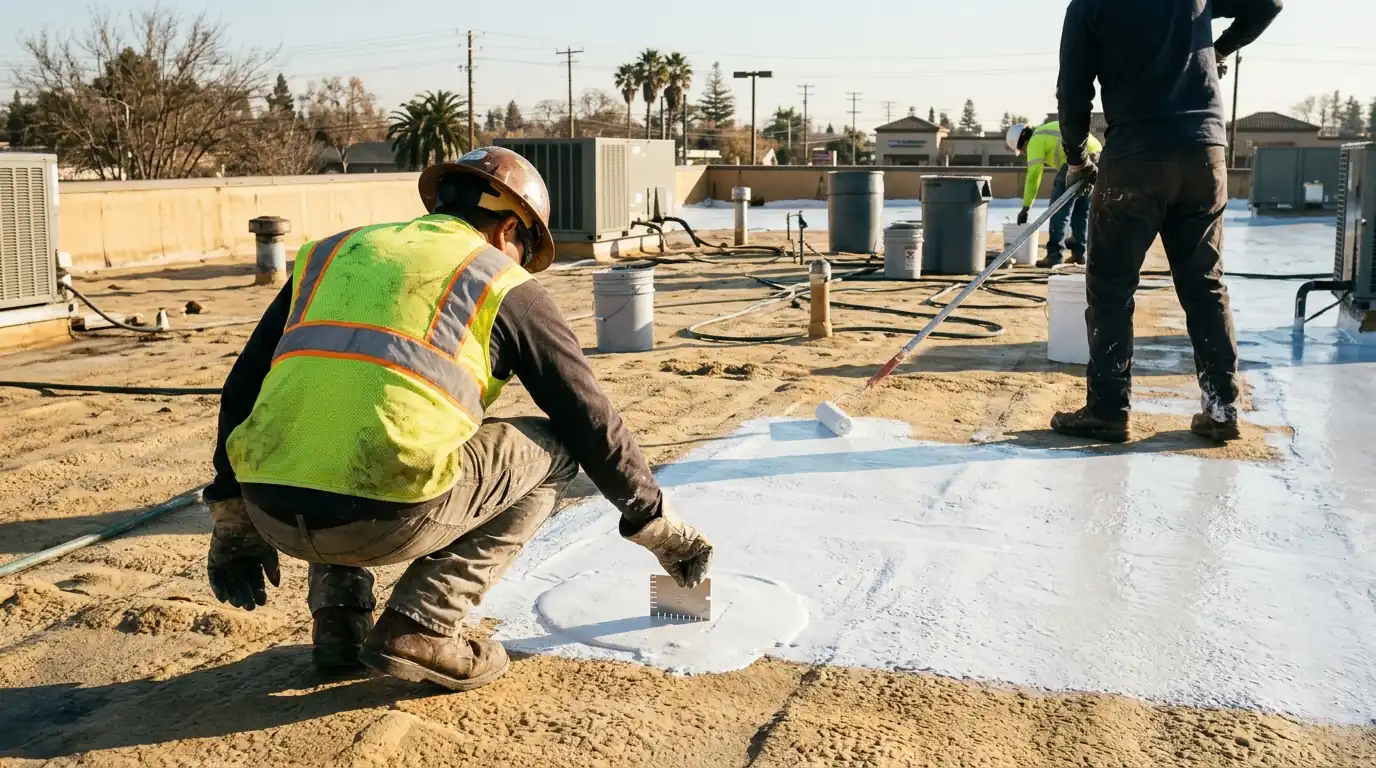
Foam roof recoating cleans the old coating, treats damaged spots and applies a new silicone or acrylic layer to a specified dry mil thickness. It extends the life of the foam beneath. Typical Sacramento cost is 1.65 to 3.10 per sq ft, and most roofs take one to two days.
What this job involves
A foam roof is a system with a short-lived top and a long-lived core. The foam can last decades when it is sealed, while the coating wears away from sun, rain, foot traffic and ponding. Recoating is the planned maintenance that resets that wear layer before the foam is touched. Done on schedule, it is the cheapest way to keep a foam roof. Waiting until foam is exposed turns a modest coating job into a foam repair job, which costs far more.
Most coatings need renewing somewhere in the range of 10 to 15 years, depending on type, thickness and exposure. Silicone tends to last longer on flat roofs that hold water. Acrylic is usually less costly and reflects heat but needs good drainage. A recoat is not just painting on a new layer. It requires cleaning, repairs, adhesion checks and the right primer, or the new coat will peel. We test a small patch first and wait for it to cure so the product, not a guess, tells us what will stick.
Signs your foam roof needs recoating
Rub your hand across the coating. If white or tan powder comes off, the binder is breaking down and UV protection is thinning, so a recoat is due.
Patches where yellow or tan foam is visible mean the coating has worn through completely. Those spots need foam repair and fresh coating immediately.
A roof that no longer reflects light has lost much of its heat benefit. Cleaning and recoating restores the reflective surface and lowers surface temperatures.
Fine crazing across the coating signals brittleness from age. Left alone, cracks widen and let water reach the foam during winter storms.
Sections where the coating curls up from the foam indicate failed adhesion. The loose area needs removal and a compatible primer before recoating.
Even a roof that looks decent should be inspected at this age. Testing coating thickness with a gauge tells us how much life remains.
Silicone, acrylic or polyurethane topcoat
The coating choice depends on how your roof behaves. Silicone is highly resistant to ponding water and holds up under long wet spells, so it fits low spots and slow drains. It stays flexible with temperature swings but attracts dirt and is hard to recoat with anything except more silicone. Acrylic is easier to apply, costs less and reflects well, but it can soften and break down under standing water. Polyurethane is tougher against foot traffic and hail but usually costs more and needs UV-stable topcoats. We pick based on your drainage, traffic and budget, and we do not mix systems without an adhesion test, because some coatings will not bond to others.
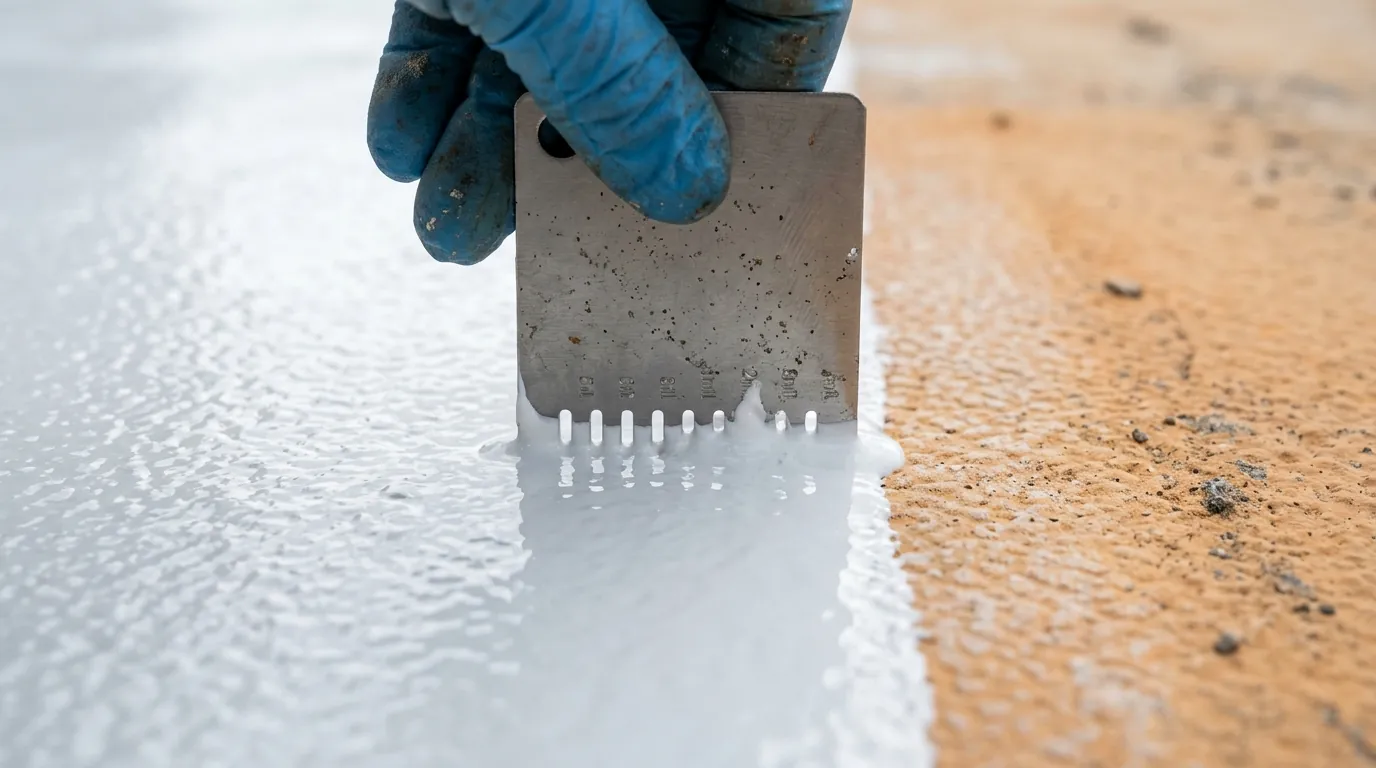
Mil thickness and how it is measured
Coating performance depends on thickness, and thickness depends on how it is measured. Wet mils are measured right after application with a gauge pressed into the fresh coating. Dry mils are what remain after solvent or water leaves, and they are lower, depending on the product's solids by volume. A coating that is 60 percent solids by volume leaves about 6 dry mils from every 10 wet mils. We calculate wet application to hit the target dry thickness, check coverage by gallons per square, and measure with a gauge as we go. Many failed recoats were simply applied too thin, which saves material cost for the applicator but shortens the coating life for you.
What to avoid when recoating foam
Skipping the wash is the most common error. Dust, oxidation and old chalk keep new coating from bonding. Applying coating over wet foam, or in the cool damp morning when dew has not burned off, causes pinholes and blisters. Recoating over damaged foam hides the problem instead of fixing it. Sacramento's heat creates its own risk: coating applied on a surface that is too hot can skin over and trap solvent. We schedule early afternoon work in winter and cooler morning hours in summer, and always check the surface temperature, humidity and forecast before mixing a bucket.
Our process for foam roof recoating
Six steps, in the order the crew does them on a Sacramento roof.
- Step 1Inspect and test
We check coating thickness, look for wet foam, and run an adhesion test patch with the proposed coating to confirm it will bond.
- Step 2Pressure wash roof
The whole roof is power washed to remove dirt, chalk and loose coating, then allowed to dry fully before any material is applied.
- Step 3Repair foam damage
Pecked holes, cuts and soft spots are repaired with new foam, and cracks at seams and edges are treated with sealant and reinforcing fabric.
- Step 4Prime where required
Areas with bare foam, aged coating or incompatible surfaces get the manufacturer primer so the new coat sticks to every spot for the long term.
- Step 5Apply base and top coats
Coating goes on in two coats, each checked with a wet mil gauge, to reach the target dry thickness across the whole roof.
- Step 6Inspect and set schedule
We walk the finished roof, check edges and drains, and give you a simple annual inspection plan and the date for the next recoat.
What foam roof recoating costs in Sacramento
Recoating a 2,000 sq ft foam roof with two coats of silicone typically costs near 5,200 to 6,400 once repairs and prep are added.
- Coating type and dry mil thickness
- Amount of foam repair needed
- Roof size and access
- Condition of the old coating
Planning a recoat? The coating calculator turns roof area, coating type and target thickness into gallons and pails.
Sacramento conditions that matter
Sacramento roofs are exposed to long stretches of intense sun, which is what breaks down coatings. The long dry season from May to October is the best application window, with morning dew in spring and fall the main thing to watch. Rain from November through March tests any gap in the coating, so recoating in late summer or early fall is smart planning. Commercial buildings in West Sacramento and Rancho Cordova often recoat on a schedule tied to the property's maintenance budget. California Title 24 cool roof requirements can apply to some reroofs, and a reflective recoat helps meet them on eligible projects.
Often paired with this service
Spray Foam Roofing
Sprayed-in-place SPF roof systems
View serviceSilicone Roof Coating
Ponding-resistant liquid roof membrane
View serviceAcrylic Roof Coating
Reflective elastomeric roof coating
View serviceRoof Maintenance Plans
Small visits that extend roof life
View serviceRead before you decide
How Long a Spray Foam Roof Lasts and When to Recoat
A spray foam roof is only as durable as its protective coating. This guide explains realistic lifespans, what wears out first, and how to time a recoat in Sacramento's sun.
Read the guideWhat a Foam Roof Core Cut Tells You
A core cut is a small round sample taken through every layer of a roof. This guide explains what each layer reveals, what the numbers mean, and how the hole gets repaired afterward.
Read the guideQuestions about foam roof recoating
How often does a foam roof need recoating?
Most coatings last about 10 to 15 years before recoating, but yearly inspection tells the real story. Silicone usually lasts longer on roofs that hold water, while acrylic may need attention sooner. If foam is showing through anywhere, recoat that area right away instead of waiting for the full interval.
Can I put acrylic over an old silicone coating?
Usually not. Acrylic and most other coatings do not stick well to cured silicone, so the film can peel. Silicone can generally be recoated with more silicone. If you want to change systems, we remove the old coating or use a specialty primer after an adhesion test.
What is the difference between wet and dry mils?
Wet mils are measured on the fresh coating, and dry mils are what remain after it cures. The ratio depends on solids by volume. A coating with 65 percent solids loses about a third of its thickness as it dries, so wet application must be higher to hit the dry target.
Do you need to add foam before recoating?
Only where the foam is worn, cut or soft. Pecked areas, thin spots and soaked sections are repaired first. If the foam is sound, we clean, prime if needed and recoat. A core cut and thickness gauge show us whether any foam rebuild is necessary.
Will recoating lower my cooling costs?
A white reflective coating can lower roof surface temperature on hot Sacramento days, which reduces heat entering the building. Results vary with insulation, ductwork and equipment, so savings differ between buildings. Dirty or aged coatings reflect less, which is one reason recoating can help comfort as well as protection.
Roof leaking, peeling or baking in the sun?
Call the 24/7 line. Tell us the roof type, where the water shows up or what the coating looks like, and we will tell you what we would check first and when a crew can be there.