What a foam roof core cut tells you
A core cut is a small round sample taken through every layer of a roof. This guide explains what each layer reveals, what the numbers mean, and how the hole gets repaired afterward.
Updated November 2026, 6 minute read
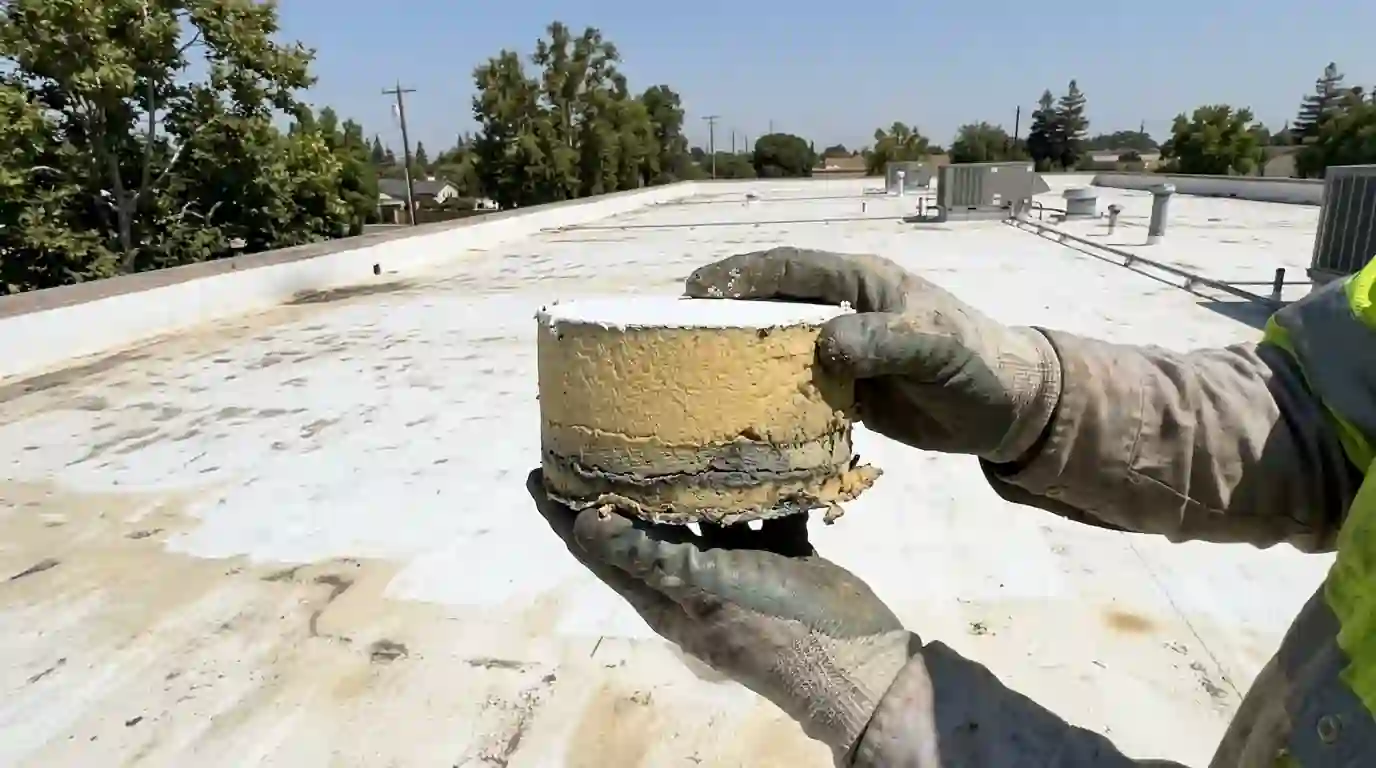
- A core shows layers a surface inspection cannot, including wet foam.
- Foam thickness, density and coating mils can all be measured from one core.
- Cores are taken at suspect and dry spots to compare.
- Each hole is patched with foam and coating, so the roof stays tight.
What a core cut is
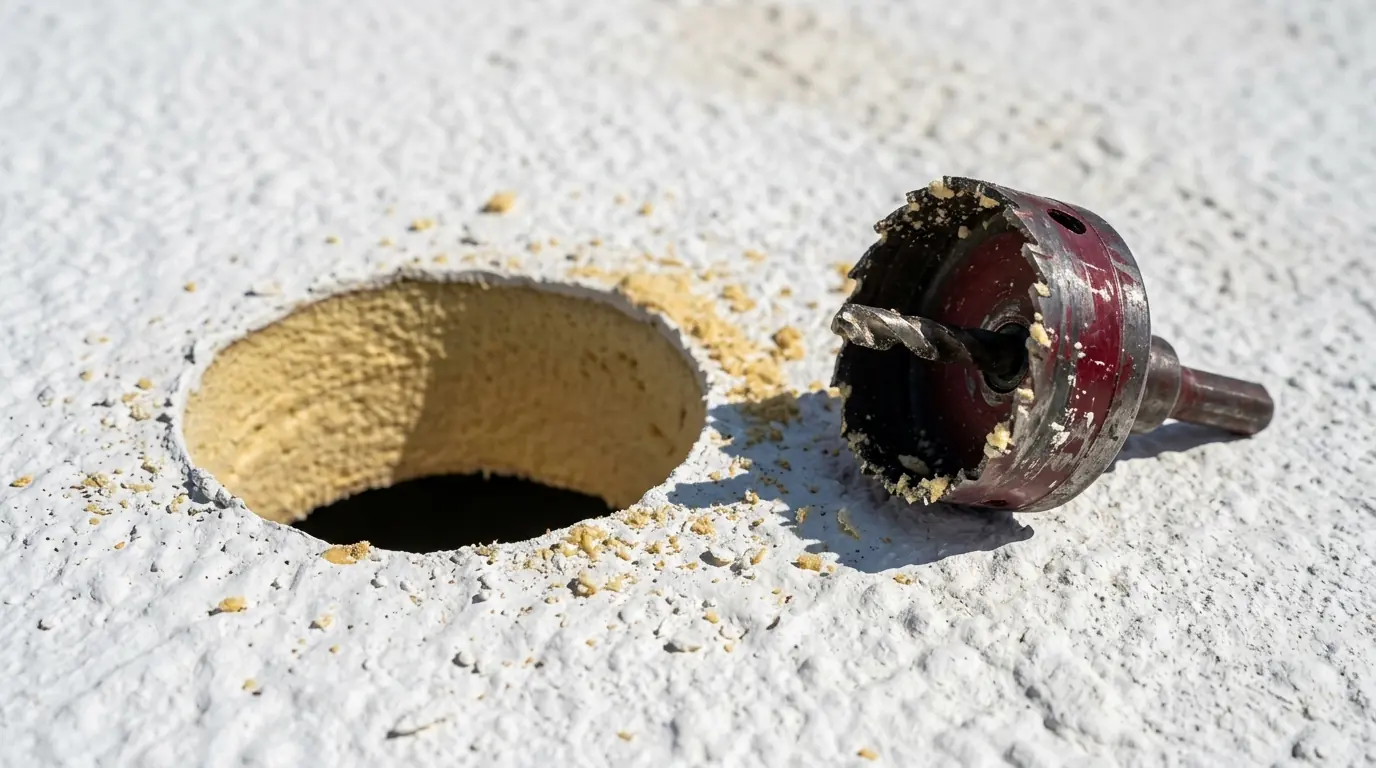
A core cut is a small circular sample, often two to four inches across, removed through the entire roof system down to the deck. It is cut with a sharp hole saw or a hand tool, and the plug is lifted out intact. What you hold is a cross-section of every layer, in order. A hole saw sample is quick, usually under a few minutes per location, and it gives hard evidence. Crews photograph the plug next to a tape measure and mark the location on a roof plan so the data can be used later.
It is the most direct way to know what is on a roof. Walking the surface and looking at the coating tells you about the top layer only. The core tells you what is underneath, which is where most of the expensive problems are hiding. The sample also lets you smell, touch and see the materials, which is hard to replace with instruments alone.
Reading the layers from top to bottom
On a foam roof, the top layer is the coating, usually white silicone or acrylic. Below it is the spray foam, then whatever substrate was beneath it, such as old built-up roofing, wood decking, metal or concrete. Sometimes there is a thin layer of primer, and on older roofs more than one coating can be seen as stripes. Under the coating, foam often shows its spray passes as faint horizontal lines. A good job has consistent lifts with no gaps between them, while a poor one shows a layer that peels or crumbles at an interface.
Each layer should be distinct and stuck to the next. Gaps between layers, a crumbly texture or a layer that peels apart in your fingers are signs of adhesion problems or aging. Older foam roofs may also show a layer of previous coating that has chalked or yellowed, and a core is the best way to see how many coatings are stacked.
Foam thickness and density
Thickness is measured with a ruler at several points, since foam is sprayed in passes and can vary. A roof specified at two inches should be close to it, and thin spots show where water can pond or where insulation value is short. At about R-6 to R-6.5 per inch, a half inch missing is a meaningful loss. A foam that is too thin can still look fine on top, which is why measuring matters. Insulation value and slope for drainage both depend on thickness, and low spots are often a thickness problem first.
Density is judged by weight and feel. Roofing-grade foam is typically around 2.7 to 3.0 pounds per cubic foot. Foam that is too soft, spongy or full of voids was likely sprayed in the wrong conditions or has absorbed water. A small sample can also be sent to a lab. Thickness can be checked non-destructively with a probe, but a core is the standard way to confirm it. A lab test can add compressive strength and closed-cell content for a roof you plan to keep for years.
Coating mils and solids
The coating layer is measured in mils, or thousandths of an inch. A caliper or a magnifier with a scale shows the dry film thickness. This is where you learn whether the roof got what it was supposed to, since many coating failures trace back to thin application. Many coatings need a minimum dry thickness to qualify for a warranty, so the mil count can matter to the paperwork as much as to the roof. Keep the core photos with your records.
Compare the number to what the manufacturer calls for. A coating can look fine and still be a few mils too thin to last. Because acrylic and silicone have different solids by volume, the expected dry thickness differs even if the wet application was the same. If the coating is thin across the roof, a recoat is usually the answer, and the core tells the crew how much to apply. If the coating is fine but the foam below is damaged, repair comes first.
Spotting moisture and delamination
Wet foam looks darker, feels heavy and can be squeezed to release water. Closed-cell foam resists moisture, but pinholes and cuts let water in, and once in, it travels. Trapped water under coating shows up as blisters or soft areas on the surface, and a core confirms it. Moisture in a foam roof is not always bad news. Small wet areas near a leak can be cut out and replaced, and the rest of the roof saved, which is far cheaper than a full tear-off.
Cores are usually taken at a suspect spot and at a normal spot nearby for comparison. Moisture meters and infrared scans can guide where to cut. The goal is to decide whether the roof needs a recoat, a repair or a partial replacement. Infrared images, moisture meters and cores together give a solid map. Each tool has weaknesses, and using more than one lowers the chance of missing a wet area under a dry-looking surface.
How the hole is repaired and what it costs
Each core hole is filled with fresh foam or a patch plug, trimmed flush and coated to match, usually the same day. Done properly, the repair is as watertight as the rest of the roof. Cores on a typical mid-size roof are a small part of an inspection, which commonly runs around 385 to 920 depending on size and testing. Some owners ask for a core cut report before buying a building, since it shows the condition of the roof, and it can be used to negotiate price or schedule a repair after closing.
Good practice is to date the repair, mark it on a roof plan and keep a copy of the report. A later inspector can then see the history and know which spots have already been checked. If you want to know what is actually inside your roof before paying for coating or repairs, call Mountainside Foam & Coating at (916) 963-8097 and we can plan a core survey.
Questions readers ask
How many core samples does a roof need?
It depends on size and history. A small roof may need three or four. Larger commercial roofs are often sampled at one to every few thousand square feet, with extra cores where scans, blisters or leaks suggest trouble. The aim is a fair picture of the whole surface. The crew may also check the deck beneath, since rot or rust there can change the repair plan.
Does cutting a core void the existing roof warranty?
It can if the patch is done wrong, since the repair must match the manufacturer's method. Check the warranty terms first, and use a contractor who can repair the hole with compatible foam and coating. Samples are best taken from different areas, including near drains, seams and the middle of large spans.
Can a core cut tell how many more years the roof has?
Not exactly, but it gives strong clues. Dry foam, stuck layers and enough coating mils suggest a good candidate for recoating. Wet foam, crumbling layers or thin coating suggest less time left and a need for repair planning. A core plan should also avoid areas just above electrical or plumbing lines, and the crew should look for them before cutting.
Roof leaking, peeling or baking in the sun?
Call the 24/7 line. Tell us the roof type, where the water shows up or what the coating looks like, and we will tell you what we would check first and when a crew can be there.