Restoring flat roofs without tear-off
Flat roof coating in Sacramento, CA
Your flat roof is cracked, alligatored and patched in a dozen places, and tearing it all off would cost far more than restoring what is still sound.
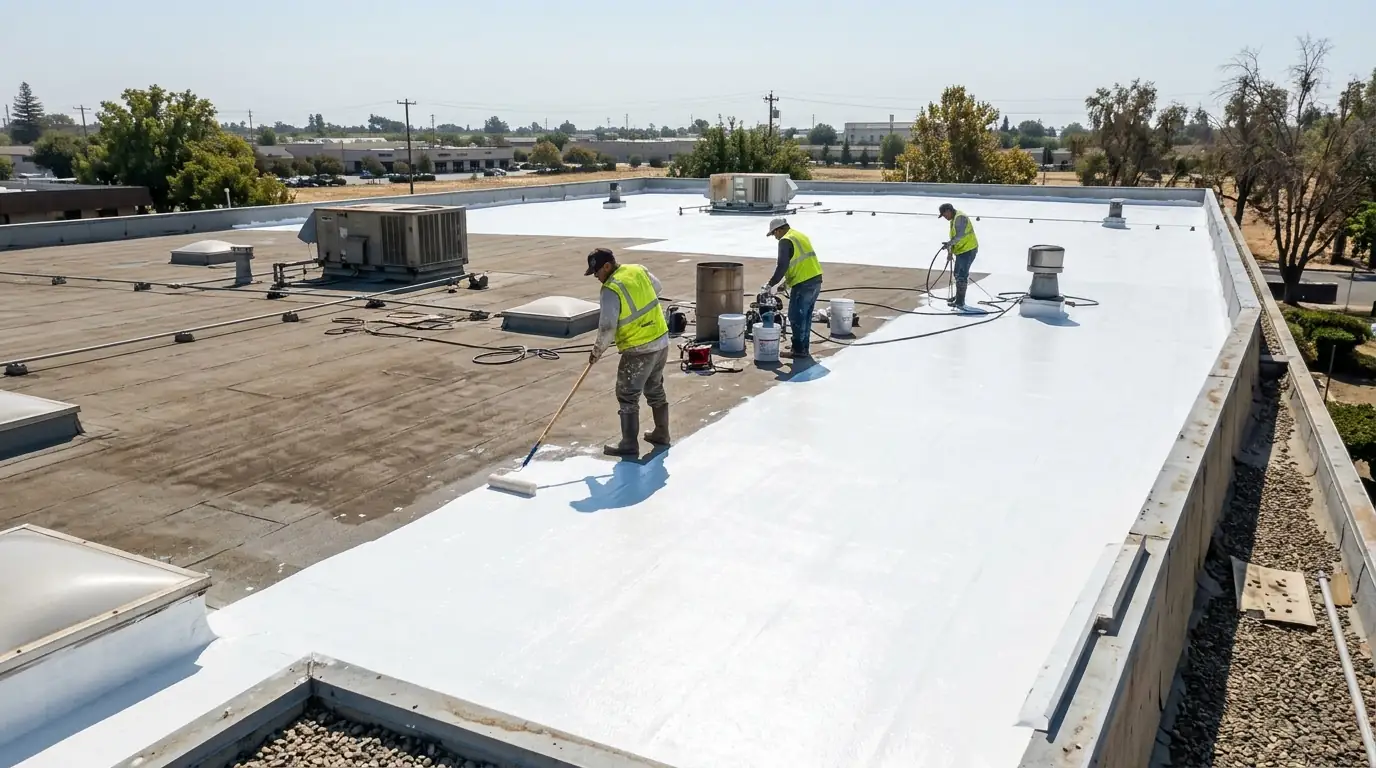
Flat roof coating restores a low-slope roof by cleaning it, repairing seams and flashings, and applying a reflective liquid membrane over the existing surface. It works when the roof is dry and still well attached. Typical Sacramento cost is 1.95 to 4.05 per sq ft, and most jobs take two to four days.
What this job involves
Flat roofs in Sacramento are common on mid-century homes, apartment buildings, offices, strip malls and warehouses. Their materials vary, from built-up tar and gravel to torch-down modified bitumen, single-ply TPO and EPDM, and old foam. A coating system can be applied over most of them, turning an aging surface into a continuous membrane that sheds heat and blocks water. Each material ages differently, so the first job is always identifying what is under the dirt.
The big question is whether the roof beneath is a good foundation. A coating is a skin, not a structure. If insulation is soaked or the deck is rotted, coating hides the problem and the roof fails again. That is why we scan for moisture and cut cores first, and why a coating job often starts with a small repair list rather than a bucket of white paint. We show you the core before pricing. The core sample tells us far more than the surface does.
Signs a flat roof can be coated
A web of fine cracks across the roof surface means the top layer is brittle from sun. If the material below is dry, coating renews the weathering surface.
Old built-up roofs with a cracked, scaly black surface can be cleaned and coated to restore waterproofing when the felts below are still dry.
Lap seams in modified bitumen or single-ply roofs separate with age. Fabric and coating bridge them without replacing the whole roof.
A roof that is dry and tight but has weathered to a chalky gray is the best candidate. Coating protects it before leaks start.
Dark flat roofs absorb heat and push it into the rooms below. A reflective coating lowers the surface temperature and reduces that load.
When replacement is out of reach, a restoration coat can add a decade or more of service for a fraction of the price.
Matching coating to the existing roof
Each roof type wants a different approach. Modified bitumen and built-up roofs often take an acrylic or silicone coat, sometimes with an asphalt-blocking primer to stop bleed-through staining. TPO and EPDM need cleaning with the right detergent and a primer made for single-ply membranes, since many coatings will not bond directly to them. Spray foam roofs get a topcoat as part of their normal maintenance. Gravel surface roofs need the gravel removed or embedded in asphalt first. In every case we run an adhesion test on a small area, wait for cure, and then pull on the film. If it does not hold, we change the primer or the coating before the full roof goes down.
Seams, flashings and the details that fail first
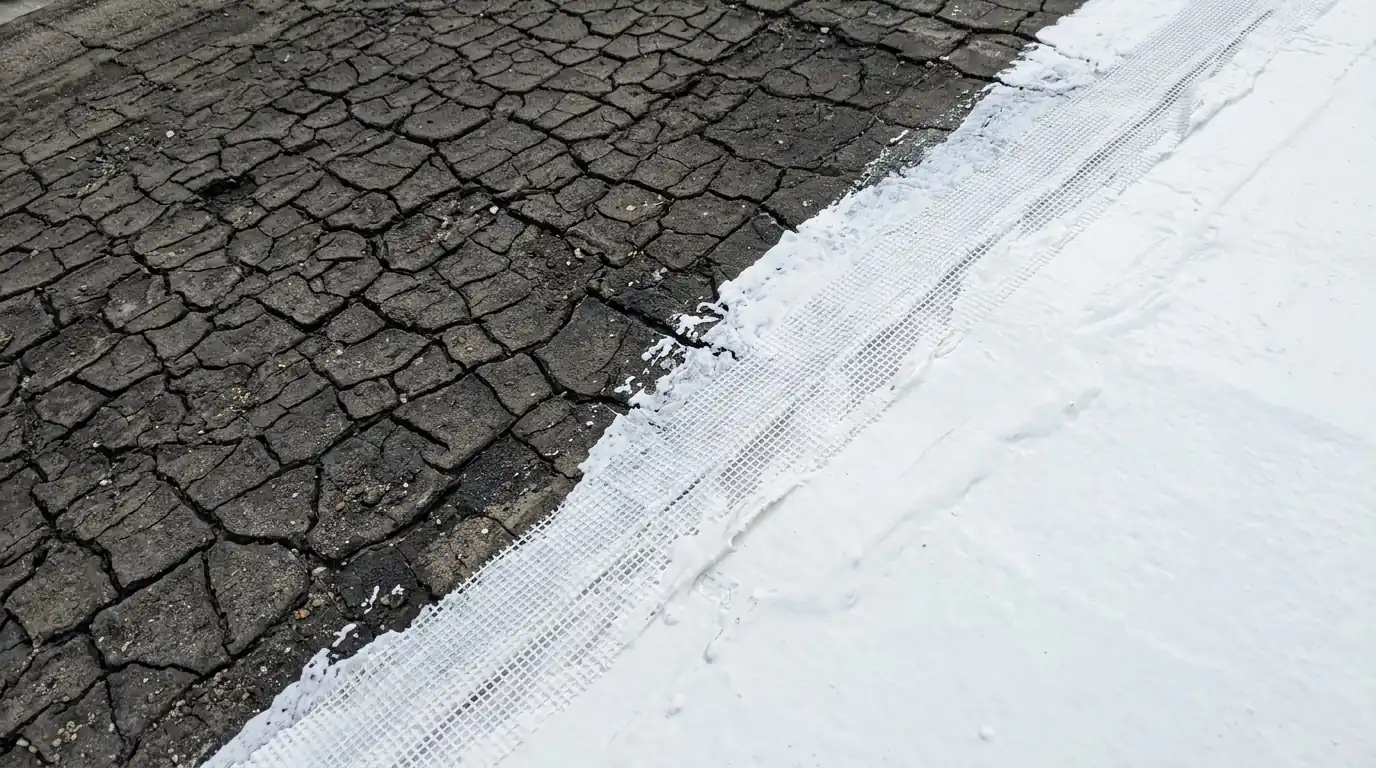
Most flat roof leaks start at details, not in the middle of the field. Pipe boots crack, curb flashings pull loose, drain bowls separate and parapet transitions open. Before the main coat we reseal each of these with fabric and mastic, and we fasten or re-adhere loose flashing so the coating has solid metal or membrane to bond to. Seams along laps get a fabric strip embedded in sealant, which acts like a bandage that moves with the roof. Skipping this step is the usual reason coatings split along old seams within a few years. We also check drains and scuppers, because a clogged drain turns a good coating into a pond.
- Reseal pipe boots and vent flashings
- Re-adhere loose curb and edge flashing
- Fabric-reinforced seams
- Clean and detail drain bowls
- Extra coating build at transitions
When coating a flat roof is a mistake
Coating wet or deteriorated roofs wastes money. If core cuts show soaked insulation, or if more than a modest share of the roof is blistered and delaminated, replacement is the honest answer. A roof that already has several layers may also be too heavy to add to, and building codes may limit adding more roofing weight. Coating also cannot fix slope. If a roof has deep ponding because the deck sags, the coating will just cover the puddle. In that case we may recommend tapered foam to build slope, or replacement. We will show you the cores and photos so you can see why we recommend one path over another.
Our process for flat roof coating
Six steps, in the order the crew does them on a Sacramento roof.
- Step 1Moisture scan and cores
We scan for wet insulation and cut cores to learn the roof layers and condition, then decide if coating is a sound choice.
- Step 2Clean the roof
Dirt, algae and chalk are removed with pressure washing and detergent, and the roof is left to dry completely. Dirt, algae and chalk are removed with pressure washing and detergent, then the roof dries completely.
- Step 3Repair and flash
Blisters are cut and patched, loose flashings are re-adhered, and pipe boots, curbs and drain bowls are resealed. Blisters are cut and patched, loose flashings are re-adhered, and pipe boots, curbs and drain bowls are resealed first.
- Step 4Treat the seams
Fabric is embedded in sealant along laps, edges and transitions so the new coating bridges movement without cracking. Fabric is embedded in sealant along laps, edges and transitions so the new coating bridges movement without cracking later.
- Step 5Prime and test
A primer suited to the old roof goes on where needed, and a test patch confirms the coating bonds before the full application.
- Step 6Coat to target mils
Two coats are applied to the specified dry mil thickness, checked by gauge, then drains are cleared and the roof is inspected.
What flat roof coating costs in Sacramento
A 4,000 sq ft modified bitumen roof on a small office building, with repairs and two coats of acrylic, typically costs near 9,800 to 14,600.
- Existing roof type and condition
- Seam and flashing repair volume
- Acrylic or silicone coating
- Roof size and access
Planning a recoat? The coating calculator turns roof area, coating type and target thickness into gallons and pails.
Sacramento conditions that matter
Flat and low-slope roofs are everywhere in Sacramento, from 1950s ranch additions in Carmichael and Arden to strip malls along Fulton Avenue and warehouses in West Sacramento. They bake all summer, with surfaces far hotter than the 100 F air, then take the full load of winter rain. Dark surfaces age faster in that sun, so reflective coating extends roof life. California Title 24 cool roof requirements can apply to some low-slope reroofs, and a reflective coat is one way to meet them on eligible projects. Tule fog and dew can hold roofs wet in the morning, so we plan afternoon application windows.
Often paired with this service
Flat Roof Repair
Seams, ponding, blisters, punctures
View serviceSilicone Roof Coating
Ponding-resistant liquid roof membrane
View serviceBuilt-Up Roof Repair
Tar and gravel roof repair
View serviceModified Bitumen Roofing
Torch-down and self-adhered mod-bit
View serviceRead before you decide
Questions about flat roof coating
Can any flat roof be coated?
Most can, if the roof is dry, firmly attached and not too many layers thick. Soaked insulation, rotted decks and widespread blistering rule coating out. We scan with a moisture meter and cut core samples first, then tell you plainly whether coating, partial repair or replacement fits the roof.
Will coating stop my flat roof from leaking?
It will if the leaks come from cracked surfaces, open seams or failed flashings that we repair first. It will not fix a leak caused by a rotted deck or wet insulation. We trace the leak, repair its cause and then coat, so the membrane protects a sound roof.
How many years does a flat roof coating add?
It depends on the roof's condition, the coating and the thickness. Many restoration systems extend service life by around 10 to 15 years with proper maintenance. A thin coat over a failing roof adds far less, which is why prep and thickness matter more than the brand name.
Do I need to remove the gravel first?
On a gravel-surfaced built-up roof, loose gravel must be removed or embedded, since coating will not bond over loose stone. Some roofs are flood-coated with asphalt to hold gravel, others are swept and primed. We check the gravel condition and pick the method that suits the roof.
Is coating allowed over several old layers?
Coating adds little weight, but building codes can limit how many layers of roofing a structure may carry, and wet layers underneath are a problem. We check layer count with core cuts and tell you if a tear-off is required before coating is a safe option.
Roof leaking, peeling or baking in the sun?
Call the 24/7 line. Tell us the roof type, where the water shows up or what the coating looks like, and we will tell you what we would check first and when a crew can be there.