Silicone vs acrylic roof coating in Sacramento heat
Silicone and acrylic coatings both reflect heat, but they behave very differently under standing water, dirt and recoating. This guide compares them for Sacramento summers and winter rain.
Updated November 2026, 6 minute read
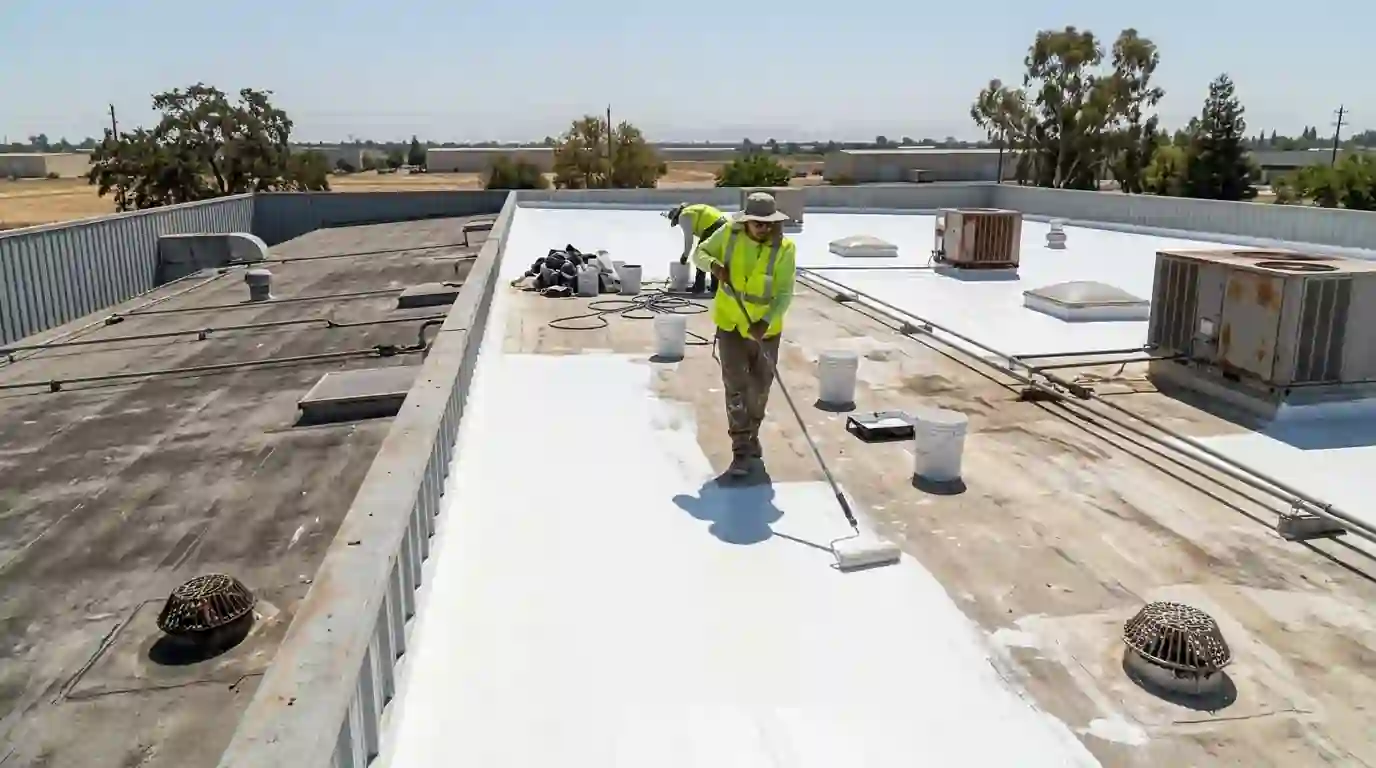
- Silicone handles ponding water better, acrylic is easier to recoat later.
- Compare solids by volume, because wet mils are not dry mils.
- Acrylic needs dry weather to cure, silicone cures in more conditions.
- Never put acrylic over old silicone, because it will not stick.
What the two coatings actually are
Acrylic roof coatings are water-based polymers. They go on as a liquid, the water evaporates, and a flexible white film is left behind. Silicone coatings are polymer-based and cure by reacting with moisture in the air, so almost nothing evaporates and the applied thickness stays close to what was sprayed. Acrylics also tend to be easier to apply by roller or sprayer in a range of weather, and they clean up with water. Silicones need more care at the sprayer and with overspray, and a silicone mist drifting onto a neighbor's car is a real hazard, so crews mask and watch wind.
Both are used as reflective coatings over foam, metal, modified bitumen, built-up roofs and some single-ply membranes. Both can lower roof surface temperature on a 105 degree day. The difference shows up in how they handle water, dirt, thickness and what happens when you need to coat again. Those chemistry differences explain almost every practical difference that follows, from cure time and dirt pickup to what can be applied over what.
Solids by volume and why mils get misunderstood
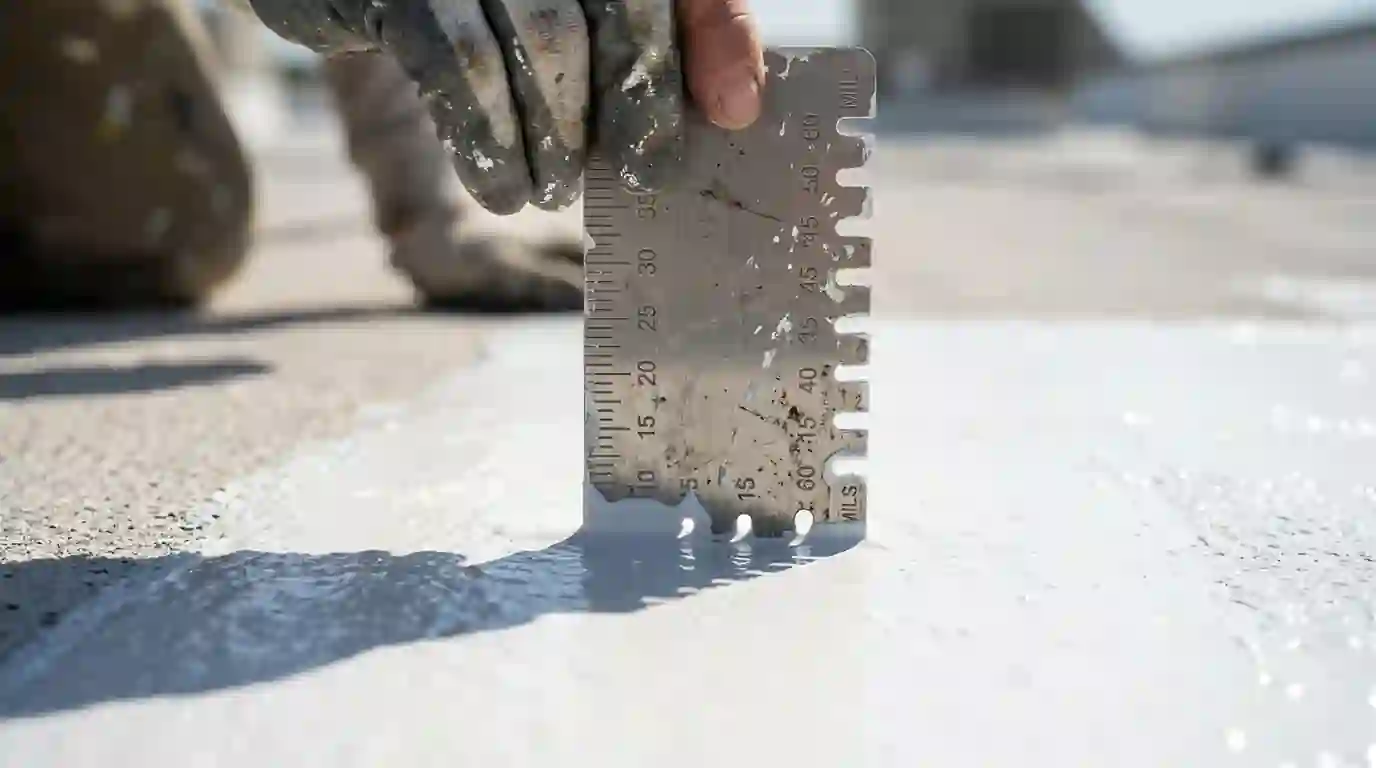
Solids by volume is the share of the liquid that stays on the roof after it cures. Many silicone coatings run roughly 90 to 96 percent solids by volume. Many acrylics run closer to 55 to 65 percent. That gap matters because a 20 mil wet application of acrylic dries to something nearer 11 to 13 mils, while the same wet silicone stays close to 18 to 19. Coverage rates come from the same math. A manufacturer may call for a certain number of gallons per 100 square feet to reach a specified dry thickness, and a crew that uses less than that is delivering less coating than the warranty assumes. Ask for the gallon count and the square footage, then check the buckets on site.
When someone quotes a thickness, ask whether it is wet or dry. Warranties and performance depend on dry mils, and a crew should be measuring wet film with a gauge as it goes down and calculating coverage by the gallon per square. Thin coating is the most common reason a coated roof fails early. Rough surfaces use more material because the coating fills texture. A granulated mod-bit or a heavily patched built-up roof can take noticeably more than a smooth metal panel, which is one reason bids for the same roof can differ.
Ponding water is the biggest dividing line
Acrylic does not like to sit in water. Standing water that lasts more than a couple of days can soften the film, cause blistering and let the coating lose adhesion, and many acrylic makers limit warranties on roofs with ponding. Silicone is far more tolerant of water that sits, which is why it is the usual pick for low spots and flat roofs with poor drainage. Many Sacramento flat roofs hold at least some water in the first days after a storm, because they were built nearly flat in the 1960s and decks sag a little over time. A coating chosen only on price can end up failing in exactly those low spots.
The better fix is to correct the ponding first, with foam build-up or added drains, and then choose a coating. Some roofs still hold a little water after a heavy storm, and silicone gives them a margin that acrylic does not. A fix for the worst low spots, such as a foam build-up that adds slope, costs far less than replacing a coating that blistered in the same place twice. Ask for it to be priced as an option.
Dirt, UV, heat and the Sacramento summer
Silicone has a sticky surface that tends to hold dirt and dust, and the white can dull toward gray in a few seasons, especially near orchards, freeways and construction. That reduces reflectivity somewhat, though it often recovers with a wash. Acrylic is harder and sheds some dirt, but it can chalk and lose film thickness over time as UV wears it down. Both products also face wildfire smoke and ash in some years, which settle on any roof and can dull the white. Washing before a heavy rain season is a cheap way to restore reflectivity, whichever coating you chose.
Both stand up to Sacramento sun when applied at proper thickness. Silicone is generally more resistant to UV breakdown. Acrylic usually costs less and is a good fit for dry, well-drained roofs where a lower budget matters. Walkway areas near equipment take the most abuse, and some owners add a granulated or reinforced pad there. Neither coating is meant to handle constant foot traffic without help.
Recoating, compatibility and cost
Acrylic can be recoated with another acrylic after cleaning, and silicone can be recoated with silicone, but acrylic does not adhere to cured silicone. That means a silicone roof stays a silicone roof for life, so choose carefully. Silicone over acrylic generally works after cleaning and a bond test. Primers and bond tests are part of the price too. Metal and some membranes need a specific primer, and a roof that was cleaned poorly will fail at the bond, not in the coating, so ask what prep is included in the number.
In the Sacramento area, acrylic coating typically runs about 1.35 to 2.60 per square foot installed, and silicone about 1.95 to 3.85, depending on prep, thickness and roof size. Those are typical ranges and the real price comes after an inspection. Silicone costs more up front but often needs recoating less often. Silicone over foam is especially popular, because the pairing handles water, UV and thermal movement well. Acrylic over foam works too, but it asks for better drainage and more frequent attention.
How to choose for your roof
Choose silicone when the roof has ponding, sits under trees, or is a foam roof where long life and water tolerance matter most. Choose acrylic when the roof drains well, the budget is tight, and you want the option to recoat or change products later. Rain timing matters too: acrylic needs dry hours to cure, so it is usually applied from late spring through early fall. Ask the contractor for the product data sheet and the cure conditions, then compare them. A coating that needs 50 degrees and no rain for 24 hours does not belong on a December schedule.
Whichever you choose, the roof gets better results when drains are cleared, seams are reinforced and the thickness is checked, so it is worth spending a little more on the prep than on the top brand. If you are deciding between the two for a Sacramento roof, call Mountainside Foam & Coating at (916) 963-8097 and we will look at the drainage, the surface and the budget before recommending one.
Questions readers ask
Why does dirt show up on silicone roofs faster than on acrylic ones?
Silicone cures to a slightly tacky surface that grabs airborne dust, pollen and soot. In a dusty valley like Sacramento that shows up as gray streaking within a few seasons. A low-pressure wash with mild detergent usually brings most of the reflectivity back. The same sensitivity means acrylic is often scheduled for dry weeks, while silicone is more forgiving of a cool morning, a bit of dew or a surprise shower once it has skinned over.
How long does acrylic coating need before it can get rained on?
Many acrylics need several dry hours and moderate temperatures to set up enough to resist rain, and a full cure takes longer. That is why crews check the forecast and avoid late-day coating when evening dew or a fall shower is possible. Chalking is a normal sign of acrylic aging. If a gloved hand comes away white and powdery, the coating is thinning and the roof is due for attention.
Can a roof owner switch from acrylic to silicone later?
Usually yes. Silicone can be applied over a clean, sound acrylic coating after a small adhesion test. The reverse does not work, because acrylic will not hold to cured silicone, so the choice to go silicone is effectively permanent. Keep in mind that wash water, flaking old coating and failed adhesion tests all change the plan, so build a little room into the budget for the unknowns.
Roof leaking, peeling or baking in the sun?
Call the 24/7 line. Tell us the roof type, where the water shows up or what the coating looks like, and we will tell you what we would check first and when a crew can be there.