Attic heat: better vents or spray foam?
A Sacramento attic can top 130 degrees in July, and there are two main ways to fight it. This guide compares balanced ventilation with spray foam at the roof deck, and when each makes sense.
Updated November 2026, 6 minute read
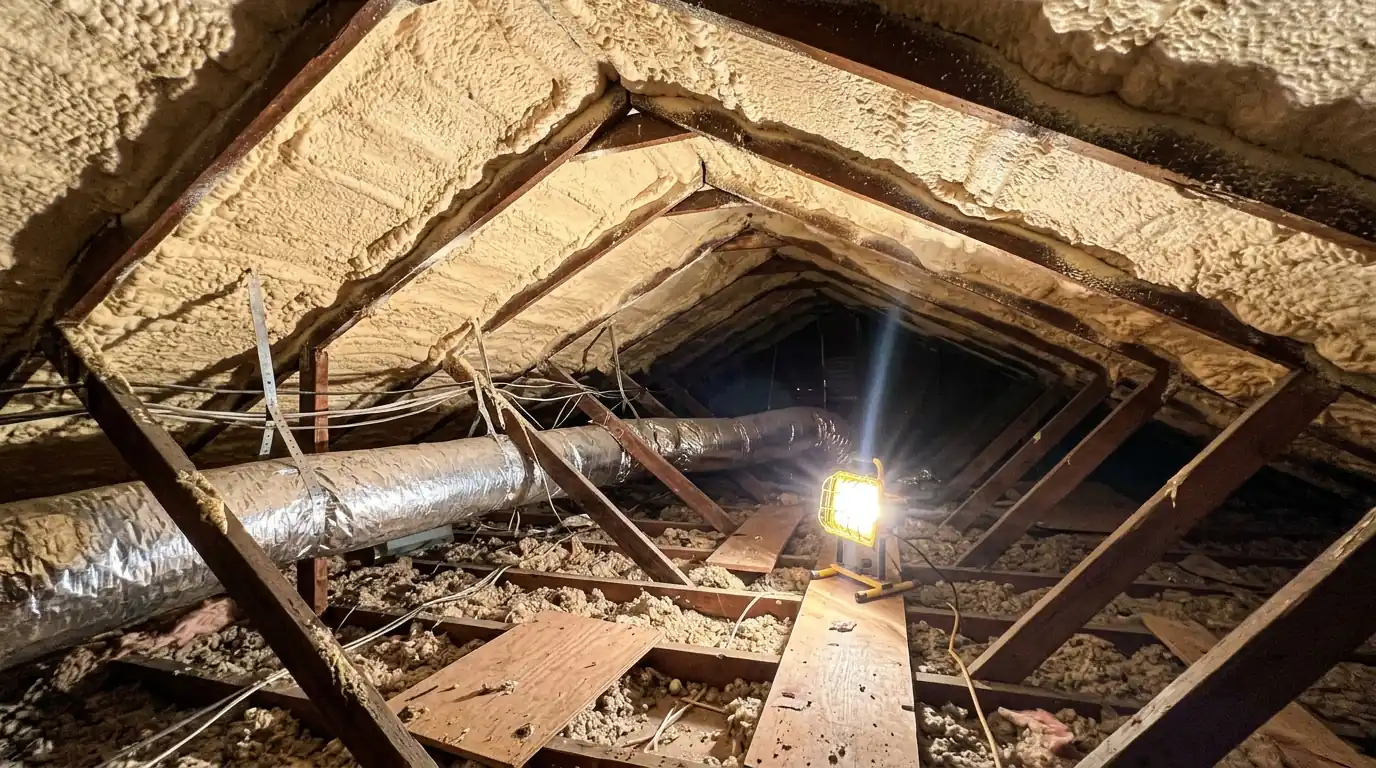
- Ventilation removes hot air, while foam stops the heat from entering.
- Intake and exhaust must be balanced or added vents can backfire.
- Closed-cell foam gives about R-6 to R-6.5 per inch.
- Ducts in the attic are the big reason foam can pay off.
Why Sacramento attics get so hot
On a 105 degree afternoon, a roof deck can reach well above 150 degrees, and an attic below it can climb past 130. That heat soaks into the ceiling, makes the air conditioner work harder and shortens the life of ducts and roofing materials. SMUD bills reflect it every summer. The roof deck is the main source, followed by gaps around ceiling fixtures and attic hatches that let hot air leak into the living space. A hot attic also bakes insulation and wiring, and ducts there can lose a large share of their cooling before it reaches the room.
Many 1950s to 1970s ranch homes have shallow attics with minimal vents, and many newer tract homes have ducts running through the attic. Both problems show up as hot rooms upstairs and long air conditioner run times. Before choosing a fix, take a few readings of attic temperature on a hot afternoon and look at where the ducts run, since that tells you how much is at stake.
How ventilation helps and where it stops
Ventilation works by letting cool outside air enter low at the soffits and hot air leave high at the ridge or a roof vent. Moving air carries heat out and also removes moisture. As a rough rule, codes call for about one square foot of net free vent area for every 150 or 300 square feet of attic floor, depending on the setup and a vapor retarder. Passive vents, such as box vents and gable vents, depend on wind and rising hot air, and they often do little on the calm, hot afternoons that matter most. Powered fans move more air but can pull conditioned air from the house if intake is short.
Venting does not stop heat from radiating down from the roof deck, and on a still hot day there is not much airflow to move. It reduces peaks, but it rarely brings an attic anywhere near outdoor temperature in July. Radiant barrier foil under the roof deck is another low-cost option, and it can reduce radiant heat in hot attics, though its effect is smaller when ducts and insulation are in good shape.
Balance matters more than quantity
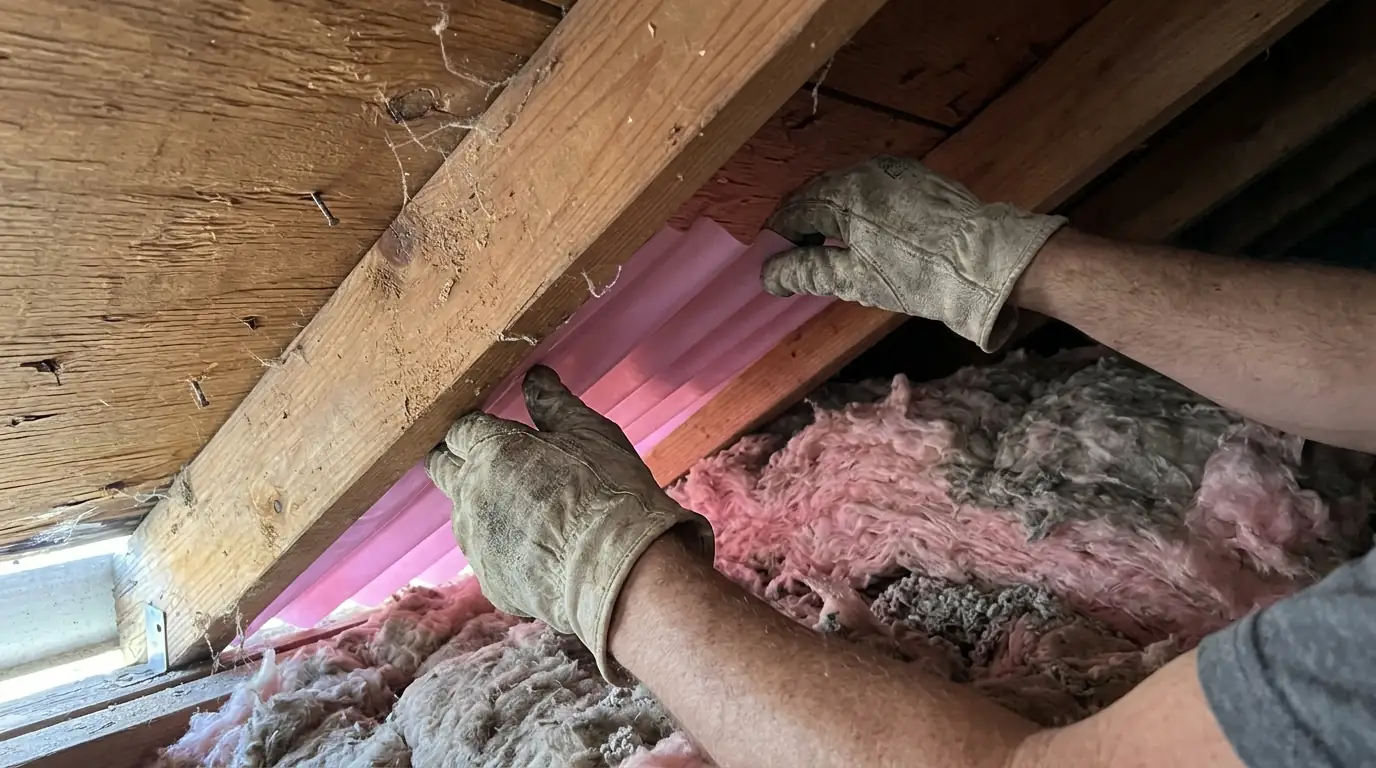
The most common ventilation mistake is adding exhaust without adding intake. If the attic cannot draw air in low, the exhaust fans or ridge vents pull conditioned air up from the house through ceiling leaks, which wastes cooling. Mixing different exhaust types, such as a ridge vent plus box vents plus a turbine, can short-circuit airflow so that the lower roof stays stagnant. Soffit vents that are blocked by insulation are the usual culprit. A crew can clear them and install rigid baffles in a few hours, and the result is often noticeable on the next hot afternoon.
A balanced system has roughly equal intake and exhaust, with intake split evenly low and exhaust high. Blocked soffit vents, often from blown-in insulation, are very common and cheap to fix. Also check that bathroom and kitchen exhaust fans vent outdoors, not into the attic, since moisture there can cause mold and wood rot that no amount of vent area will fix.
- Clear soffit vents blocked by insulation
- Add baffles to hold insulation back from the eaves
- Use one type of exhaust vent, not several
- Keep intake at least equal to exhaust
- Seal ceiling leaks into the attic
What spray foam at the roof deck does
Spray foam is applied to the underside of the roof deck, which turns the attic into a conditioned or semi-conditioned space. Closed-cell foam gives about R-6 to R-6.5 per inch and acts as an air barrier. Two to three inches is common, and it keeps heat out at the source. Spray foam also seals the small gaps where roof framing meets walls, which is where a lot of air leaks. That air sealing is often as valuable as the R-value, since air movement carries more heat than conduction in a typical attic.
This approach brings the attic much closer to indoor temperature. Ducts inside it lose less energy, since they no longer sit in a 130 degree space. The attic is no longer vented, so soffit and ridge vents are sealed or covered, and building code and Title 24 requirements apply. Local energy code requirements apply to unvented attics, including the amount of foam needed in each climate zone, so check that the plan is designed for compliance and permitted before work begins.
Trade-offs and what to watch for
Foam costs more than vent work, typically around 2.85 to 5.20 per square foot at the roof deck, compared with several hundred dollars for added vents or baffles. Foam on the underside of the deck makes later roof repairs trickier, since nails come through into the foam and a leak is harder to see. Foam is also not a fit for every attic. Roofs with active leaks, knob-and-tube wiring, or recessed lights that are not rated for contact need attention first, and some building types may need a different approach.
Foam also needs good ventilation during application and a cure period before the space is occupied. Open-cell is cheaper and breathes more, but gives lower R-value per inch and is less suited to areas that might see moisture. Foam costs can also be offset in part by lower utility bills, a smaller air conditioner at replacement and longer duct life. Owners who plan to stay in the home for years tend to see the best return.
Which route to pick
Start with the cheap fixes: clear soffits, add baffles, balance the vents and seal ceiling penetrations. If the attic is still very hot and the ducts live in it, foam at the roof deck is the stronger option. If you are about to replace the roof anyway, doing the foam first or at the same time saves repeat work. If you are also planning a new roof, talk about foam before the old roof comes off. Some contractors can spray foam from the top of the deck during a reroof, which avoids working in a cramped attic.
Whichever way you go, get a baseline. Note the attic temperature, the electric bill in a hot month and any room that runs warm, then compare after the work so you know what changed. If you are unsure which makes sense for your house, call Mountainside Foam & Coating at (916) 963-8097 and we will go up into the attic and look.
Questions readers ask
Will added ridge vents cool my attic enough on their own?
Sometimes, if intake is the missing piece. A ridge vent without enough soffit intake does little. When intake and exhaust are balanced, peak attic temperature usually drops, but it will still run hotter than outdoor air on a calm 100 degree day. Wiring, plumbing vents and chimney clearances matter in either approach, and a good installer will check them before work begins.
Do I need to remove old blown-in insulation before spraying foam on the roof deck?
Not always. Foam goes on the underside of the roof deck, not on the attic floor, so existing floor insulation can stay. Many owners leave it in place or reduce it later. Rafters and the deck underside have to be clean and dry first. Used together, a clean intake and one type of exhaust vent are often enough for older houses with minimal ductwork in the attic.
Does foam under the deck cause roof deck rot?
Closed-cell foam is generally considered safe because it limits air and vapor movement and keeps the deck warm. The risk comes from roof leaks hidden behind foam, so the roof above should be in sound shape before foam goes in. A modest upgrade done correctly usually beats an expensive one done in the wrong order.
Roof leaking, peeling or baking in the sun?
Call the 24/7 line. Tell us the roof type, where the water shows up or what the coating looks like, and we will tell you what we would check first and when a crew can be there.