How long a spray foam roof lasts and when to recoat
A spray foam roof is only as durable as its protective coating. This guide explains realistic lifespans, what wears out first, and how to time a recoat in Sacramento's sun.
Updated November 2026, 6 minute read
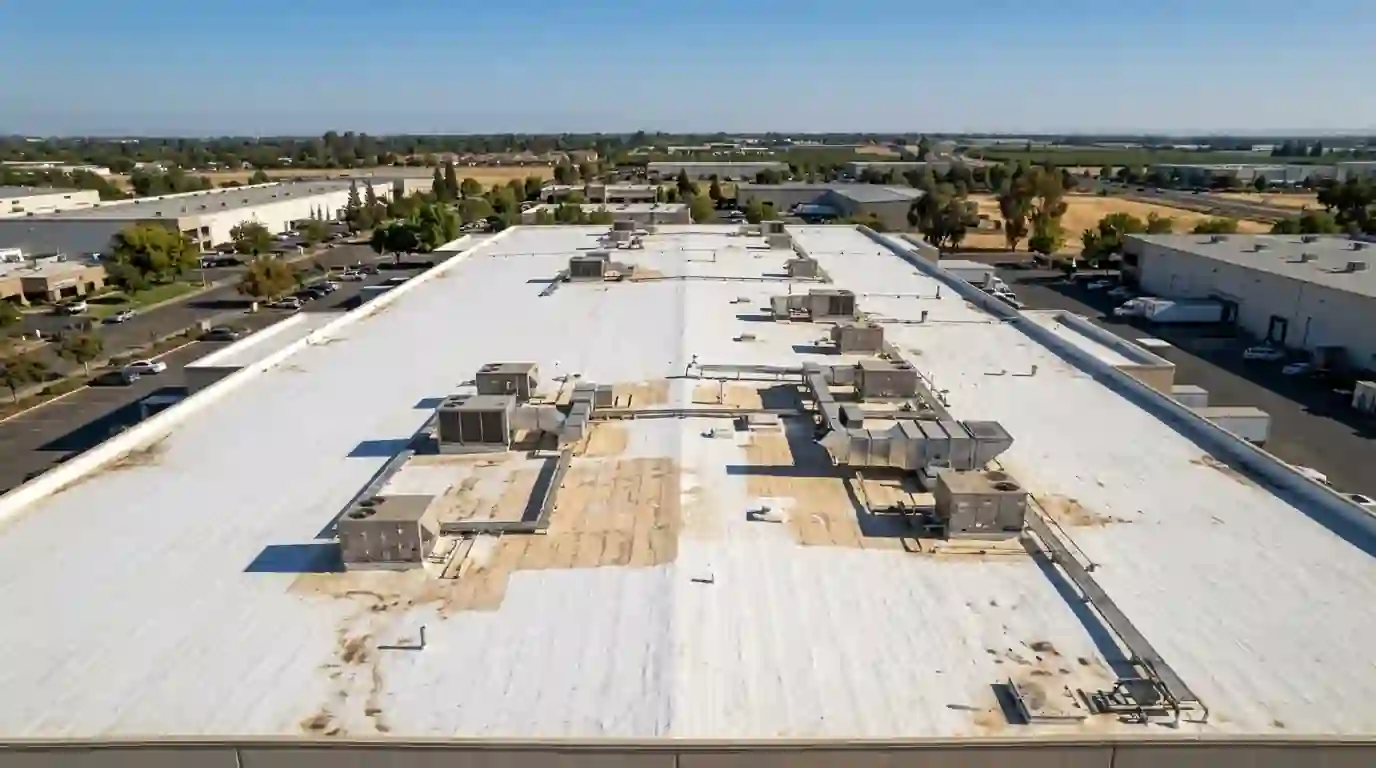
- The foam rarely wears out first, the coating on top does.
- Recoating before the foam is exposed is far cheaper than repairing it.
- Typical recoat timing runs from about 10 to 20 years, by coating.
- Hail, foot traffic and ponding shorten the interval more than age.
Foam and coating are two different layers
A spray foam roof has two jobs split between two layers. The closed-cell foam, typically around 2.7 to 3.0 pounds per cubic foot, gives insulation, waterproofing and a continuous surface. The coating on top protects that foam from ultraviolet light, which breaks it down quickly if left bare. Foam does not rot, and it does not take on water as readily as many insulations because of its closed-cell structure. Its weakness is sunlight, which chalks the surface and slowly erodes it, and mechanical damage, such as a dropped tool or a hailstone, which can puncture the skin.
That is why lifespan questions have two answers. The foam itself can last decades when it stays protected, and many roofs in service for 30 years or more have been recoated along the way. The coating is the wear layer and is the part that gets renewed. Those two facts explain the whole maintenance plan: keep the coating intact, keep the surface clean and repair breaks quickly, and the foam beneath can keep working for decades.
Realistic lifespans by coating type
Maintenance cycles vary by product, thickness and exposure. As a rough guide, acrylic coatings are often recoated somewhere around every 10 to 15 years in Sacramento sun. Silicone, applied at proper thickness, often goes 15 to 20 years or more before it needs attention. Polyurethane top coats with a granule or aliphatic finish are sometimes used where traffic or hail is a concern. Some roofs get a mineral granule broadcast into the top coat for extra wear. The granules protect against hail and foot traffic and add a little fire resistance, but they also make later cleaning and recoating a bit more involved.
Manufacturer warranty terms vary by product and thickness, and these ranges are typical rather than promises. A roof that is cleaned yearly and spot-repaired after storms almost always outlasts one that nobody looks at. Roofs in the foothills, with falling pine needles and heavier debris, and roofs near the river with more humidity can see different wear, so interval ranges are a starting point, not a schedule.
Signs the coating is wearing out
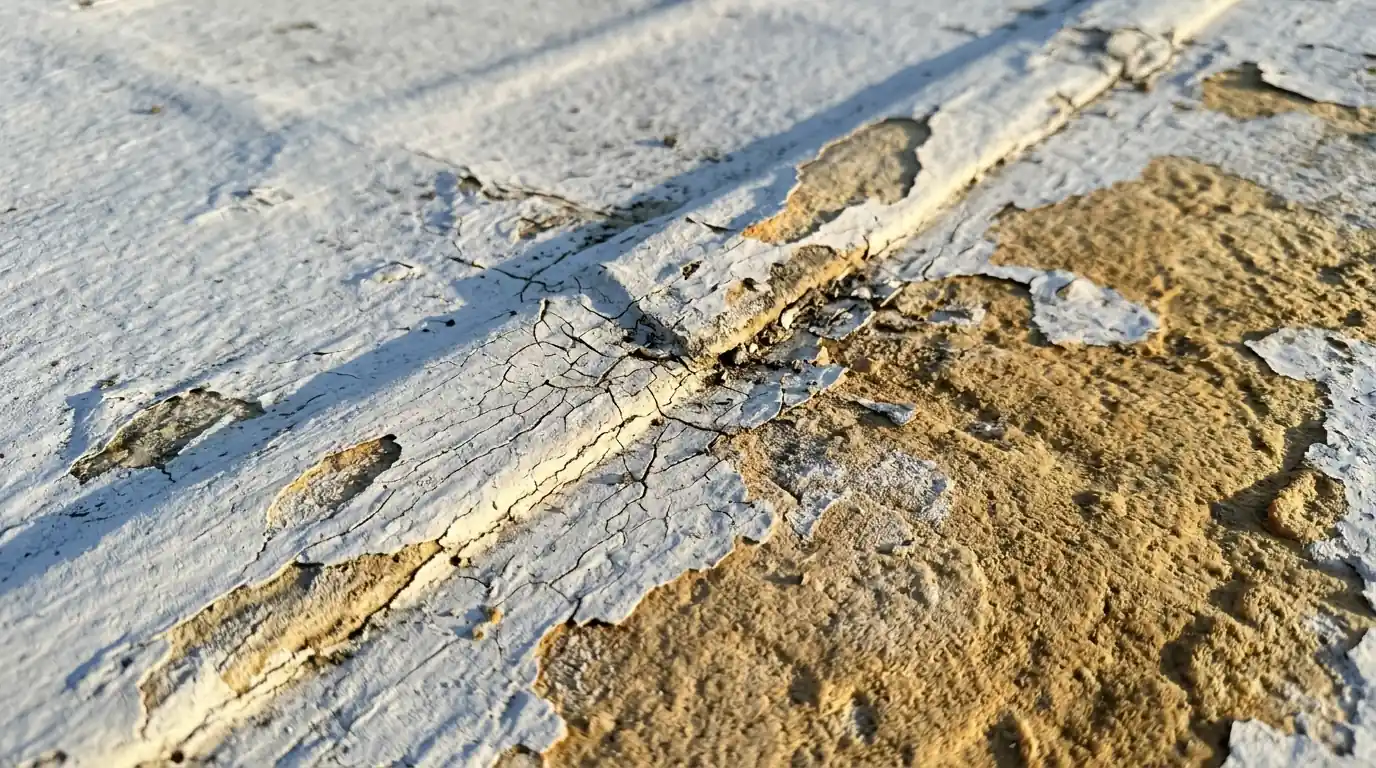
Watch for the foam surface showing through, usually as a tan or orange tint where the white has thinned. Chalky residue when you rub the surface, small cracks near seams, and bare spots around vents and drains are early warnings. Bird pecking, dents from hail and scuffs from foot traffic all open the coating. Hail is rare in the valley, but when it comes it can dent foam and crack coating in a pattern that looks like hundreds of small scars. A check after any hail event, or after a branch falls, is worth doing before the next rain.
Once the foam is exposed, it starts to erode slowly under sun and weather. At that point the repair is no longer just a recoat. Damaged foam has to be cut out or patched first. Catching it early keeps the job small. Many owners also find that small breaks stay small if they are caught right away. A patch of coating over a pecked area takes a few minutes, while a patch after a winter of water in the foam takes much longer.
- Orange or tan foam showing through the white
- Chalking, cracking or peeling coating film
- Dents or pecked holes from hail or birds
- Worn paths near rooftop equipment doors
- Coating thin or missing around drains and curbs
What a recoat involves
A recoat starts with a thorough cleaning, usually a pressure wash, to remove dust, mildew and loose film. Crews then inspect the foam, repair damaged areas with fresh foam, treat seams and penetrations, and apply a new coat at the specified thickness. A bond test confirms the new coat will stick to the old one. The cleaning step is not just cosmetic. A coating applied over dust bonds to the dust, not the roof, so skipping the wash is a fast way to lose the new layer within a couple of years.
The work typically takes a day or two for a mid-size roof and can often be done with the building occupied. Because the foam stays in place, there is no tear-off, no dumpster and no exposed deck. Drains, curbs and parapet joints get extra attention in a recoat, since those are where coatings thin out first and where foam tends to be cut by other trades. Ask for a before and after photo set of those spots.
What shortens the interval
Age is less important than abuse. Ponding water, constant foot traffic from HVAC technicians, hail and heavy tree debris all wear coatings faster. Roofs on the east side of the valley, near orchards or dusty fields, can also pick up grime that shortens reflectivity. Coating itself also gets thinner with each cleaning, so a roof with several decades of recoats may need some of the old film removed or at least tested before more is added.
Thin original coating is the other big cause. Two roofs of the same age can be in very different shape if one received the right dry mils and the other was sprayed light. Walk pads at service routes and clean drains twice a year to stretch the interval. Trees overhead drop leaves and sap that stain coatings and clog drains. Trimming branches back from the roof edge is one of the least expensive ways to extend the life of any flat roof surface.
Budgeting for the long run
In Sacramento, a recoat typically runs about 1.65 to 3.40 per square foot depending on coating type, cleaning needed and repairs. That is a fraction of replacing a roof, and over 30 years a foam roof with two or three recoats often costs less per year than repeated tear-offs. Real pricing comes after an inspection. The comparison with other systems is usually favorable. A built-up or modified bitumen roof is often replaced entirely at around 20 to 25 years, while foam is renewed with a coating that costs a fraction of that, as long as the foam stays dry.
Keep a simple file with the date of each coating, the product used, the thickness and the photos. When it is time to sell or refinance, that record shows a buyer a well-kept roof rather than an unknown one. If your foam roof is past ten years or you are unsure of its condition, call Mountainside Foam & Coating at (916) 963-8097 and we can check the coating before it becomes a foam repair.
Questions readers ask
Can a foam roof be recoated more than once?
Yes. A properly maintained foam roof can take several recoats over its life, as long as the foam is dry, stuck and not damaged. Each recoat renews the UV protection and adds thickness. Roofs with wet or deteriorated foam need that foam repaired first. A simple habit helps: after the first big storm of the season, look at the roof from above or have a roofer do it, since problems show up fast under real rain.
Do I have to recoat on a fixed schedule?
Not a fixed one. The best schedule is condition-based: inspect yearly, track how the coating looks, and recoat when thinning or chalking shows up. Recoating early is cheap, while waiting until foam is exposed adds repair costs. Annual cleaning, a quick look at seams and a coat renewal at the right moment will usually keep a foam roof in service for decades.
Does the color of the coating affect how long it lasts?
White reflective coatings run cooler, which slows thermal movement and aging, so they usually help. Tinted or darker coatings absorb more heat and can age somewhat faster. Reflectivity also drops as dirt builds, so cleaning helps lifespan and cooling. Small foam repairs are cheap and quick, so do not let a pecked patch or a crack sit through the wet season.
Roof leaking, peeling or baking in the sun?
Call the 24/7 line. Tell us the roof type, where the water shows up or what the coating looks like, and we will tell you what we would check first and when a crew can be there.