Mobile home roof coating: what owners should know
A reflective coating can cool a mobile home and seal an aging metal roof for years. This guide covers the prep that matters, coating choices and what typically goes wrong on park roofs.
Updated November 2026, 6 minute read
- Prep matters more than the coating, so seams and screws come first.
- Coating cannot fix a roof that is rotted or holds standing water.
- Acrylic suits most park roofs, while silicone suits ponding and long life.
- Check park rules about roof work before scheduling.
Why mobile home roofs age differently
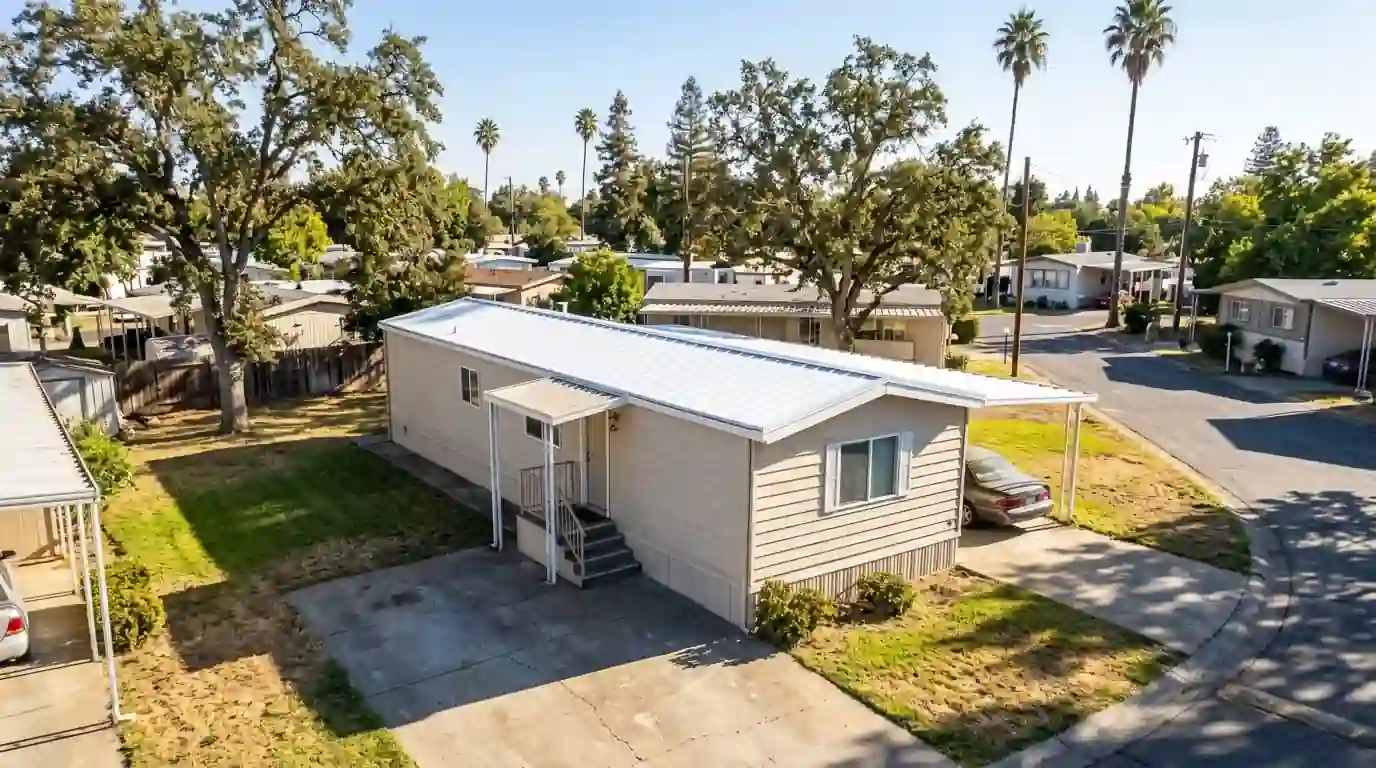
Most mobile and manufactured homes in Sacramento parks have low-slope metal roofs, often galvanized or aluminum, sometimes with a thin factory coating that has worn off. Panels are long and light, and they expand and contract more with temperature than a typical house roof does. A summer afternoon can heat the metal well above 150 degrees, and it cools quickly at night. Many park homes also have a thin layer of insulation under the metal, sometimes a bowed roof that holds water over the ridge, and a rubber or tar patch history from decades of owners applying whatever was handy. All of that affects what can be coated and how.
That daily movement loosens screws, opens seams and cracks old sealant. The trailer frame also flexes slightly. Small gaps that would be harmless on a heavy roof become leaks, which is why mobile home roofs need regular attention. Knowing what is already on the roof helps a coating contractor choose a primer and a coating that will actually stick.
What coating can and cannot do
A reflective coating seals seams and fasteners, protects bare metal from rust and lowers the roof surface temperature. Many owners notice the home feels several degrees cooler in the afternoon and the air conditioner cycles less. Coating also slows corrosion, which extends the metal's life. A metal roof also leaks in places you cannot see from the ground. Screws back out as the metal moves, and the rubber washers on them crack from sun, leaving a pinhole that lets water run down the screw into the wall.
Coating cannot fix rusted-through panels, a roof with soft decking, or sag that holds large pools of water. If the metal has holes or the interior ceiling is damaged, those repairs come first. Think of coating as maintenance and protection, not a rescue for a failed roof. Coating over those screws without tightening or replacing them hides the problem for a season and then lets it come back, usually after the first heavy rain.
Prep is most of the work
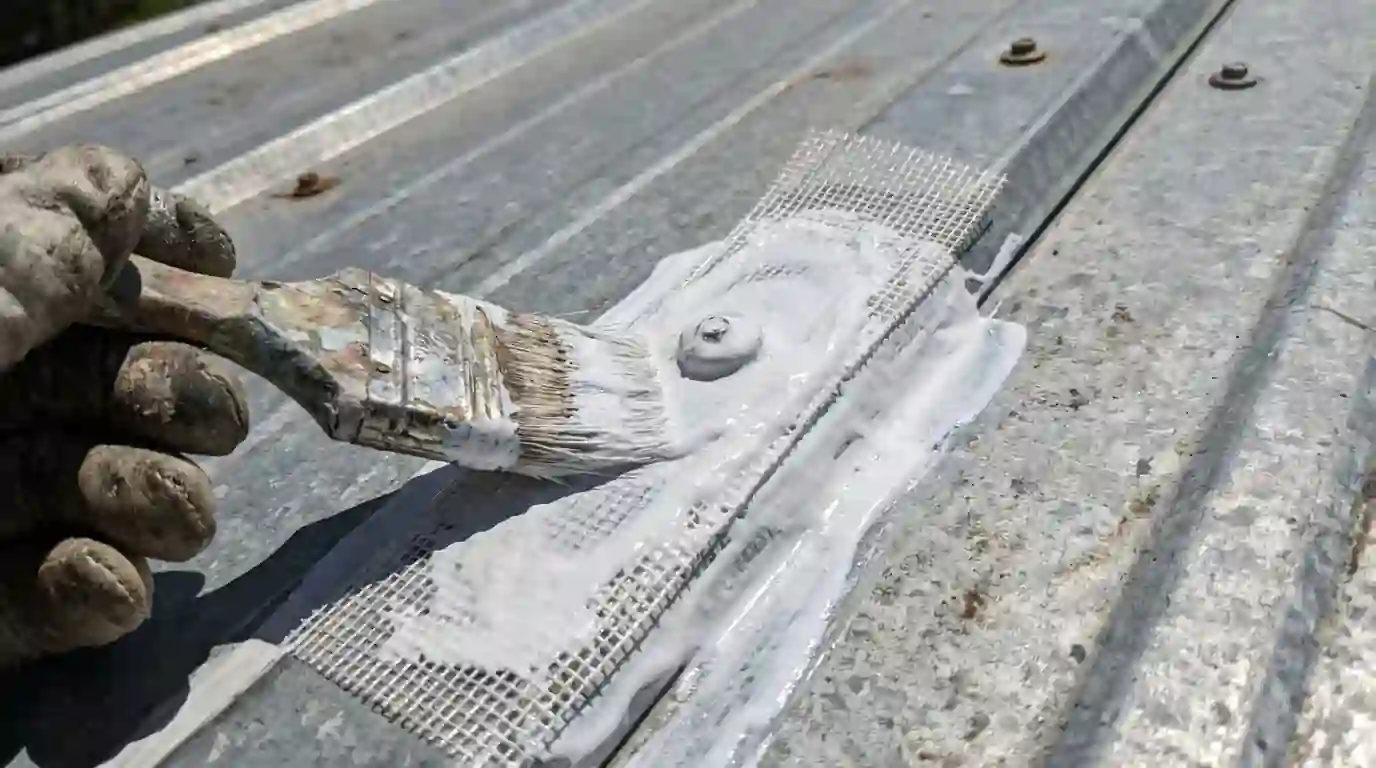
A good coating job starts with cleaning, usually a pressure wash to remove chalk, dirt and loose paint. Rust is wire-brushed and treated with a primer. Every screw head gets checked, tightened or replaced with a larger one, and then sealed. Seams are reinforced with fabric and mastic, and vent and A/C penetrations get fresh flashing. Metal roofs that are rusted at the edges, around vents or at the seam over the ridge usually need panel repair or replacement of the affected piece before coating. A coating cannot span a hole.
Skipping these steps is the most common reason a coating peels or leaks early. The finish coat only works if it bonds to clean, sound metal and if the seams underneath are tight. Some owners ask about rolling a thick coat directly over everything. A heavy layer without proper reinforcement tends to crack at seams as the metal moves, so fabric and mastic at seams is important.
- Pressure wash and let the metal dry
- Treat and prime rusted areas
- Replace or re-seat loose screws
- Reinforce seams with fabric and mastic
- Re-seal vents, stacks and A/C curbs
Acrylic or silicone for a park home
Acrylic is the usual choice. It costs less, goes on easily and works well over properly primed metal when water drains off the roof. Typical application is two coats for a combined dry thickness in the range recommended by the manufacturer, often around 20 to 30 mils across the system. Weather also controls timing. Acrylic needs a dry day with temperatures above about 50 degrees and no rain for 24 hours, and the metal should not be so hot that the coating skins before it levels.
Silicone is worth the extra cost when a roof has low spots that hold water, or if you want a longer interval between recoats. Silicone does not adhere to cured acrylic without testing, and acrylic does not stick to cured silicone, so pick once and stay with it. Early morning application in summer often works best, since the metal is cooler and the coating has a long day to cure before evening dew.
Costs, timing and park rules
For a single-wide home, coating typically runs from about 985 to 2,350 per job depending on roof size, rust, number of penetrations and whether repairs are needed. A double-wide often runs 1,650 to 3,780. These are typical ranges, and the real price comes after an inspection. Insulation or a roof-over system is another option for owners who want to improve comfort more than the coating alone can. A layer of foam or rigid board under a new coating can lower interior heat far more than reflectivity alone.
Check your park's rules before scheduling. Some parks require notice, restrict work days or have a list of approved methods. Most coating jobs can finish in one to two days of dry weather, and acrylic is best applied from spring through early fall in Sacramento. Many parks also have a rule about how long a contractor can leave equipment or materials on site, and about noise or work hours. Tell the park office the dates so there are no surprises.
Mistakes to avoid and when to call
Avoid coating over wet metal, applying a thin single coat to save money, or using ordinary house paint. Another common mistake is skipping seam work because the roof looks fine from the ground. Also avoid piling extra material onto a roof that already has layers of old coating that is peeling. If a roof has been coated several times, ask for a test of adhesion and a look at the layers before adding another. Too many layers can peel in sheets, and removal is much more expensive than a clean start.
A little routine maintenance, such as clearing leaves, checking screws and washing the roof every year or two, can extend a coating's life and help you catch a problem before it reaches the ceiling. If your ceiling is stained, you see rust streaks or screws backing out, call Mountainside Foam & Coating at (916) 963-8097 and we will look at the roof and tell you whether coating, repair or something else makes sense.
Questions readers ask
Can a roof coating be applied over an old rolled-on mobile home sealer?
Sometimes. If the old sealer is firmly stuck, clean and not peeling, a coating can go over it after a bond test. Loose or flaking layers have to be scraped off first, otherwise the new coating peels with the old one. A coating that is dirty or chalky will not look white for long, so a wash every year or two keeps both appearance and performance up.
Will coating make my mobile home cooler in July?
Usually somewhat. A white reflective coating lowers the surface temperature of the metal, which reduces heat entering the home. The effect depends on insulation, ceiling thickness and shade. Many owners notice the afternoon air conditioner runs less, but results vary. Reflective coating is generally a better use of money than repeated patching, especially on older metal roofs that still have sound panels.
How often does a mobile home roof coating need maintenance?
Plan an annual look at seams, screws and drains, and a recoat when the finish thins, chalks or cracks. Acrylic often needs recoating in roughly 8 to 12 years, and silicone often lasts longer, depending on thickness and exposure. Every coating job should come with written notes on the product, thickness and prep, so the next owner knows what is on the roof.
Roof leaking, peeling or baking in the sun?
Call the 24/7 line. Tell us the roof type, where the water shows up or what the coating looks like, and we will tell you what we would check first and when a crew can be there.