Why 25-year-old tile roofs start leaking
Concrete and clay tiles can last 50 years, but the felt underlayment beneath them usually does not. This guide explains how underlayment ages in Sacramento heat and what a proper fix involves.
Updated November 2026, 6 minute read
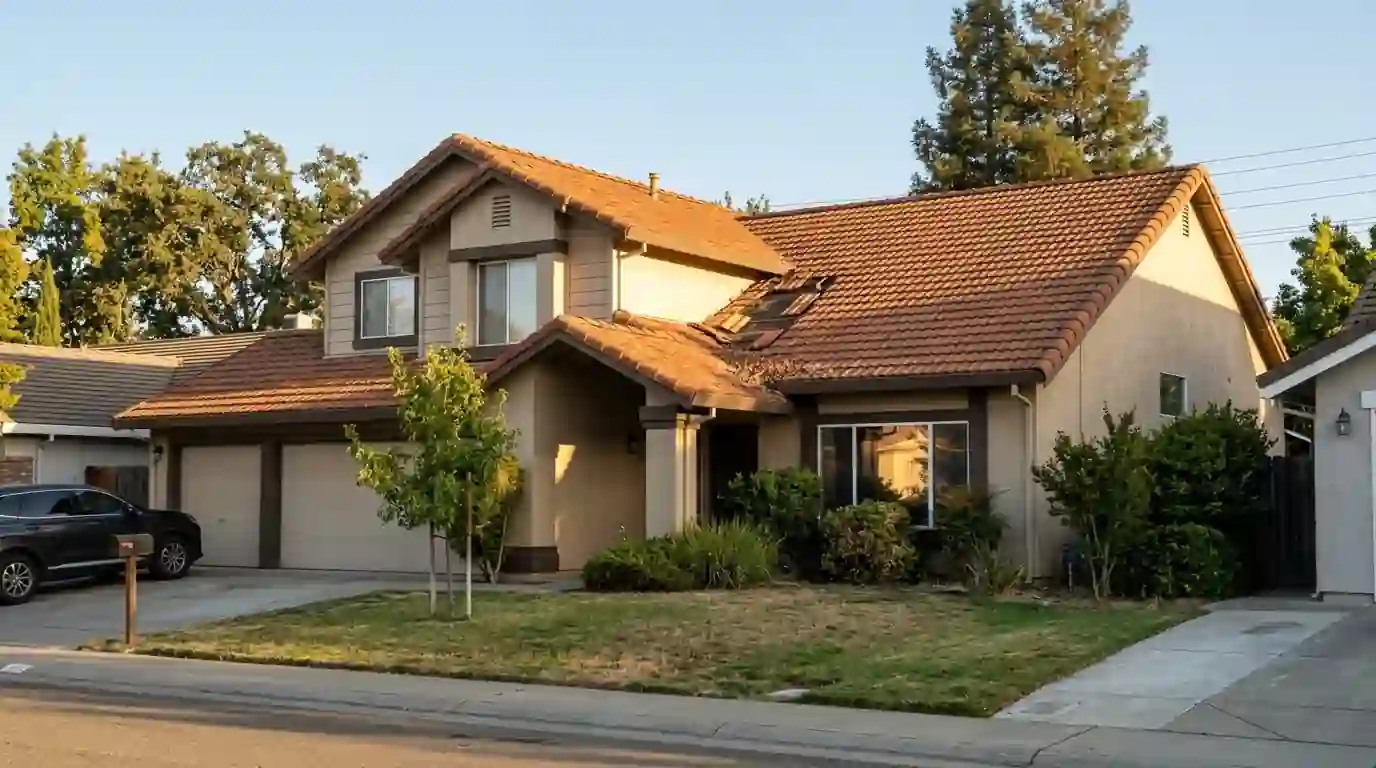
- Tile sheds water, but the underlayment is the real waterproofing layer.
- Felt under tile in hot attics often wears out around 20 to 30 years.
- Cracked tile is rarely the main reason an older tile roof leaks.
- Lift and relay with new underlayment is the lasting repair.
Tile is the cover, felt is the barrier
Concrete and clay tile look like the waterproof layer, but they are not. Tiles overlap and shed most water, yet wind-driven rain, small gaps and capillary action push moisture under them every storm. The layer that actually keeps water out of the house is the underlayment, a sheet laid over the deck before the tile goes on. The cost of this arrangement is that the roof looks fine from the street long after the real waterproofing has aged out. A homeowner can look up at a tile roof with no visible damage and have no idea the felt is brittle.
On many Natomas, Elk Grove, Roseville and Folsom homes built in the 1990s and 2000s, that sheet is asphalt-saturated felt, often a single layer of 30 pound felt or lighter. The tile can last 50 years or more. The felt under it is rated for far less. That gap between how a tile roof looks and how it performs is the main reason leaks seem to show up suddenly around the 20 to 30 year mark.
How felt ages in Sacramento heat
Felt is made of paper or fiber soaked in asphalt. Under tile, there is an air space and the tiles hold heat, so the underlayment is cooked daily from spring to fall. Over time, the asphalt oils dry out, the felt shrinks and turns brittle, and it can crack at nail holes, valleys and overlaps. Some tile roofs were installed with a thin 15 pound felt, a single layer, or with the felt lapped less than best practice. Builders in busy years sometimes used the cheapest option that met code, and that choice shows up as early failure.
Roof surface temperatures under tile can run high through a long Sacramento summer, and the cycle of hot days and cool nights adds stress. Many felt underlayments reach the end of their useful life somewhere around 20 to 30 years, sometimes sooner on south and west slopes. Tile weight also stresses the underlayment, and foot traffic on tile can crush the felt where tiles flex, so past repairs by other trades can leave hidden damage.
Where the leaks actually show up
Leaks on an older tile roof usually start at penetrations and transitions: valleys, around chimneys, vents, skylights, the ends of ridges and wall intersections. These are where felt has to be cut and lapped, and where flashing details matter most. Wind-driven rain is a good test. A tile roof that is fine in a steady drizzle can leak in the first storm with strong wind, because water is pushed up under the tile laps and onto an aged felt that no longer sheds it.
Homeowners often find a brown stain on a ceiling after a heavy rain and assume a tile is cracked. A cracked tile is worth replacing, but a leak that returns after every repair is more often a sign that the felt around it has failed, and that the roof is leaking in several places before the stains appear. Leaks can also run along the felt and out at a distant spot, so the stain in the ceiling may be several feet from the failure. A roofer trained to read tile roofs follows the wetness upslope.
- Stains below valleys, chimneys or wall lines
- Leaks only during heavy or wind-driven rain
- Brittle, dry felt visible when a tile is lifted
- Repeated small repairs that do not last
- Daylight or dampness in the attic near penetrations
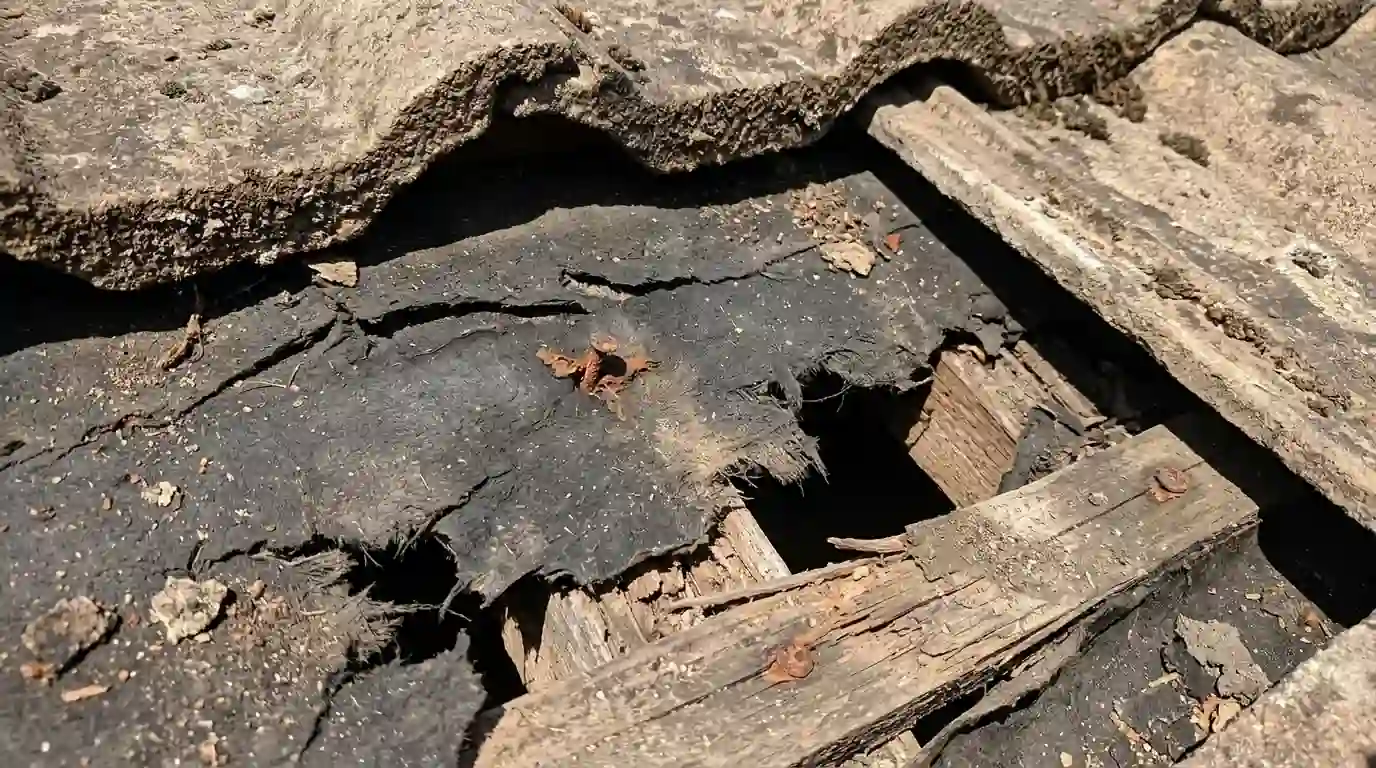
What a real fix looks like
The lasting repair is to remove the tile, set it aside by section, strip the old felt, repair any damaged deck and install new underlayment before relaying the tile. Replacing broken tile and adding new flashing and valley metal happens at the same time. Foam adhesive or mortar, used to set ridge and rake tiles, can also crack and let water in. Replacing those pieces with mechanical fasteners and proper sealing is common during a lift and relay.
Newer underlayments include self-adhered membranes that seal around nails and high-temperature synthetic sheets made for tile roofs. These generally outlast felt in a hot attic. The product choice matters more than the tile, so ask which underlayment will be used and what temperature rating it has. Metal flashings and valleys matter as much as the felt. A rusted or short valley liner sends water under the tile on both sides, so new metal is part of nearly every proper underlayment job.
Why patching has limits
Replacing one tile or sealing a valley with mastic can stop a particular leak for a while. It does not fix the aging felt around it, and the next leak will show up nearby. Roof cement and sealants dry and crack in the sun and tend to need redoing. Another choice is to replace only the failing slopes. South and west faces age fastest, so some owners fix those first and plan the rest later, though that can mean paying for setup twice.
That said, patching is reasonable when the roof is younger or the leak is isolated. The question is whether the repair is a one-off or part of a pattern. If the second or third repair is in the same roof, it is usually cheaper to treat the whole slope than keep chasing leaks. Tiles stack on the roof in neat piles during work, and the crew has to spread weight and protect the roof framing. A careful crew relays tile in the right pattern so the roof looks as it did before.
Costs and planning in the Sacramento area
Lifting and relaying tile with new underlayment typically runs about 7.90 to 14.60 per square foot, depending on tile type, roof pitch, number of penetrations and the underlayment chosen. Spot repairs often run 485 to 1,240 per visit. These are typical ranges, and the real price comes after an inspection. Insurance may or may not cover underlayment failure from age, since policies often treat wear as maintenance. Check your policy, and note the date of your first leak and any repairs.
Plan the work for dry months, since the roof is open during the swap. It helps to photograph the old felt before it is buried. If a future buyer or inspector asks about the roof, you can show what was replaced and when, which adds value in a sale. If your tile roof is approaching 25 years or has begun leaking at the valleys, call Mountainside Foam & Coating at (916) 963-8097 and we can check the underlayment before the next storm season.
Questions readers ask
Can I tell the underlayment condition without lifting tiles?
Not reliably. Attic inspection can show stains, damp decking and daylight, but the felt itself is only visible when a few tiles are lifted. A roofer will usually pull tile at a valley and a vent to see whether the felt is flexible or brittle. Sealant used on tile roofs also dries and cracks in a few years, so a repair done with mastic needs to be rechecked regularly.
Can tiles be reused when the underlayment is replaced?
In most cases yes. Concrete and clay tiles are removed, stacked and relaid, with broken ones replaced. Some older or discontinued profiles can be hard to match, so a few salvage tiles from low-visibility areas may be used for repairs. In a small number of cases, only a section of the underlayment has failed, and a focused repair is enough.
Does the underlayment matter for wildfire areas near Auburn or Placerville?
It can. Fire-rated assemblies often specify a particular underlayment layer, and some foothill jurisdictions want a Class A roof assembly. Ask what product is being installed and whether it is part of a rated system before work begins. A good crew will also check the roof deck for dry rot and replace boards as needed before the new underlayment goes down.
Roof leaking, peeling or baking in the sun?
Call the 24/7 line. Tell us the roof type, where the water shows up or what the coating looks like, and we will tell you what we would check first and when a crew can be there.